




















From Arundel Castle and Chichester to West Wittering, Goodwood and the South Downs, West Sussex combines historic towns, sandy beaches, Roman sites, country estates and some of southern England’s best gardens. Here are the places worth putting on your list.
West Sussex is sometimes overshadowed by the white cliffs and big seaside resorts farther east, but it offers a remarkably varied collection of days out.
You can spend the morning inside a Roman palace, walk around a cathedral city after lunch and reach a sandy beach by the afternoon. Elsewhere are medieval castles, vast country estates, internationally important art, heritage railways, wildlife reserves and villages tucked beneath the South Downs.
The geography matters. Chichester and the Manhood Peninsula make sense as one area, Arundel and the Arun Valley as another, while Petworth, Midhurst and the Downs form a different inland West Sussex again.
This guide concentrates on places that justify a journey rather than attempting to list every park, museum or attraction in the county. Opening arrangements, prices and event dates can change, so use the linked official visitor information when planning a specific trip.
West Sussex at a glance
Where should you start?
Castle: Arundel. Historic city: Chichester. Beach: West Wittering. Roman history: Fishbourne or Bignor. Families: Weald & Downland Living Museum. Art: Petworth. Motorsport: Goodwood. Walking: South Downs. Harbour: Bosham and Chichester Harbour.
Find the places on a map
Use this map to plan your visit. Select a pin for the location and open the map for directions. Check the visitor information in this guide before travelling.
Best places to visit in West Sussex at a glance
| Place | Best for | Car-free? |
|---|---|---|
| Arundel | Castle, historic town and cathedral | Very good |
| Chichester | History, culture, shopping and theatre | Excellent |
| Fishbourne Roman Palace | Roman mosaics and archaeology | Good |
| West Wittering | Sandy beach and coastal walks | Possible with planning |
| Chichester Harbour | Walking, sailing, wildlife and villages | Varies |
| Goodwood | Motorsport, racing and major events | Event dependent |
| Weald & Downland Living Museum | Families, rural history and historic buildings | Possible |
| Petworth | Art, deer park and historic town | Possible |
| Amberley | Village, industrial heritage and South Downs | Good |
| Bignor Roman Villa | Roman mosaics and countryside | Difficult |
| Kingley Vale | Walking, ancient yews and archaeology | Requires planning |
| West Dean | Gardens and South Downs | Possible by bus |
Arundel
Seasonal opening: the castle’s published 2026 visitor season ends on 1 November. Check the official opening calendar before planning a winter visit.
Arundel is one of the easiest West Sussex recommendations because the town looks like a destination before you have even decided what to visit.
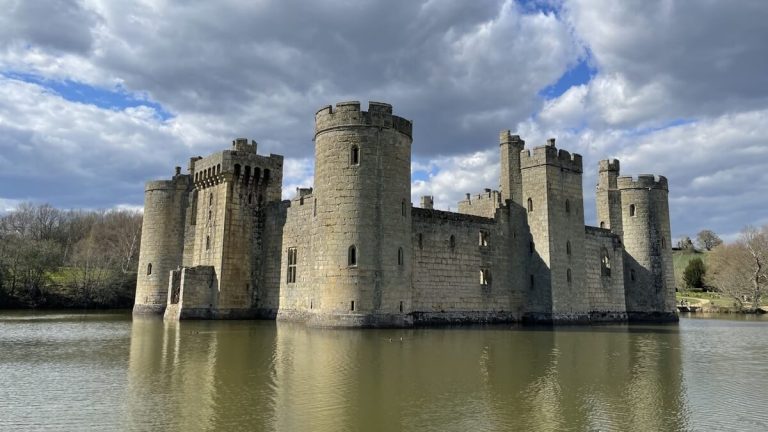
Arundel Castle rises dramatically above the River Arun and historic town centre, while the cathedral provides a second major landmark on the hillside opposite.
The castle has Norman origins but was extensively rebuilt and restored over later centuries. Visitors today encounter a mixture of medieval defensive architecture, grand furnished rooms, art, gardens and extensive grounds.
Below it, Arundel is compact enough to explore on foot. Independent shops, cafés, pubs and historic buildings fill the streets between the river and castle, while the cathedral is a short climb uphill.
That means Arundel still works if you do not want to spend the entire day inside the castle. The town, river and architecture provide plenty to explore independently.
Families and wildlife enthusiasts can extend the visit to WWT Arundel Wetland Centre, while walkers can use the town as a gateway towards the Arun Valley and South Downs.
Best for: Castles, architecture, historic towns and families.
Allow: A full day if visiting the castle properly.
Cost: The town and cathedral can be explored free; the castle and Wetland Centre charge admission.
Without a car: Very good. Arundel has a railway station, with a walk into the historic centre.
Chichester
Chichester packs Roman history, a medieval cathedral, galleries, theatre and independent shopping into a remarkably compact city centre.
The four principal streets meet at the ornate Chichester Cross, reflecting a street pattern with origins in the Roman settlement of Noviomagus Reginorum.
Chichester Cathedral has stood at the centre of the city for more than 900 years and is free to enter, although donations support its upkeep. Its art and architecture range across centuries rather than belonging to one period.
In 2026, the cathedral’s Glowing + Alive exhibition marks 60 years of John Piper’s High Altar tapestry and runs until 15 November.
The city’s cultural offer extends well beyond the cathedral. Pallant House Gallery has an important collection of modern British art, while Chichester Festival Theatre is one of the best-known producing theatres outside London.
The Novium Museum adds the city’s Roman and local history, including the remains of a Roman bathhouse preserved within the museum building.
Chichester also works extremely well as a base. Fishbourne, Goodwood, West Dean, the South Downs, Chichester Harbour and the Witterings are all nearby.
Best for: Culture, architecture, history and shopping.
Allow: Half a day for the centre; a full day with a gallery, museum or performance.
Cost: Plenty can be explored free; individual attractions charge separately.
Without a car: Excellent. The railway and bus stations are close to the city centre.
Fishbourne Roman Palace
Just outside Chichester is one of the most significant Roman archaeological sites in Britain.
Fishbourne Roman Palace preserves the remains of an enormous first-century residence built only decades after the Roman conquest.
Its mosaics are the headline attraction. Raised walkways allow visitors to look directly over surviving Roman floors, including the famous Cupid on a Dolphin mosaic, while exposed foundations reveal the scale of the wider palace.
The site was discovered unexpectedly in 1960 during work to lay a water main. Subsequent excavation revealed a complex arranged around a large formal garden.
The identity of the original owner remains debated, although the client king Tiberius Claudius Cogidubnus has traditionally been associated with the palace.
Outside, part of the Roman garden has been reconstructed using archaeological evidence, helping visitors understand the buildings as a residence rather than simply a collection of mosaics.
Best for: Roman history, archaeology, families and mixed-weather days.
Allow: Two to three hours.
Cost: Paid admission.
Without a car: Good. Fishbourne railway station is nearby.
West Wittering Beach and East Head
If you want a proper sandy beach in Sussex, West Wittering is one of the strongest choices.
The beach sits at the entrance to Chichester Harbour and opens into a broad expanse of sand at lower tide, with views across the Solent and towards the Isle of Wight.
At its western end, East Head adds a landscape of dunes, saltmarsh and shifting sand managed by the National Trust. It is worth walking beyond the busiest part of the beach to experience the harbour entrance properly.
West Wittering’s popularity is also its greatest practical problem. Warm weekends and school holidays can produce heavy traffic on the roads leading onto the peninsula, and parking arrangements are used to manage visitor numbers.
Before you drive
Check West Wittering parking before leaving home
Do not assume you can simply arrive on a hot summer afternoon and find a space. Check the beach’s current parking and booking arrangements before setting out, particularly during school holidays, sunny weekends and bank holidays.
Best for: Sandy beaches, families, swimming and coastal walks.
Allow: Half a day to a full day.
Cost: No attraction admission for the beach; parking charges apply.
Without a car: Possible, but considerably more planning is required than for Chichester or Arundel.
Chichester Harbour and Bosham
The coast around Chichester is very different from Brighton’s open seafront or the chalk cliffs of East Sussex.
Chichester Harbour is a sheltered landscape of tidal creeks, mudflats, saltmarsh, sailing channels and waterside villages.
Bosham is the best-known village around the harbour and makes an easy introduction. Its church, waterfront and old streets sit beside a tidal road that is regularly covered by the incoming sea.
Bosham warning
The tide really does cover the road
The waterfront road and parking spaces at Bosham can flood on the incoming tide. Pay attention to tide information and local signs rather than assuming a parked car will remain safely above the water.
The harbour works particularly well for walking. Routes link villages including Bosham, Fishbourne, Itchenor and Chidham, with boats, wildlife and the changing tide constantly altering the view.
Coastal access around this part of West Sussex has also been strengthened through the King Charles III England Coast Path, including routes around Chichester Harbour.
Best for: Walking, sailing, wildlife, photography and waterside pubs.
Allow: Half a day or more.
Cost: Free to explore; parking and individual activities cost extra.
Without a car: Possible, particularly around Bosham and Fishbourne, but route planning helps.
Goodwood
Goodwood is not one attraction but an estate containing several internationally known events and experiences.
The Festival of Speed brings historic and modern cars, racing drivers and manufacturers to the famous hill climb, while Goodwood Revival recreates the atmosphere of the Motor Circuit’s post-war period.
Horse racing provides another side of Goodwood. The racecourse sits high on the South Downs and is particularly associated with its major summer meeting.
Goodwood House, aviation, golf, driving experiences and the wider estate mean a visit can look completely different depending on the date.
This is consequently one destination where checking the calendar is essential. Major event days transform roads, public transport, accommodation demand and ticket availability across the Chichester area.
Best for: Motorsport, horse racing, major events and experiences.
Allow: Usually a full day for a major event.
Cost: Varies substantially according to event or activity.
Without a car: Major events have their own travel arrangements; check these when booking.
Weald & Downland Living Museum
The Weald & Downland Living Museum at Singleton is one of the best places in Sussex for understanding how ordinary buildings and rural life changed over the centuries.
Its site contains historic houses, farm buildings, workshops and other structures rescued from across south-east England and reconstructed within a rural landscape.
That makes it very different from a conventional museum. Visitors walk through the buildings, see working areas and explore gardens and woodland rather than moving through a sequence of glass display cases.
Working animals and demonstrations help bring the site to life, particularly for children. The museum is also widely recognised as the filming location for BBC programme The Repair Shop, although the television workshop should not be treated as an ordinary walk-in attraction.
The museum’s location beneath the South Downs also makes the landscape part of the visit.
Best for: Families, social history, architecture and traditional crafts.
Allow: Half a day to a full day.
Cost: Paid admission.
Without a car: Possible by public transport to Singleton, but check the current service before travelling.
Amberley and Amberley Museum
Amberley gives visitors two quite different versions of West Sussex within a small area.
The village itself sits beneath the South Downs and retains historic houses, a church and lanes that make it worth exploring on foot.
Nearby Amberley Museum occupies a former chalk quarry and focuses on the industrial, transport and communications history of the South East. Its large open-air site contains historic buildings, workshops, vehicles, machinery and collections covering subjects including telecommunications, printing and traditional crafts.
The museum’s transport collections are a large part of the appeal for families. Depending on the operating programme, visitors may encounter heritage buses, a narrow-gauge railway and demonstrations around the site.
Its position beside the South Downs also makes Amberley useful for a mixed day. You can spend several hours at the museum and still have the village, River Arun and surrounding countryside nearby.
Best for: Families, industrial history, transport and the South Downs.
Allow: Half a day for the museum; longer if exploring the village as well.
Cost: Amberley Museum charges admission; the village is free to explore.
Without a car: Good. Amberley railway station is close to the museum, although check walking routes for anything farther into the village.
Petworth House and Park
Petworth combines one of the National Trust’s most important art collections with a grand country house, Capability Brown parkland and a historic market town immediately outside the gates.
The house contains paintings and sculpture associated with major European and British artists, with J.M.W. Turner particularly closely connected to Petworth. Turner was a regular visitor and repeatedly drew and painted the house, park and surrounding landscape.
Outside, the deer park provides a completely different experience. The landscape was shaped by Capability Brown and gives visitors enough space for a substantial walk rather than simply a circuit of the formal gardens.
Petworth town deserves time of its own. Independent shops, cafés, pubs and antique dealers make it easy to turn the National Trust visit into a full West Sussex day rather than driving away as soon as the house closes.
Best for: Art, country houses, deer park and antiques.
Allow: Half a day to a full day.
Cost: Paid admission to the house and principal visitor areas; National Trust membership arrangements apply.
Without a car: Possible by bus, but easier with a car than Arundel or Chichester.
Our National Trust and English Heritage guide compares Petworth with other Sussex houses, gardens and heritage sites.
Bognor Regis
Bognor Regis is sometimes overshadowed by Brighton, Worthing and the historic attractions around Chichester, but it remains one of West Sussex’s principal seaside towns.
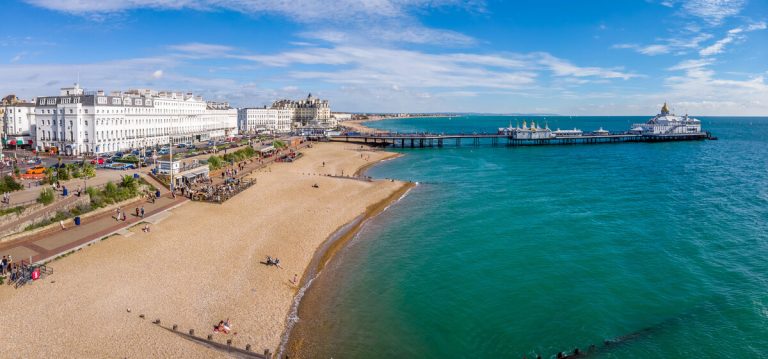
The resort has a long promenade, beach, pier and traditional seaside attractions, while Hotham Park provides green space a short distance inland.
The town’s royal name dates from George V’s stay in the area while recovering from illness in 1929. It subsequently received permission to add “Regis” to Bognor.
For families, Bognor works best as an uncomplicated seaside day rather than a sightseeing checklist: beach, promenade, park, food and traditional resort entertainment.
It is also a useful base for the western West Sussex coast, with Chichester and other destinations within relatively easy reach.
Best for: Traditional seaside days and families.
Allow: Half a day to a full day.
Cost: The seafront and beach are free; individual attractions charge separately.
Without a car: Excellent. Bognor Regis has a railway station within walking distance of the centre and seafront.
If you plan to browse the town centre, our Bognor Regis Arcade guide covers shops, parking and the building’s regeneration proposals.
Worthing
Worthing provides a calmer urban seaside alternative to Brighton without abandoning cafés, culture and a proper town centre.
The long promenade, pier and beach form the obvious visitor route, but Worthing has increasingly developed a food, arts and independent-business identity of its own.
Worthing Pier is one of the town’s defining landmarks, while the seafront can be followed west towards Goring and east towards Lancing and Shoreham.
Culture is concentrated around venues including the Connaught Theatre and Worthing Museum & Art Gallery, making the town workable when the weather is less cooperative.
Worthing also makes a useful base for exploring the South Downs immediately to the north, including Cissbury Ring.
Best for: Seaside walks, food, culture and a less frantic coastal break.
Allow: Half a day to a full day.
Cost: Plenty can be done for free.
Without a car: Excellent.
For an indoor shopping stop, see our Guildbourne Centre visitor guide.
Cissbury Ring
Immediately north of Worthing is one of the largest and most important ancient hillforts in Sussex.
Cissbury Ring occupies a prominent chalk hill within the South Downs and contains evidence of human activity stretching back thousands of years.
Long before the Iron Age hillfort was constructed, people were mining flint here during the Neolithic period. The surviving earthworks later enclosed a substantial settlement on the hilltop.
Today the archaeology is combined with broad views across the Downs, Worthing and the coast. On a clear day, the elevated position makes the scale of the landscape particularly obvious.
This is a countryside site rather than a conventional attraction. Expect uneven paths, exposed weather and livestock rather than a visitor centre at the summit.
Best for: Walking, archaeology and views.
Allow: Two to three hours.
Cost: Free.
Without a car: Possible from Worthing, but involves a substantial walk or local transport followed by walking.
Shoreham-by-Sea
Shoreham sits where the River Adur reaches the Channel and offers a very different coastal atmosphere from nearby Brighton or Worthing.
The town centre has cafés, pubs and independent businesses, while the river provides one of Shoreham’s most distinctive sights: its collection of houseboats.
Across the river, Shoreham Beach is a shingle landscape with an important vegetated beach habitat and a much less resort-like character than the central beaches farther along the coast.
The Adur also creates opportunities for walking and watersports, while the South Downs rise only a short distance inland.
Shoreham is therefore better approached as somewhere to wander, eat and explore than as a town with one headline attraction.
Best for: Riverside walks, cafés, coast and a quieter town day.
Allow: Two to four hours.
Cost: Free to explore.
Without a car: Excellent. Shoreham-by-Sea station is close to the town centre.
Leonardslee Lakes and Gardens
Leonardslee near Horsham provides another of West Sussex’s major garden landscapes, but with a noticeably different character from Wakehurst or Nymans.
The Grade I-listed gardens extend across a steep valley containing lakes, woodland and extensive plant collections. Rhododendrons, azaleas, camellias and magnolias make spring a particularly colourful period.
The unusual extra attraction is the estate’s population of wallabies, descendants of animals introduced to Leonardslee many years ago.
Walking routes can involve significant gradients, so visitors with mobility requirements should check the current accessibility information before travelling.
Leonardslee also offers food and hospitality experiences, making it possible to build the visit around more than a straightforward garden walk.
Best for: Gardens, spring colour, photography and unusual wildlife.
Allow: Three to four hours.
Cost: Paid admission.
Without a car: Possible but requires more planning than town-centre attractions.
Bignor Roman Villa
Bignor is a smaller Roman visit than Fishbourne, with mosaics protected inside covering buildings and a countryside setting beneath the Downs. It suits visitors who want to spend time looking closely at the surviving floors rather than combine several large attractions.
The published 2026 season runs from 1 April to 31 October, normally Wednesday to Sunday, with daily opening in August. Check the calendar before a winter journey; the villa’s car park is reserved for its customers, not a starting point for unrelated walks.
Address: Bignor, West Sussex, RH20 1PH. Allow: one to two hours. Paid admission applies; arrival by car is more straightforward than by public transport.
Kingley Vale
Kingley Vale is a walking destination with ancient yew woodland, chalk grassland and higher ground overlooking the Chichester area. It offers a different day from a formal garden: paths and weather are part of the experience, and the slopes require more effort than the woodland approach.
Natural England’s reserve information gives the current access and livestock guidance. Follow signed paths, keep dogs under the controls requested on site and choose a route that fits the daylight and your fitness.
Getting there: the usual approach is from the West Stoke car park north of the village, followed by a walk to the reserve. Check the official location information rather than navigating to the reserve’s centre. Allow two to four hours; admission to the reserve is free.
West Dean Gardens
West Dean Gardens combines a walled kitchen garden, restored glasshouses, a long pergola and wider grounds near the foot of the South Downs. It makes a useful alternative to a castle or museum when the plan is a garden walk with time to pause.
Garden admission does not give general access to the house. The gardens use shorter winter hours, with last entry an hour before closing. The operator publishes access information for wheelchair users and separate details for events.
Address: West Dean, near Chichester, PO18 0RX, off the A286. Chichester station connects with the number 60 bus towards Midhurst; check the current timetable. Allow two to four hours. Paid admission applies, with free entry for under-16s.
Wakehurst
Wakehurst near Ardingly is managed by the Royal Botanic Gardens, Kew, and combines gardens with a wider landscape of woodland, meadows and wetlands. Its Millennium Seed Bank gives the place a conservation role as well as the makings of a substantial family walk.
A useful ticket distinction can affect the cost of a visit: National Trust members receive garden entry under the membership arrangement, but pay for parking. Ordinary paid garden admission includes parking. Check separate terms for special events.
Address: Ardingly, Haywards Heath, RH17 6TN. Metrobus 272 serves Wakehurst; check the service for your date and return journey. Follow the signed visitor entrance when driving. Allow half a day to a full day.
Nymans
Nymans at Handcross combines a garden shaped by the Messel family with house ruins and a wider woodland landscape. The garden and woods offer different walking conditions, so check the access map before choosing a longer route.
Admission applies, with National Trust membership entry available. The garden, house, cafés and shops can have different opening hours; a garden visit should not be taken as a guarantee that every part of the house is open.
Address: Handcross, near Haywards Heath, RH17 6EB. Metrobus routes 271 and 273 stop nearby; check current services from Crawley or Brighton. Allow three to four hours.
Bluebell Railway from East Grinstead
The Bluebell Railway crosses the county boundary, connecting East Grinstead in West Sussex with Sheffield Park in East Sussex. Starting beside East Grinstead’s National Rail station makes it a particularly practical heritage day out without a car.
Historic stations and carriages are part of the appeal, but trains do not run to an everyday mainline timetable. Choose a published operating day and check whether your ticket is for a standard service or a separately priced event.
Arrival point: Bluebell Railway’s East Grinstead terminus beside the mainline station. Allow half a day to a full day. Train admission is paid; standard rover tickets and special-event tickets have different conditions.
Best West Sussex places to visit without a car
A car makes rural West Sussex considerably easier, but several of the county’s strongest destinations work very well by public transport.
| Destination | Car-free verdict | How it works |
|---|---|---|
| Chichester | Excellent | Railway station close to the historic centre |
| Arundel | Very good | Railway station within walking distance of the town and castle |
| Worthing | Excellent | Station close to the town centre and seafront |
| Bognor Regis | Excellent | Railway station within walking distance of the seafront |
| Shoreham-by-Sea | Excellent | Station in the town centre |
| Amberley Museum | Good | Amberley station is close to the museum |
| Fishbourne Roman Palace | Good | Fishbourne station is nearby |
| Bluebell Railway | Excellent from East Grinstead | Heritage station beside the National Rail station |
Places such as Petworth, Goodwood, West Wittering, Leonardslee and the Weald & Downland Living Museum can also be reached without driving, but the journey usually needs more planning. Check the return service as carefully as the outward journey, particularly on Sundays and outside the summer season.
Best free things to do in West Sussex
You do not need to pay for a castle, garden or country house to have a good day out in West Sussex.
Cissbury Ring and the wider South Downs provide some of the strongest free options, with walking routes, archaeology and extensive views across the county.
The coast provides another obvious choice. Worthing, Shoreham and Bognor Regis can all be approached as simple seaside days without paying for an attraction, while Chichester Harbour has miles of waterside landscapes and footpaths to explore.
Historic centres including Arundel, Chichester, Petworth and Amberley are also worth visiting without necessarily buying admission to their principal attractions. Chichester Cathedral is a donation-supported cultural stop in the city centre; services can affect sightseeing.
West Wittering does not require an attraction ticket, although parking can make it a relatively expensive version of a supposedly free beach day.
Best West Sussex attractions for families
West Sussex has particularly strong family attractions because so many combine history with space to explore.
Arundel Castle has the obvious towers-and-battlements appeal, while Fishbourne Roman Palace makes Roman history considerably easier to understand through its surviving mosaics and reconstructed garden.
Amberley Museum is a good choice for children interested in transport and machinery, while the Weald & Downland Living Museum allows families to move through historic buildings rather than spending the whole visit looking at objects behind glass.
For a simpler day, West Wittering provides sand and sea, while Worthing and Bognor Regis offer traditional seaside alternatives with railway stations.
Family shortlist
Five easy West Sussex choices
Castle: Arundel. Romans: Fishbourne. Hands-on history: Weald & Downland. Transport: Amberley Museum. Beach: West Wittering.
What can you do in West Sussex when it rains?
A wet forecast favours West Sussex’s museums, historic houses and compact towns over its beaches and exposed Downs.
Fishbourne Roman Palace is one of the strongest choices because the famous mosaic floors are protected inside the museum building.
Petworth House provides substantial interiors and an important art collection, although much of the appeal of the wider estate is outdoors. Amberley Museum and the Weald & Downland Living Museum have indoor spaces but remain fundamentally open-air attractions, so waterproof clothing still matters.
Chichester is probably the easiest town for a thoroughly wet day. The cathedral, Pallant House Gallery, shops, cafés and cultural venues are concentrated within a compact centre.
Arundel can also work in mixed weather, but a large part of the castle visit involves grounds and gardens. Check the forecast before paying for a day that you hoped would be mostly outdoors.
If you base yourself around Horsham, note that Horsham Museum is closed for roof repairs until 5 January 2027; do not build a wet-weather visit around its galleries during the closure.
Where should you stay in West Sussex?
The best base depends on whether the priority is coast, countryside or historic attractions.
| Base | Best for | Easy nearby trips |
|---|---|---|
| Chichester | Culture, history and the western coast | Fishbourne, Goodwood, West Wittering, Chichester Harbour and Weald & Downland |
| Arundel | Castle, historic town and South Downs | Amberley, Arun Valley, Worthing and countryside walks |
| Worthing | Seaside, food and car-free trips | Cissbury Ring, Shoreham, Arundel and the South Downs |
| Horsham area | Gardens and northern West Sussex | Leonardslee, countryside and nearby estates |
Chichester is the most versatile base for a first western West Sussex trip. It has strong rail connections, plenty to do in the city itself and straightforward access to several of the county’s biggest attractions.
Arundel works particularly well for a slower historic break, while Worthing suits visitors who want to stay beside the sea without the intensity of central Brighton.
How many days do you need in West Sussex?
A single day is enough for one of the county’s major attractions or towns, but West Sussex becomes much easier to understand over a weekend or longer.
Chichester, Fishbourne and the harbour naturally fit together. Arundel, Amberley and the Arun Valley form another cluster, while the gardens and estates farther north deserve their own time rather than being squeezed into a coastal itinerary.
| Time available | A sensible approach |
|---|---|
| One day | Choose Arundel, Chichester, West Wittering or one major country attraction. |
| Weekend | Base yourself in Chichester, Arundel or Worthing and explore the surrounding area. |
| Three to four days | Combine the coast with a historic town, South Downs landscape and one or two major estates or museums. |
| A week | Split the trip geographically rather than repeatedly crossing between the Chichester coast and northern West Sussex. |
More ways to plan your day
- Days out across Sussex to compare ideas across the county.
- Rainy-day outings for museums and indoor alternatives.
Frequently asked questions
What are the best places to visit in West Sussex?
Arundel, Chichester, Fishbourne Roman Palace, West Wittering, Chichester Harbour, Petworth, Goodwood, Amberley Museum and the Weald & Downland Living Museum are among the strongest starting points. Worthing, Shoreham, Cissbury Ring and Leonardslee provide further options for longer stays.
What is the prettiest town in West Sussex?
Arundel is the obvious contender because of its castle, cathedral, historic streets and position beside the River Arun. Petworth and Amberley provide smaller alternatives, while Chichester is the county’s strongest historic city.
What is the best beach in West Sussex?
West Wittering is the standout choice if sand is the priority. Worthing, Shoreham and Bognor Regis offer easier rail access and more conventional town or resort facilities.
Can you visit West Sussex without a car?
Yes. Chichester, Arundel, Worthing, Bognor Regis and Shoreham are straightforward by train. Fishbourne Roman Palace and Amberley Museum also have nearby railway stations. Rural estates, Goodwood and West Wittering require more planning.
What are the best free things to do in West Sussex?
Cissbury Ring, the South Downs, Chichester Harbour and the county’s beaches can all be explored without an attraction admission charge. Historic centres including Chichester, Arundel, Petworth and Amberley are also free to wander.
What are the best things to do in West Sussex with children?
Arundel Castle, Fishbourne Roman Palace, Amberley Museum, Weald & Downland Living Museum and West Wittering are among the easiest family recommendations.
Is Chichester worth visiting?
Yes. Chichester combines a cathedral, Roman history, galleries, theatre, shops and restaurants within a compact centre. It is also one of the most useful bases for exploring western West Sussex.
Is Arundel worth a full day?
Yes, particularly when Arundel Castle is open. The castle and gardens can occupy several hours, while the cathedral, historic centre, River Arun, cafés and shops make it easy to fill the rest of the day.
Planning a West Sussex day out
The easiest way to plan West Sussex is to think in clusters rather than treating the county as one continuous sightseeing route.
Chichester, Fishbourne, Goodwood, the Weald & Downland Living Museum and West Wittering belong naturally in a western cluster. Arundel and Amberley work together around the Arun Valley, while Worthing, Shoreham and Cissbury Ring form another useful group farther east.
Petworth and the gardens of northern West Sussex deserve more deliberate planning because public transport can be less frequent and driving distances can become deceptive on rural roads.
Before setting out
Four things worth checking
Opening: castles, museums and country estates can have seasonal hours. Transport: check the return journey from rural attractions. Events: Goodwood dates can dramatically change traffic in the Chichester area. Parking: West Wittering and other popular destinations can reach capacity on busy summer days.
More Sussex days out
For a city-based visit, read our Chichester guide. Our Sussex days-out hub has more seasonal suggestions.
Guide edited on 24 October 2026. Seasonal opening, access alerts and selected visitor arrangements checked against the linked official pages. Confirm the live opening calendar, transport and admission terms before travelling; suggested visit lengths are editorial estimates.
You May Also Be Interested In