















Halloween goes hand in hand with ghost stories and spooky tales, and this time of year begs the question on where the most haunted places in Sussex are.
There’s a few options, from Preston Manor’s White Lady to Rye’s ghostly duellists and a phantom hound on the Downs. These Sussex stories have outlived generations of the people who told them.
Finding first-hand reliable evidence is another matter.
At Preston Manor in Brighton, visitors are being invited to add their own unexplained experiences to a new Spirit Ledger. The house already has accounts of mysterious figures, an elaborate Victorian séance and a White Lady whose identity remains disputed. Now its custodians are collecting another chapter.
The Brighton & Hove Museums project is a reminder that Sussex’s ghost stories are still developing. Some survive in letters and recollections from people who lived in historic houses. Others belong to inns, castles and landscapes where each retelling brings a slightly different explanation.
There is no reliable way to rank Sussex’s most haunted places of course. But what we can explore is where the stories come from, what the historical record supports and how to visit the places associated with them.
About the stories
History, reported experiences and folklore
An archived account can establish that someone reported an encounter. It does not establish what caused it. The hauntings below are presented as reported experiences or local traditions, with documented history identified separately.
Find the places on a map
Use this map to plan your visit. Select a pin for the location and open the map for directions. Check the visitor information in this guide before travelling. Pins do not imply public access. The Verdley Castle entry marks the Fernhurst area only, not an entrance to the ruins.
Brighton: a manor house and the old police cells
Preston Manor: the White Lady and an 1896 séance
Most local school children have visited Preston Manor, which has unusually detailed material behind its reputation. Brighton & Hove Museums records an account from Lily Macdonald, who described seeing a woman in white while trying a lampshade in the drawing room in 1896. She reportedly followed the figure through the house and tried to put her arms around it, only for it to disappear.
Later that year, a séance in the Cleves Room involved the medium Ada Goodrich Freer. The identification of the supposed spirit as a nun called Sister Agnes became central to the story, but the museum’s own research into Lily Macdonald questions that interpretation and notes that Freer was subsequently denounced as a fraudulent medium (shock!).
There were sceptics in the household too. According to the museum, Lady Ellen Stanford wrote in 1930 that she did not believe anyone had seen a ghost there. The differing views make the surviving record more interesting than a simple claim that everyone accepted the house was haunted.
Regardless, the new Spirit Ledger will collect visitors’ and staff members’ reports, helping inform plans for a book and future events. Preston Manor is beside Preston Park, at Preston Drove, Brighton, BN1 6SD. Its official programme includes daytime visits and separately advertised ghost events.
Old Police Cells: Brighton’s darker history beneath the Town Hall
Below Brighton Town Hall, the Old Police Cells Museum occupies the basement of the town’s first police station. Its history includes the murder of Chief Constable Henry Solomon in 1844, an event the museum recounts as part of its account of local policing.
Ghost stories have gathered around the subterranean rooms, and the museum describes the atmosphere and after-dark vigils in its account of Brighton’s criminal past. The historical killing and the later supernatural interpretations should remain distinct.
This is a museum visit to arrange in advance: the Old Police Cells Museum, in Brighton Town Hall, BN1 1JA, lists pre-booked public tours rather than unrestricted walk-in access.
East Sussex: ghostly guests, monks and a headless drummer
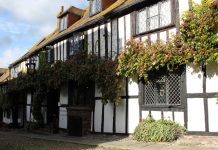
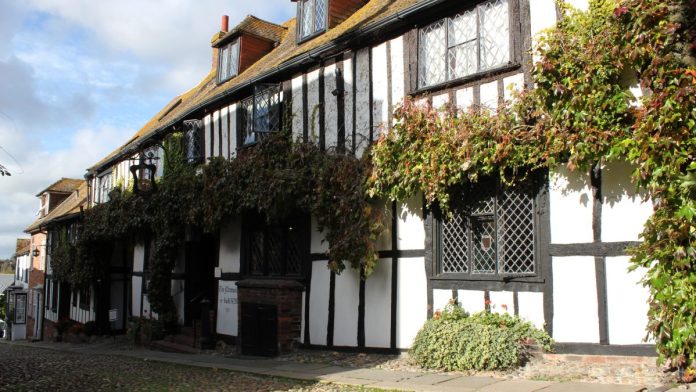
The Mermaid Inn, Rye: a duel in the Elizabethan Bedchamber
The Mermaid Inn’s most striking story concerns a fight in Room 16, the Elizabethan Bedchamber. In the inn’s retelling, two men duel before the loser is thrown down a secret passage.
The hotel publishes an account from actress Kiki Kendrick and her husband Robin about a stay in December 1993. They described waking to a sudden coldness and the sounds and indistinct shapes of a fight near the fireplace. It is a named recollection published by the venue, rather than a verified reconstruction of a historical duel.
The Mermaid’s collection of ghost stories is part of its identity as a working inn in Rye. Anyone hoping to see a particular bedroom should enquire about a stay or an organised visit; guest rooms are not public exhibition spaces.
Lamb House, Rye: a literary home with an appetite for the supernatural
A different sort of ghost story awaits at Lamb House, the Georgian home associated with Henry James and E. F. Benson. Both writers’ connections make it a natural setting for a feature about the uncanny, but their fiction should not be mistaken for a record of events inside the house.
The National Trust’s candlelight tours draw on tales of ghosts, séances and poltergeists. For October 2026, it advertises tours on 27, 28, 30 and 31 October, priced at £20, with booking essential. They are recommended for children aged 11 and over, and the historic house has no step-free access for the event.
Lamb House is on West Street, Rye, TN31 7ES. Consult the National Trust’s tour details for the available sessions.
Michelham Priory: figures beside the moat
At Michelham Priory in Upper Dicker, the bridge, gatehouse and moat provide the setting for several recurring stories. Paranormal event organiser PIGS records accounts of a Grey Lady looking into the water, a hooded monk and other figures associated with the house.
The organiser’s account connects the Grey Lady with a supposed drowning. That explanation belongs to the haunting tradition; it does not establish the identity of a woman or child, or prove that the suggested incident occurred.
For families interested in the stories, Sussex Past advertises ghost walks at 11am and 2pm on 28 October 2026, included with admission, as part of Michelham Priory’s Halloween programme. These daytime activities are a different proposition from an overnight paranormal investigation.
Herstmonceux Castle: the Headless Drummer and a room that “plays” in the wind
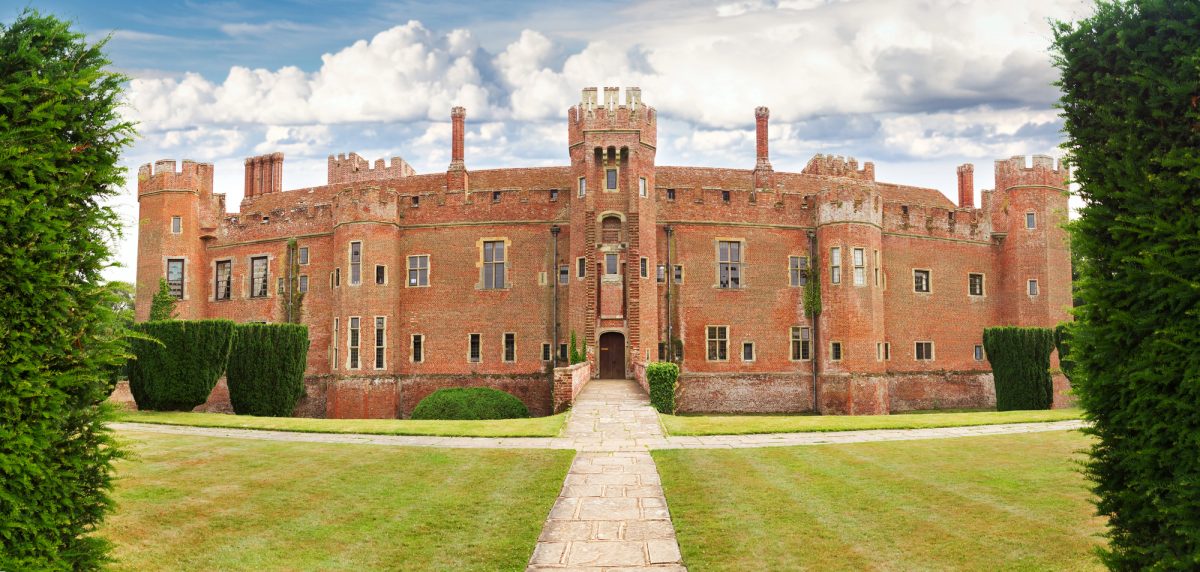
Herstmonceux’s ghostly cast includes the Headless Drummer, one of several figures discussed in a 2017 account published by Queen’s University. The university described staff reports and a former tour operator’s collection of written encounters, preserved in the castle’s archives.
That account also offers a useful alternative explanation for some unsettling sounds. Musician Shelley Katz suggested that wind passing open windows could make the ballroom resonate, producing low wailing or moaning noises.
It is a good example of how a building can sustain both a ghost story and a physical explanation worth examining. For visits, the castle estate’s admission information distinguishes access to the gardens and grounds from the guided tours required for the castle interior.
Newhaven Fort: footsteps in the tunnels
Newhaven Fort’s tunnel stories are acknowledged in its own educational material, which invites children to imagine a ghost story in the caponier. Reports described by paranormal event organiser PIGS include a sense of someone nearby and sounds interpreted as marching boots.
The fort’s teaching resource demonstrates that the rumours form part of its storytelling. The more specific claims come from the ghost-hunt organiser and should be attributed accordingly.
Its October half-term programme includes spooky tunnel activities, recommended for children over eight. The fort warns that steps in these tunnels may make them unsuitable for people using mobility aids. Check the official programme before booking.
Sussex countryside legends: hounds, ruins and the Devil
Chanctonbury Ring: an invitation to the Devil
Chanctonbury Ring, near Washington in West Sussex, has a supernatural reputation quite different from that of a haunted bedroom. The South Downs National Park Authority recounts a tradition that circling the ring seven times anticlockwise will summon the Devil, offering milk, soup or porridge in exchange for a soul.
The variations are part of the folklore. Its account of the ring also describes the prehistoric and Roman remains associated with the hill. The landscape’s recorded past is substantial enough without treating the summoning tale as an instruction or a historical event.
Racton Monument: the disappearing tractor
Near Chichester, Racton Monument has acquired stories about objects thrown from the tower and, more unusually, a ghost tractor said to approach before vanishing. The National Park Authority records the local legend alongside a clear practical distinction: the monument is private property.
Anyone exploring the area should remain on the public bridleway. A ruin’s appearance in a ghost guide does not make it an attraction that visitors can enter.
Devil’s Dyke: the valley that nearly drowned the Weald
At Devil’s Dyke, near Brighton, folklore attempts to explain the landscape itself. The story has the Devil digging through the Downs to let in the sea and drown the Christian communities of the Weald.
The National Trust sets the legend beside the valley’s Ice Age origins. It also records a connected tradition that two humps at the bottom of the valley mark the burial places of the Devil and his wife.
This is a place for a countryside visit and a story about how people explained their surroundings, rather than an account of a particular witness seeing a ghost.
Alfriston: the running black hound
The National Park’s collection of supernatural traditions includes a large black dog said to run from the Downs to Town Fields at Alfriston during a full moon. In the tale, it looks over a flint wall before returning the way it came.
The account gives the story a recognisable local setting, but it does not identify a particular public viewpoint or establish a route for visitors to follow. It belongs in the guide as a village legend, rather than a promised sighting spot.
Verdley Castle, near Fernhurst: a bear that returns at Christmas
Perhaps the most unexpected creature in this collection is the ghost bear associated with the ruins of Verdley Castle. The National Park Authority records a tradition that it returns on Christmas Day in protest at its death.
The accompanying suggestion that this was where England’s last wild bear was killed should be treated as part of the legend, not established wildlife history. As with Alfriston’s hound, the published tale is a starting point for exploring local folklore, not confirmation of public access to the ruins.
Planning a visit to Sussex’s haunted places
| Type of outing | Places to consider | What to check |
|---|---|---|
| A historic house or museum | Preston Manor, Michelham Priory, Lamb House, Newhaven Fort | Seasonal opening, admission and access to the parts of the building you want to see. |
| A guided indoor visit | Old Police Cells; Herstmonceux Castle interior | Advance booking and the distinction between a general visit and a special ghost event. |
| A stay in a working inn | The Mermaid Inn, Rye | Room availability and arrangements for any organised tour. |
| Landscape folklore | Devil’s Dyke and Chanctonbury Ring | A suitable public walking route, terrain, weather and daylight. |
| Stories associated with private or unconfirmed-access sites | Racton Monument; Verdley Castle ruins | Public rights of way and property boundaries. Do not assume entry is permitted. |
Before you go
Book the experience you actually want
A family storytelling walk, a house tour and a late-night paranormal investigation can have very different age limits and access arrangements. Check the organiser’s current information, and use public paths when exploring the countryside. An advertised date does not guarantee tickets remain available.
Explore the places behind the stories
- Sussex heritage places for practical visits to the historic buildings.
- Explore East Sussex for a wider trip around Rye, Lewes and the coast.
- Explore Brighton and the South Downs for the city and countryside around the legends.
Questions about haunted Sussex
Which Sussex ghost stories have surviving historical accounts?
Preston Manor is a particularly useful example because the museum discusses family accounts, correspondence and the 1896 séance. Herstmonceux also has reports described by its owner, Queen’s University. These records help trace the stories and the people who told them; they do not independently prove a supernatural explanation.
Are the ghost events suitable for children?
Some are designed for families, including Michelham Priory’s advertised daytime Halloween walks. Others have specific age recommendations: Lamb House’s October 2026 candlelight tours are recommended for ages 11 and over. Check the individual event rather than assuming that every ghost tour is suitable for younger children.
Can I visit the haunted places after dark?
Indoor access depends on the venue’s opening hours or a booked event. Private buildings and ruins do not become accessible after closing. For countryside outings, check the public route and conditions; the existence of a night-time legend is not evidence that a particular site or approach is open to visitors.
You May Also Be Interested In