



















From the white cliffs of the Seven Sisters and Beachy Head to Lewes, Hastings, Battle, Rye and Bodiam Castle, East Sussex packs dramatic coastline, medieval history, wildlife and some of the South East’s best walking into a relatively small county.
East Sussex is much more varied than its best-known postcard suggests.
The Seven Sisters provide the famous white-cliff landscape, but travel inland and you quickly reach historic towns, castles, vineyards, gardens and the rolling chalk of the South Downs. Head east and the story changes again through Hastings and 1066 Country before reaching Rye, Romney Marsh and the Kent border.
The county is also unusually good for visitors without a car. Eastbourne, Lewes, Hastings, Battle and Rye all have railway stations, while buses connect the coastal towns with Seven Sisters Country Park and other parts of the South Downs.
This guide concentrates on places actually worth building a day around, rather than trying to list every attraction in East Sussex. For major destinations such as the Seven Sisters, we also have separate detailed guides covering walks, parking, public transport and safety.
East Sussex at a glance
Where should you go?
Classic landscape: Seven Sisters. Seaside: Eastbourne or Hastings. Historic town: Rye or Lewes. 1066: Battle. Castle: Bodiam. Wildlife: Rye Harbour. Art: Charleston. Walking: South Downs. Sandy beach: Camber Sands.
Find the places on a map
Use this map to plan your visit. Select a pin for the location and open the map for directions. Check the visitor information in this guide before travelling.
Best places to visit in East Sussex at a glance
| Place | Best for | Without a car? |
|---|---|---|
| Seven Sisters | Cliffs, walking and photography | Excellent by bus |
| Eastbourne | Seaside, culture and a coastal base | Excellent |
| Beachy Head | Views and South Downs walking | Good with bus/walking connections |
| Lewes | History, independent shops and food | Excellent |
| Charleston | Art and Bloomsbury history | Requires more planning |
| Ditchling Beacon | Walking and Downs views | Possible, but involves walking |
| Hastings | Old Town, fishing history and seaside | Excellent |
| Battle | 1066 and medieval history | Excellent |
| Bodiam Castle | Castles and families | Possible with planning |
| Rye | Historic streets and weekends away | Excellent |
| Rye Harbour | Wildlife and walking | Good |
| Camber Sands | Sandy beach days | Good by bus from Rye |
The Seven Sisters and Cuckmere Haven
The Seven Sisters are the landscape most likely to make a first-time visitor understand why people become so attached to the Sussex coast.
The rolling chalk cliffs rise between Cuckmere Haven and Birling Gap as part of the Sussex Heritage Coast and South Downs National Park. Unlike some heavily developed sections of England’s coastline, much of the view remains dominated by chalk, grassland, sea and the winding River Cuckmere.
There are several different ways to experience the area, and choosing the right one matters.
Seven Sisters Country Park at Exceat is the most useful general starting point. From the visitor centre, a relatively gentle valley route follows the Cuckmere towards the shingle beach. It provides views towards Seaford Head and the cliffs without requiring the repeated climbs of the full coastal walk.
For the famous photograph of the coastguard cottages with the Seven Sisters rising behind them, however, you want Seaford Head on the western side of the Cuckmere. Approach from Seaford or South Hill Barn rather than trying to cross the river mouth.
Experienced walkers can tackle the much more demanding cliff-top route east towards Birling Gap, Belle Tout, Beachy Head and Eastbourne.
Seven Sisters Country Park is open throughout the year. The country park visitor page lists seasonal hours for the centre, toilets and car parks. Check the live closing time before setting off; the car parks are locked overnight. Coastal buses stop by Exceat.
Best for: Walking, photography and the classic Sussex landscape.
Allow: Two hours for Cuckmere Valley; half a day or more for longer walks.
Cost: The landscape is free to explore; parking and transport cost separately.
Without a car: Excellent. Coastal buses connect Brighton, Seaford and Eastbourne.
Cliff and river safety
Do not take shortcuts for the photograph
The chalk cliffs are actively eroding and falls can happen without warning. Keep well back from cliff edges and away from the base of the cliffs. Do not attempt to cross the River Cuckmere at its mouth to reach Seaford Head; approach the viewpoint from the Seaford side.
Eastbourne
Eastbourne sometimes gets reduced to the stereotype of a traditional retirement resort, which misses what makes it useful as a visitor base.
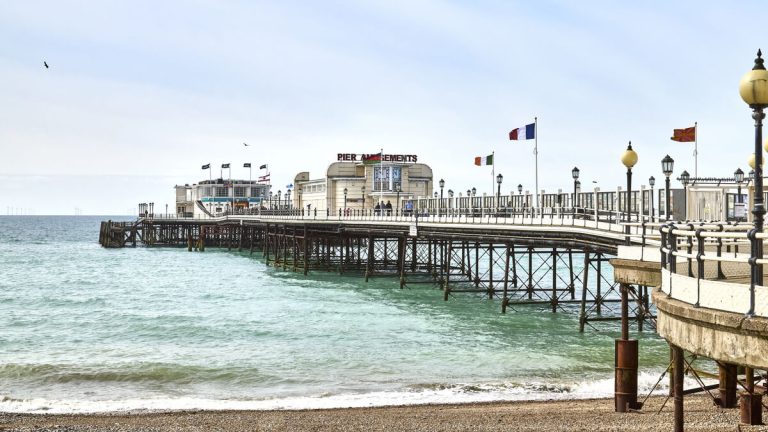
The town has a long seafront, beaches, a Victorian pier, theatres and galleries, but its real advantage is geography. The South Downs effectively begin at the western edge of town, putting Beachy Head and the Seven Sisters within easy reach.
That means a day can combine a conventional seaside morning with a serious coastal walk in the afternoon without moving to another town.
The seafront stretches for miles, with the pier and central beach at its busiest point. Farther west, the promenade runs towards Holywell and the foot of the Downs, while Sovereign Harbour lies in the opposite direction.
For culture, the Towner Eastbourne has become one of the most significant galleries on the Sussex coast, while the town’s theatre district gives Eastbourne a stronger year-round cultural offer than its beach-town image sometimes suggests.
Eastbourne is also one of the easiest bases in this guide without a car. The railway station is in the centre, buses serve the surrounding coast and Downs, and the town itself is highly walkable.
Best for: Seaside breaks, walking, theatre and culture.
Allow: A full day, or use Eastbourne as a weekend base.
Cost: The seafront and beaches are free; attractions charge separately.
Without a car: Excellent.
For shopping, food and cinema in the town centre, use our Beacon visitor guide.
Beachy Head and Birling Gap
Beachy Head gives East Sussex one of its biggest coastal views.
The chalk headland rises west of Eastbourne, with the red-and-white Beachy Head Lighthouse standing in the sea below. Paths connect it with Belle Tout, Birling Gap and ultimately the Seven Sisters.
Birling Gap provides a very different way to experience the same coastline. The National Trust site sits between the Seven Sisters and Beachy Head and has a café, toilets and access towards the beach when conditions permit.
This is exposed coastal terrain rather than a conventional promenade. Strong wind, fog, rain and cliff erosion can change the character of a visit very quickly.
The safest way to enjoy the views is from well back from the edge. Chalk can fracture behind what appears to be the visible cliff line, and people on the beach also need to remain away from the cliff base.
Best for: Coastal views, photography and walking.
Allow: Two to four hours, longer as part of a Seven Sisters walk.
Cost: Free to explore; parking and refreshments cost separately.
Without a car: Good when using the coastal bus network or walking from Eastbourne.
A better way to plan the coast
Use public transport for a point-to-point walk
The Seven Sisters coast is particularly well suited to walking in one direction rather than returning to a parked car. Buses and trains make it possible to start around Seaford or Exceat and finish towards Eastbourne, depending on the route and your fitness.
Pevensey Castle
For a quieter piece of East Sussex history, Pevensey connects Roman Britain directly with the Norman Conquest.
The site began as a Roman Saxon Shore fort and was reused after William the Conqueror’s forces landed nearby in 1066. A medieval castle subsequently developed within the much larger Roman enclosure.
That layered history is what makes Pevensey different from a more visually complete medieval fortress such as Bodiam. Visitors can see how the defensive importance of the same site was repeatedly recognised across many centuries.
Pevensey village and Pevensey Bay are nearby, making the castle easy to combine with the coast rather than treating it as an isolated attraction.
Best for: Roman and Norman history.
Allow: One to two hours.
Cost: Paid entry to the principal castle area; check current English Heritage arrangements.
Without a car: Good. Pevensey & Westham railway station is nearby.
Lewes
Lewes is one of the strongest all-round day trips in East Sussex because the town itself is the attraction.
The county town sits between steep Downs beside the River Ouse and combines a Norman castle, medieval and Georgian streets, independent shops, historic pubs and a brewing tradition that remains very much alive.
Lewes Castle was built soon after the Norman Conquest and remains the obvious landmark. Climbing its surviving towers gives views across the rooftops towards the surrounding Downs.
Nearby Anne of Cleves House provides the Tudor counterpoint. The timber-framed building formed part of the settlement following Henry VIII’s annulment from Anne, although there is no evidence that she actually lived there.
But Lewes does not require a museum ticket to work as a day out. Cliffe High Street, Keere Street, Southover and the lanes around the castle are worth exploring in their own right, with cafés, pubs, bookshops and independent businesses throughout the centre.
Harvey’s Brewery beside the Ouse provides one of the town’s most recognisable industrial landmarks and is a reminder that Lewes is not simply a preserved historic set.
Best for: History, independent shops, pubs and food.
Allow: Half a day to a full day.
Cost: Free to explore; museums and attractions charge separately.
Without a car: Excellent. The station is in the town centre.
One date to know
5 November is not a normal sightseeing day in Lewes
Lewes Bonfire is one of the country’s largest Bonfire Night events. The town becomes exceptionally busy and extensive transport and crowd arrangements are introduced. If you simply want to explore Lewes Castle, shops and historic streets, choose another day.
If you are considering a Bonfire Night visit, consult our Sussex bonfire dates and travel guide before treating it as an ordinary sightseeing day.
Charleston
At the foot of the Downs near Firle, Charleston tells a very different East Sussex story.
Artists Vanessa Bell and Duncan Grant moved to the farmhouse in 1916, and it became closely associated with the Bloomsbury group. Writers, artists and intellectuals including Virginia Woolf, John Maynard Keynes and E. M. Forster were among those connected with the circle around the house.
The reason to visit is not simply the famous names. Bell and Grant treated the building itself as a canvas, painting furniture, fireplaces, doors and other surfaces throughout the rooms.
The result feels much more personal than a conventional stately home. Paintings, ceramics, textiles and books sit within interiors shaped by the people who actually lived and worked there.
The garden is equally important, combining planting, sculpture, ponds and views towards the Downs.
Charleston now also has gallery spaces and a programme of exhibitions, talks and events, so check what is running on the date of your visit rather than assuming every visit follows the same format.
Best for: Art, Bloomsbury history, gardens and literary Sussex.
Allow: Two to three hours.
Cost: Depends on the house, exhibitions and events selected.
Without a car: Requires more planning than Lewes or Eastbourne.
Ditchling and Ditchling Beacon
Ditchling provides a useful combination of Sussex village and South Downs landscape.
The village developed a particularly strong artistic reputation during the 20th century through figures including Eric Gill and the community of artists and craftspeople associated with Ditchling and nearby communities.
Today the Ditchling Museum of Art + Craft explores that creative history, while the village itself provides pubs, cafés and historic buildings beneath the Downs.
Above it rises Ditchling Beacon, at 248 metres one of the highest points in East Sussex.
The South Downs Way crosses the hill, with wide views across the Weald to the north and towards the coast to the south. The remains of an Iron Age hillfort add another historical layer to what is primarily a landscape destination.
This works particularly well as a combined day: museum and village when you want culture and food, followed by the Beacon when the weather is good.
Best for: Walking, views, art and village life.
Allow: Half a day; longer for a substantial walk.
Cost: The Beacon is free; the museum charges admission.
Without a car: Possible, although reaching the high ground involves walking.
Sheffield Park and Garden
Sheffield Park is one of East Sussex’s great landscape gardens, particularly famous for the reflections and autumn colour around its four lakes.
The garden near Uckfield was shaped over several centuries, with Capability Brown among the designers associated with its development. Today the National Trust manages a landscape of lakes, bridges, mature trees, lawns and carefully framed views.
Autumn is the season most strongly associated with Sheffield Park, when maples, tupelo and other trees turn the lakesides red, orange and gold. It is not exclusively an autumn destination, however. Spring brings blossom and fresh growth, while summer gives the garden a much greener character.
The wider estate adds a different experience. Paths extend through parkland beyond the formal garden, so visitors who want a longer walk can spend considerably more time here than those making a circuit of the lakes.
There is also a useful connection with another East Sussex attraction. Sheffield Park station, the southern terminus of the Bluebell Railway, is nearby, although the railway and National Trust garden are separate attractions with their own tickets, opening arrangements and access.
Best for: Gardens, autumn colour, photography and gentle walking.
Allow: Two to four hours.
Cost: Paid admission; National Trust members enter under their membership.
Without a car: Possible but requires more planning than Lewes, Battle or Rye.
Bluebell Railway
The Bluebell Railway is one of Britain’s pioneering preserved railways and one of the strongest family attractions in inland Sussex.
Steam trains run through the countryside between Sheffield Park and East Grinstead, calling at Horsted Keynes and Kingscote. Historic stations, signal boxes, locomotives and period carriages mean the experience begins well before the train starts moving.
The railway opened as a preserved line in 1960 and became one of the early successes of Britain’s railway preservation movement. Its collection now allows visitors to encounter different periods of railway history rather than one carefully recreated moment.
Sheffield Park is the railway’s principal southern base and includes its museum and locomotive facilities. At the northern end, the heritage station at East Grinstead sits beside the National Rail station, making the Bluebell unusually practical for visitors arriving without a car.
Operating days, steam locomotives and timetables vary through the year, and special events can have different ticketing arrangements from ordinary services.
Best for: Steam trains, families, railway history and nostalgic days out.
Allow: Half a day to a full day.
Cost: Paid; fares vary by service and event.
Without a car: Excellent from East Grinstead; reaching Sheffield Park directly requires more planning.
Herstmonceux Castle and Observatory Science Centre
Herstmonceux provides an unusual combination: a red-brick castle, formal gardens and one of the most important sites in the history of British astronomy.
Herstmonceux Castle dates from the 15th century and is notable for its early use of brick on a grand scale. The gardens and grounds have their own admission ticket. Castle interiors are accessible only on selected guided tours, which require an additional ticket.
Nearby, the former Royal Greenwich Observatory site is now home to The Observatory Science Centre. The Royal Observatory moved much of its work from Greenwich to Herstmonceux after the Second World War, and the site’s distinctive telescope domes remain one of its defining features.
The Science Centre turns that scientific heritage into a family attraction, with hands-on exhibits about light, forces, sound, electricity and astronomy. Its public opening follows weekends and school holidays rather than an everyday timetable. Check the current opening calendar; a castle-estate ticket and a Science Centre ticket are separate purchases.
This makes Herstmonceux particularly useful for families who want something more interactive than another historic house. The domes and telescopes also give the site an identity unlike anywhere else in Sussex.
Best for: Science, astronomy, families and architecture.
Allow: Half a day for the Science Centre; longer if combining it with other accessible parts of the estate.
Cost: Admission charges apply; check the separate visitor arrangements.
Without a car: Difficult compared with the county’s rail-connected towns.
Hastings Old Town and the Stade
Hastings is worth a full day for the Old Town, the fishing beach and the streets between them. Start with George Street and the High Street, then continue to the Stade, where the tall black net huts explain a working coast that feels different from a conventional resort promenade.
The town is spread along the shore, so choose an area rather than trying to combine every museum, the castle, both hill lifts and St Leonards in a single afternoon. Hill-lift operation and individual attraction hours can change; check before building the day around a particular ride.
Getting there: Hastings railway station is within walking distance of the seafront; continue east for the Old Town and Stade. Allow: a full day. The streets and beach are free to explore; museums and rides may charge.
For a shopping stop elsewhere in central Hastings, our Priory Meadow guide explains the directory, parking and station access.
Battle Abbey and the 1066 battlefield
The Battle of Hastings took place at Battle, rather than on Hastings seafront. The abbey ruins, gatehouse and battlefield interpretation give the events of 14 October 1066 a setting that is difficult to grasp from the battle’s name alone.
Allow half a day for the paid English Heritage site and the town around it. The battlefield is outdoors, with slopes and uneven ground, so check the access guide and the day’s opening arrangements before booking.
Address: High Street, Battle, TN33 0AD. Battle railway station is within walking distance of the town; the approach involves an uphill walk.
Bodiam Castle
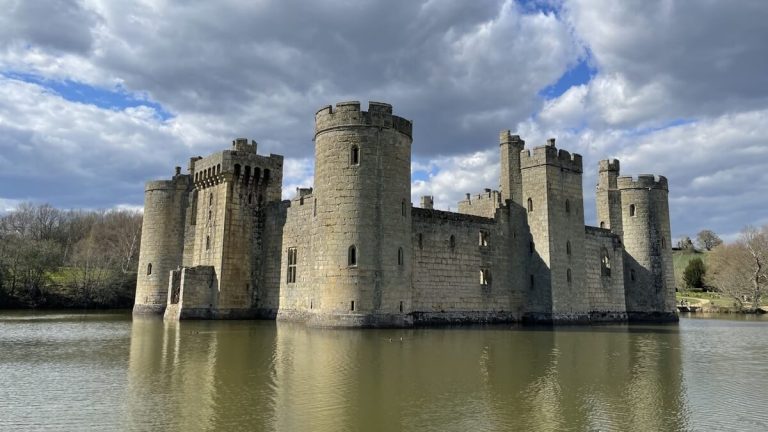
Bodiam’s moat, round towers and ruined courtyard make it a different castle experience from Pevensey or Lewes. It is a particularly useful choice for families interested in exploring a medieval fortress, with spiral stairs and battlements where access permits.
Plan two to three hours and check the National Trust calendar before travelling. Heritage trains can provide an arrival at Bodiam on Kent & East Sussex Railway operating days, but Bodiam is not a National Rail station and the two attractions need separate planning.
Address: Bodiam, near Robertsbridge, TN32 5UA. Admission and parking arrangements are listed separately on the property’s visitor page.
Rye
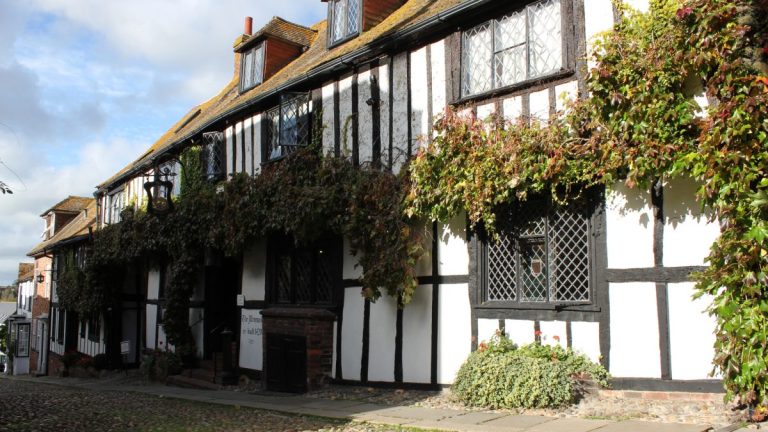
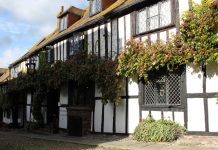
Rye works best at walking pace. Mermaid Street, Church Square, Watchbell Street and the Landgate give the town more to explore than its best-known cobbled photograph. Shops, inns and cafés make useful stops between the steeper lanes.
Ypres Tower adds a paid historical visit near St Mary’s Church. Cobbles, slopes and narrow stairs mean the town and tower have different access considerations; consult the attraction directly if those affect your plans.
Getting there: Rye railway station is close to the town centre. Allow half a day to a full day. Treat Rye Harbour and Camber as onward journeys, rather than assuming they are beside the station.
Rye Harbour Nature Reserve
Rye Harbour provides a contrast with the old town: shingle, wetlands, lagoons and open coastal views rather than cobbled lanes. Sussex Wildlife Trust manages the reserve, which is free to visit and has paths and birdwatching hides.
Start at Rye Harbour village for the Discovery Centre and the surfaced route towards the beach. The landscape is exposed, so bring suitable layers and follow the signed dog-control and wildlife-protection zones.
Arrival point: Rye Harbour village car park, TN31 7TX; the Discovery Centre is about ten minutes’ walk away. The reserve is open throughout the day, while the centre and car park have seasonal closing times. Allow two hours to half a day.
Camber Sands
Camber Sands provides something much of the Sussex coast conspicuously lacks: a large sandy beach backed by dunes.
East of Rye and close to the Kent border, the beach stretches for miles and can feel dramatically different depending on tide, weather and season.
For families, the sand is the obvious attraction. For walkers and photographers, the dunes and enormous low-tide landscape provide a completely different experience from the chalk cliffs farther west.
Its popularity creates practical problems on hot summer days. Roads and car parks can become extremely busy, while the beach’s size and tidal conditions mean visitors need to pay attention to local safety information rather than treating it like a small sheltered resort beach.
Beach safety
Check the tide and current safety advice
Camber’s wide sands can make the sea appear deceptively distant at low tide, while currents and changing conditions need to be taken seriously. Follow lifeguard information and local safety signs, particularly when visiting with children.
Rye and Camber work naturally as a combined trip, although on a warm summer day there is enough at the beach to justify making it the main destination rather than squeezing it between sightseeing stops.
Best for: Sandy beach days, families and photography.
Allow: Half a day to a full day.
Cost: No attraction admission; parking and transport cost extra.
Without a car: Good when bus services between Rye and Camber suit your journey.
Alfriston
Alfriston is one of the villages that makes the South Downs feel inhabited rather than simply walked through.
The village sits beside the River Cuckmere and has a compact historic centre of old houses, pubs, shops and cafés. Its location makes it a natural stopping point for walkers as well as a destination in its own right.
The Alfriston Clergy House is particularly significant as the first property acquired by the National Trust, in 1896. The medieval Wealden hall house and its garden provide a small-scale contrast with the grand estates elsewhere in Sussex.
Nearby St Andrew’s Church is sometimes known as the Cathedral of the South Downs because of its size and prominent position beside the village green and river.
Alfriston also works well as a base for exploring the Cuckmere Valley, Long Man of Wilmington and surrounding Downs.
Best for: Villages, walking, pubs and historic buildings.
Allow: Two to three hours, or longer as part of a walk.
Cost: The village is free to explore; individual attractions may charge.
Without a car: Possible by bus, but check the current timetable carefully.
The Long Man of Wilmington
High on the Downs above Wilmington is one of Sussex’s most recognisable archaeological mysteries.
The Long Man of Wilmington is a large human figure marked out on the chalk slope of Windover Hill. It is easily seen from below and has inspired centuries of speculation about its age and meaning.
Despite claims sometimes attaching the figure to prehistoric or ancient cultures, its precise origins remain uncertain. The visible outline has also been altered and maintained over time, so the Long Man is a good example of why Sussex folklore and archaeological evidence do not always tell the same story.
The figure can be appreciated from the valley without climbing directly to it, while surrounding footpaths provide access to the Downs for those wanting a longer walk.
Best for: Walking, archaeology, folklore and photography.
Allow: One to three hours depending on the walk.
Cost: Free.
Without a car: Possible but requires route planning.
Best East Sussex places to visit without a car
East Sussex is unusually good for car-free days out because many of its strongest destinations sit on railway lines or established bus routes.
| Destination | Car-free verdict | How it works |
|---|---|---|
| Lewes | Excellent | Railway station in the town centre |
| Hastings | Excellent | Station within walking distance of the seafront and Old Town |
| Battle | Excellent | Station within walking distance of Battle Abbey |
| Rye | Excellent | Compact historic centre close to the station |
| Eastbourne | Excellent | Rail connections plus buses towards the South Downs |
| Seven Sisters | Very good | Coastal buses connect Brighton, Seaford and Eastbourne |
| Pevensey Castle | Good | Walkable from Pevensey & Westham station |
| Camber Sands | Good | Travel to Rye and continue by bus when services suit |
| Bluebell Railway | Excellent from the north | Heritage station beside East Grinstead National Rail station |
The South Downs require more thought. A bus may get you to a trailhead or village, but walkers need to check the final return service before setting off, particularly on Sundays or outside the summer season.
Best free things to do in East Sussex
Some of East Sussex’s defining attractions cost nothing to enter.
Seven Sisters, Beachy Head, Ditchling Beacon, the Long Man of Wilmington and the wider South Downs can all be explored on foot without an admission charge.
Rye Harbour Nature Reserve is another substantial free day out, while the historic centres of Lewes, Rye and Hastings can be explored without buying a museum or attraction ticket.
Beaches provide the most obvious free option. Eastbourne, Hastings, Seaford and Camber all offer very different versions of the Sussex coast.
Free does not necessarily mean cost-free, of course. Parking, public transport, food and optional attractions still need to be included in the day’s budget.
Best East Sussex attractions for families
Families have a particularly broad choice because East Sussex mixes conventional attractions with beaches, castles, trains and outdoor spaces.
Bluebell Railway is an obvious choice for train-loving children, while Bodiam Castle provides towers, a moat and ruins that are easier to engage with than a formal historic-house tour.
The Observatory Science Centre at Herstmonceux offers a more hands-on indoor option, and Battle Abbey works especially well with children learning about 1066 at school.
For a cheaper day, Camber Sands, Rye Harbour and the South Downs replace admission tickets with space to explore.
Family shortlist
Five easy East Sussex choices
Steam trains: Bluebell Railway. Castle: Bodiam. History: Battle Abbey. Science: Observatory Science Centre. Beach: Camber Sands.
What can you do in East Sussex when it rains?
A wet day changes the shortlist considerably, particularly if strong winds are also affecting the coast.
The Observatory Science Centre provides one of the strongest wet-weather options, with hands-on science exhibits inside the former Royal Greenwich Observatory buildings at Herstmonceux.
Battle Abbey can still work in mixed weather because the visitor centre and exhibitions provide shelter, although the battlefield itself is an outdoor experience. The same applies to Bodiam Castle, where poor weather makes the exposed ruins and grounds considerably less appealing.
Lewes is particularly useful because attractions, shops, cafés and pubs are concentrated within a walkable town centre. Lewes Castle and Anne of Cleves House can be combined with lunch and independent shopping without building the entire day around the weather.
Hastings also has indoor alternatives around the Old Town and seafront, while Rye is compact enough to move between historic buildings, shops, cafés and pubs when showers come and go.
Heavy rain accompanied by strong winds is a different matter. Seven Sisters, Beachy Head, Birling Gap, Ditchling Beacon and other exposed South Downs locations are not sensible places to force into an itinerary when conditions are poor.
Where should you stay in East Sussex?
The best base depends on which part of the county you actually want to explore.
| Base | Best for | Easy nearby trips |
|---|---|---|
| Eastbourne | Coast and South Downs | Beachy Head, Birling Gap, Seven Sisters and Pevensey |
| Lewes | Central East Sussex, history and walking | Charleston, Ditchling, South Downs and Sheffield Park |
| Hastings | Seaside, 1066 Country and families | Battle, Bexhill, Rye and eastern Sussex |
| Rye | Historic weekends and the eastern coast | Rye Harbour, Camber Sands, Hastings and Bodiam |
Eastbourne is probably the strongest base for walkers because the South Downs begin immediately beside the town. Hastings works better for visitors who want a livelier historic seaside base with Battle and Rye nearby.
Rye suits a slower weekend built around food, historic streets and the coast, while Lewes provides particularly good rail connections and easy access to the central Downs.
How many days do you need in East Sussex?
You can have an excellent East Sussex day out, but seeing the county properly takes longer.
For a weekend, choose one geographical area rather than repeatedly crossing the county. Eastbourne and the Seven Sisters make a natural combination, as do Hastings, Battle and Rye.
With three or four days, it becomes realistic to combine the coast with Lewes, the South Downs and one or two inland attractions.
| Time available | A sensible approach |
|---|---|
| One day | Choose one town, one major attraction or one section of the South Downs. |
| Weekend | Base yourself in Eastbourne, Hastings, Rye or Lewes and explore nearby. |
| Three to four days | Combine the Seven Sisters or another coastal area with 1066 Country, Rye or the central Downs. |
| A week | Move between two bases rather than driving backwards and forwards across East Sussex every day. |
More ways to explore Sussex
- Days out across Sussex to compare East Sussex with other areas.
- Sussex heritage sites for more detail on castles, houses and gardens.
Frequently asked questions
What are the best places to visit in East Sussex?
Seven Sisters, Eastbourne and Beachy Head, Hastings, Battle Abbey, Rye, Rye Harbour, Bodiam Castle and Lewes are among the strongest first choices. Charleston, Ditchling Beacon, Sheffield Park, Pevensey Castle, Camber Sands and Alfriston are good additions for a longer stay.
What is the most beautiful place in East Sussex?
The Seven Sisters and Cuckmere Haven provide the landscape most strongly associated with the county. For historic streets rather than countryside, Rye is one of the strongest alternatives.
What are the best seaside towns in East Sussex?
Eastbourne and Hastings offer the fullest traditional seaside experiences but have very different characters. Eastbourne provides a broad promenade and immediate access to the South Downs, while Hastings combines its beach with the Old Town, fishing heritage and funicular railways. Rye is historic rather than a conventional seaside resort, with Camber Sands and Rye Harbour nearby.
Where can I see the Seven Sisters?
For the classic view across Cuckmere Haven towards the cliffs, approach Seaford Head from the Seaford side. Seven Sisters Country Park at Exceat provides access to the Cuckmere Valley, while Birling Gap is a useful starting point farther east.
Can you visit East Sussex without a car?
Yes. Lewes, Eastbourne, Hastings, Battle and Rye are particularly easy by train. Coastal buses serve Seven Sisters and Birling Gap, while Pevensey Castle is walkable from Pevensey & Westham station. More rural attractions require additional planning.
Where was the Battle of Hastings actually fought?
The Battle of Hastings was fought at Battle on 14 October 1066, several miles inland from modern Hastings. Battle Abbey was subsequently established on the battlefield.
What are the best free things to do in East Sussex?
Seven Sisters, Beachy Head, Ditchling Beacon, the Long Man of Wilmington, Rye Harbour Nature Reserve and the wider South Downs can all be explored without an attraction admission charge. The historic centres of Lewes, Rye and Hastings are also free to wander.
Where is the best sandy beach in East Sussex?
Camber Sands near Rye is the county’s standout choice for a large sandy beach. Much of the rest of the East Sussex coast is predominantly shingle or chalk.
Planning an East Sussex day out
The most useful rule is geographical: do not try to see everything simply because it is all in East Sussex.
Seven Sisters, Eastbourne and Birling Gap belong naturally together. Hastings and Battle form another obvious pairing. Rye, Rye Harbour and Camber Sands can fill a separate day, while Lewes makes a strong base for Charleston, Ditchling and the central Downs.
That approach leaves more time for the places themselves and less time sitting in traffic on the A27 or A259.
Before setting out
Four things to check
Weather: cliff tops and Downs can be much more exposed than the towns. Transport: check your return bus or train as well as the outward journey. Opening: heritage attractions can have seasonal days and hours. Parking: Seven Sisters, Camber and other popular destinations can become extremely busy on sunny weekends.
More Sussex days out
For a detailed coastal plan, read our Seven Sisters visitor guide. Our Sussex events and days-out hub has more seasonal ideas.
Guide edited on 24 October 2026. Seasonal opening, access alerts and selected visitor arrangements checked against the linked official pages. Confirm the live opening calendar, transport and admission terms before travelling; suggested visit lengths are editorial estimates.
You May Also Be Interested In