




















From the Seven Sisters and Brighton seafront to Rye, Arundel Castle, Chichester and the South Downs, Sussex packs an extraordinary variety of places into one corner of southern England. Here are 25 of the best places to start.
Sussex is difficult to reduce to a single kind of day out. The county has chalk cliffs and sandy beaches, medieval castles and Roman remains, seaside cities, historic towns, steam railways, country estates, vineyards and some of the finest walking country in southern England.
It is also larger than it can appear on a map. Rye and Chichester both belong in a guide to Sussex, but trying to visit them on the same sightseeing day would mean spending far too much of it travelling.
This guide is organised geographically into Brighton & Hove, East Sussex, central Sussex and West Sussex. It is designed as a starting point rather than an encyclopaedia: choose the part of Sussex that appeals, then follow our more detailed regional and destination guides for the practical information.
Choosing where to go
What kind of Sussex day out do you want?
Coast: Seven Sisters or West Wittering. History: Battle, Bodiam or Fishbourne. Families: Brighton, Bluebell Railway or Weald & Downland. Gardens: Wakehurst, Nymans or Sheffield Park. Historic towns: Rye, Lewes, Arundel or Chichester. Walking: the South Downs.
Find the places on a map
Use this map to plan your visit. Select a pin for the location and open the map for directions. Check the visitor information in this guide before travelling.
Sussex places to visit at a glance
| If you want… | Try… |
|---|---|
| The classic Sussex landscape | Seven Sisters and Cuckmere Haven |
| A first weekend in Sussex | Brighton & Hove |
| A historic town | Rye, Lewes, Arundel or Chichester |
| 1066 history | Battle and Hastings |
| A castle | Bodiam or Arundel |
| A sandy beach | West Wittering |
| A family day out | Bluebell Railway or Weald & Downland Living Museum |
| A major garden | Wakehurst, Nymans or Sheffield Park |
| A car-free trip | Brighton, Lewes, Hastings, Battle, Rye, Arundel or Chichester |
| A free day out | South Downs, Seven Sisters, Rye Harbour or Sussex beaches |
Best places to visit in Brighton & Hove
Brighton & Hove is the obvious introduction to Sussex for visitors arriving by train. The city combines the county’s biggest concentration of attractions with a beach, historic architecture, independent shopping, food, nightlife and excellent public transport.
Royal Pavilion
The Royal Pavilion is the building that could only really belong to Brighton. George IV’s former seaside palace combines an Indian-inspired exterior with extraordinarily theatrical Regency interiors filled with dragons, chandeliers, rich colours and Chinoiserie.
The Banqueting Room, Great Kitchen and Music Room are the highlights, while the Pavilion’s later use as a First World War military hospital gives the building a much more complicated history than its pleasure-palace reputation suggests.
Best for: Architecture and history · Allow: Around 90 minutes · Car-free: Excellent
Beside the Royal Pavilion, Brighton Museum provides the useful rainy-day counterpart to the beach.
Its collections cover Brighton history, archaeology, art, fashion and design, while changing exhibitions give repeat visitors a reason to return. It is also home to the Brighton & Hove Albion: Stand or Fall gallery exploring the football club’s history.
Our Royal Pavilion visitor guide explains what to see inside and how to plan the visit.
The Lanes and North Laine
Brighton’s two best-known independent shopping areas are often confused, but they have quite different characters.
The Lanes occupy the historic Old Town between North Street and the seafront, with narrow twittens, jewellery shops, restaurants and centuries of pub history. North Laine, north of North Street towards the station, is known for independent shops, vintage clothing, records, cafés and colourful street life.
Together they provide one of the best free ways to spend several hours in central Brighton.
Best for: Shopping, food and wandering · Allow: Two to four hours · Car-free: Excellent
Brighton seafront and Palace Pier
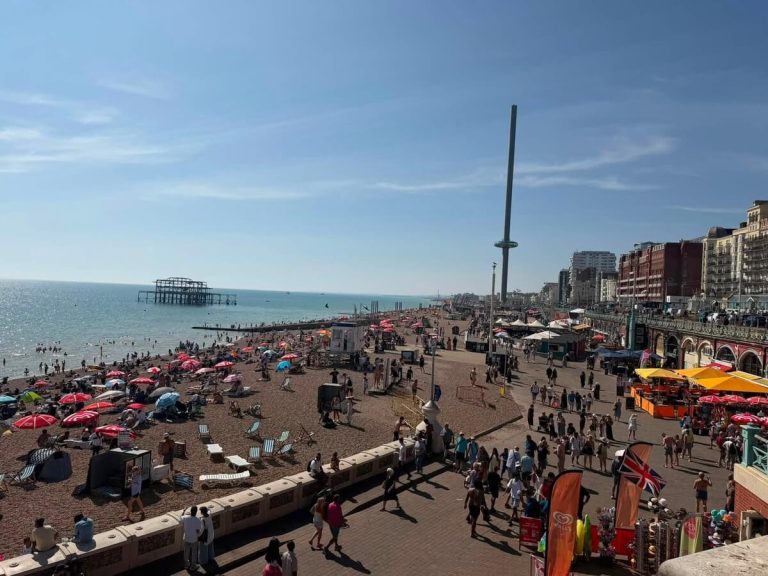
Brighton seafront can be touristy, occasionally ridiculous and very busy on a sunny Saturday. It is also a large part of why people keep coming back.
Brighton Palace Pier provides the traditional arcades and fairground rides, while the promenade links SEA LIFE, beach cafés, historic seafront architecture and attractions stretching west towards Hove.
You do not need to buy a wristband or attraction ticket to enjoy it. Walking the promenade, sitting on the beach and watching Brighton happen can fill a substantial part of a day.
Best for: First visits and families · Allow: Half a day · Car-free: Excellent
Hove seafront and Hove Lagoon
Walk west and Brighton gradually gives way to a different kind of seafront.
Hove Lawns, beach huts and the promenade offer more space than the busiest central Brighton beach, while Hove Lagoon and the surrounding Beach Park have become a major family and wheeled-sports destination.
It is a good choice when you want the coast without spending the whole day among the Palace Pier crowds.
Best for: Families, cycling and a quieter seafront · Allow: Two to four hours · Car-free: Very good
Explore further
More ways to explore Brighton & Hove
These are starting points. The city also has SEA LIFE, Hove Museum, parks, theatres and live venues. Volk’s Electric Railway is seasonal, while Preston Manor has specific opening days and a current lift warning. Use the railway timetable and manor access page when planning.
Best places to visit in East Sussex
East Sussex has the county’s most dramatic coastline and much of its best-known history. The Seven Sisters, 1066 battlefield, Hastings, Rye and Lewes can all justify a trip in their own right.
Seven Sisters and Cuckmere Haven
If one landscape has to represent Sussex, this is probably it.
The rolling white chalk cliffs of the Seven Sisters rise between Cuckmere Haven and Birling Gap within the South Downs National Park. The famous postcard view is from the Seaford Head side of the Cuckmere, looking across the coastguard cottages towards the cliffs.
Visitors can choose between a relatively gentle walk through the Cuckmere Valley and a much more demanding cliff-top route towards Birling Gap, Beachy Head and Eastbourne.
Best for: Walking and photography · Allow: Half a day or more · Car-free: Very good
Cliff safety
The white cliffs are unstable
Keep well back from the cliff edge and away from the base of the cliffs. Do not attempt to cross the River Cuckmere at its mouth to reach the famous viewpoint. Approach Seaford Head from the Seaford side instead.
Eastbourne and Beachy Head
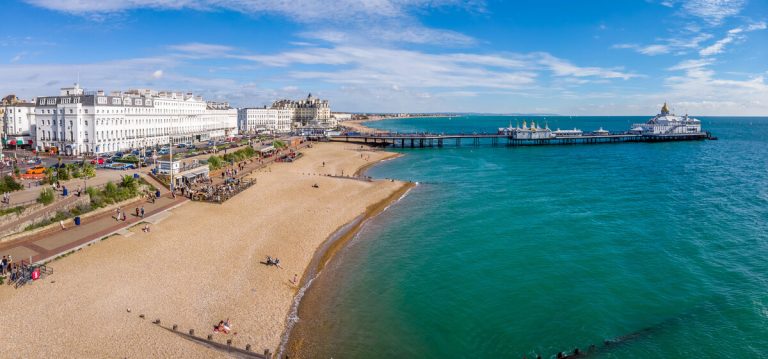
Eastbourne combines a traditional seaside resort with immediate access to some of the highest chalk sea cliffs in Britain.
The town has a long promenade, pier, beaches and cultural venues, while Beachy Head and the eastern end of the South Downs sit immediately beyond it. That makes Eastbourne particularly useful for visitors who want both a conventional seaside base and serious coastal walking.
Best for: Seaside breaks and walking · Allow: A full day or weekend · Car-free: Excellent for the town; buses serve the Downs
Hastings
Hastings is much more interesting than simply being the town associated with a battle that happened several miles away.
The Old Town has narrow streets, historic pubs and independent businesses, while the Stade retains the tall black net huts associated with the fishing fleet. The hill lifts add another distinctly Hastings experience when operating, and the seafront stretches west towards St Leonards.
Best for: Seaside history, families and Old Town wandering · Allow: A full day · Car-free: Excellent
Battle Abbey and the 1066 battlefield
If you want to stand where the Battle of Hastings actually happened, go to Battle rather than Hastings.
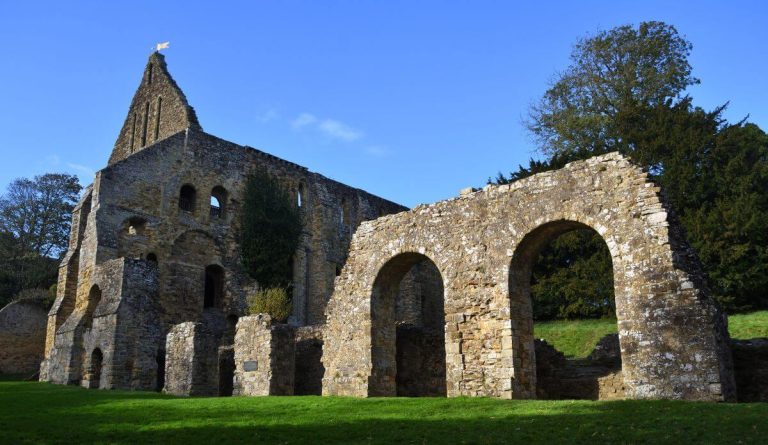
Battle Abbey occupies the landscape where William of Normandy defeated Harold II on 14 October 1066. The battlefield walk explains how the fighting unfolded, while the abbey ruins and great medieval gatehouse dominate the small town that subsequently grew around the site.
Battle station is within walking distance, making this one of Sussex’s easiest major historic attractions to visit by rail.
Best for: 1066 and medieval history · Allow: Half a day · Car-free: Excellent
Rye
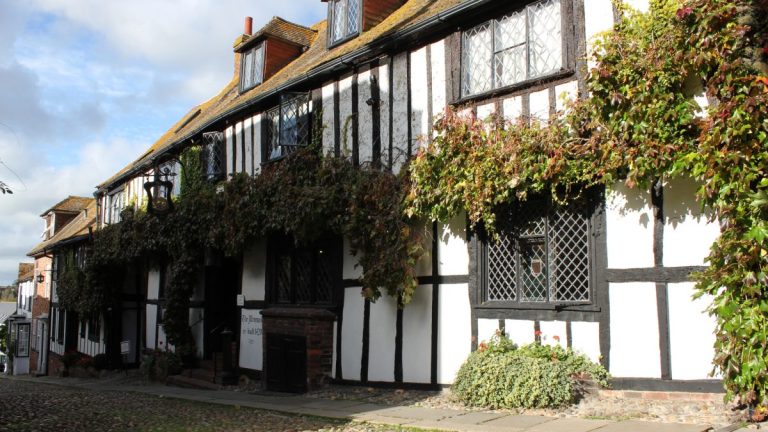
Rye is one of the best Sussex destinations when simply wandering around is enough of an itinerary.
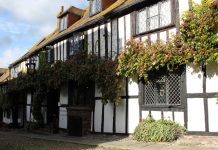
Mermaid Street provides the famous cobbled photograph, but the historic town deserves more exploration than that. Church Square, Watchbell Street, the Landgate, Ypres Tower, old inns and independent shops all sit within walking distance of the railway station.
Rye also makes a useful base for the wildlife at Rye Harbour and the sandy beach at Camber.
Best for: Historic streets, photography and weekends away · Allow: Half a day to a full day · Car-free: Excellent
Rye Harbour Nature Reserve
A few miles from Rye’s cobbles is an altogether wilder landscape of shingle, saltmarsh, lagoons, wetlands and coastal habitat.
Rye Harbour Nature Reserve is excellent for birdwatching but works equally well as a free coastal walk. Paths and hides allow visitors to explore at their own pace, while the Discovery Centre provides an accessible starting point.
Best for: Wildlife and walking · Allow: Two hours to half a day · Cost: Free
Bodiam Castle
Bodiam is the Sussex castle that looks most like a child’s drawing of a castle brought to life.
The 14th-century fortress rises directly from its moat, with round towers, battlements and a gatehouse surrounding a ruined interior. Spiral staircases and elevated areas add to the experience where access allows.
There is also a particularly good way to arrive on operating days: the Kent & East Sussex Railway runs heritage trains to Bodiam.
Best for: Families, castles and photography · Allow: Two to three hours · Car-free: Possible with planning
Lewes
Lewes squeezes a remarkable amount of Sussex into one walkable town: a Norman castle, medieval streets, independent shops, historic pubs, Harvey’s Brewery and the South Downs rising around it.
Lewes Castle and Anne of Cleves House provide the principal ticketed attractions, but much of the pleasure comes from walking around Cliffe, Southover and the steep streets surrounding the castle.
Best for: History, food and independent shopping · Allow: Half a day to a full day · Car-free: Excellent
Charleston
Charleston near Firle became the country home of artists Vanessa Bell and Duncan Grant and a meeting place for figures associated with the Bloomsbury group.
The art extends across the house itself, with painted furniture, walls and decorative surfaces alongside paintings, ceramics and textiles. Gardens, galleries and exhibitions make this a much broader visit than a conventional historic-house tour.
Best for: Art, Bloomsbury history and gardens · Allow: Two to three hours
Ditchling Beacon and the South Downs
You could fill an entire guide with places along the South Downs National Park, which stretches across East and West Sussex.
Ditchling Beacon is one of the most accessible introductions to its high chalk landscape. The South Downs Way crosses the hill, with broad views towards the Weald and coast and longer walking routes in either direction.
For visitors staying in Brighton, nearby Devil’s Dyke provides another particularly easy route into the Downs.
Best for: Walking and views · Allow: From an hour to a full day · Cost: Free
Central Sussex: railway and gardens
The Bluebell Railway crosses between East and West Sussex, while Wakehurst, Nymans and Sheffield Park offer three different garden landscapes. Choose one main visit rather than trying to cover them all in a day.
Bluebell Railway
The Bluebell Railway is one of Britain’s pioneering heritage railways and one of Sussex’s strongest family days out.
Steam trains run through the Sussex countryside between Sheffield Park and East Grinstead, with historic stations at Horsted Keynes and Kingscote. The railway’s locomotives, period carriages, stations and museum make the journey itself the attraction.
It is also unusually practical without a car. The Bluebell’s East Grinstead station is beside the National Rail station, allowing visitors to transfer directly from mainline trains.
Best for: Families and steam trains · Allow: Half a day to a full day · Car-free: Excellent from East Grinstead
Wakehurst
Wakehurst near Ardingly is Kew’s wild botanic garden, combining ornamental planting with woodland, meadows, wetlands and a much larger landscape than a conventional formal garden.
It is also home to the Millennium Seed Bank, giving the site an international conservation role alongside its appeal as a Sussex day out. Families can comfortably spend several hours exploring, while the changing planting and woodland make repeat visits worthwhile.
Best for: Gardens, conservation and families · Allow: Half a day to a full day · Car-free: Possible, but check current connections
Nymans
Nymans combines one of Sussex’s best-known gardens with the romantic ruins of a country house badly damaged by fire in 1947.
The Messel family developed the garden using plants collected from around the world, and its magnolias, camellias, rhododendrons and autumn colour make different seasons feel like quite different visits. Woodland walks extend beyond the formal garden.
Best for: Gardens, photography and woodland walks · Allow: Three to four hours · Car-free: Possible by bus
Sheffield Park and Garden
Sheffield Park is built around a series of lakes, mature trees and carefully composed views, creating one of Sussex’s most recognisable garden landscapes.
It is particularly famous for autumn colour, although spring blossom and summer planting make it far more than a one-season destination. The wider estate also provides longer walking routes beyond the formal garden.
Best for: Gardens, autumn colour and photography · Allow: Two to four hours · Car-free: Requires planning
Best places to visit in West Sussex
Arundel and Chichester provide useful bases for castles, Roman history, country estates and the western coast.
Arundel
Seasonal opening: the castle’s published 2026 visitor season ends on 1 November. Check the official opening calendar before planning a winter visit.
Few Sussex towns have a more dramatic skyline than Arundel. The castle rises above the historic centre while Arundel Cathedral provides a second major landmark on the opposite side of town.
Arundel Castle has Norman origins but was substantially rebuilt and restored over later centuries. Today visitors can explore defensive structures, state rooms, art, gardens and extensive grounds. The town below adds independent shops, cafés, pubs and walks beside the River Arun.
Best for: Castles, architecture and historic towns · Allow: A full day · Car-free: Very good
Chichester
Chichester provides Sussex with a compact cathedral city built around a street plan whose origins stretch back to the Roman period.
Chichester Cathedral, the Chichester Cross, Pallant House Gallery and Chichester Festival Theatre give the centre an unusually strong concentration of history and culture. It also makes a practical base for Fishbourne, Goodwood, the South Downs and the coast.
Best for: Culture, architecture and history · Allow: Half a day to a full day · Car-free: Excellent
Fishbourne Roman Palace
Just outside Chichester, Fishbourne preserves the remains of one of the most important Roman sites in Britain.
The enormous first-century residence is particularly famous for its surviving mosaic floors, which visitors view from raised walkways. Reconstructed gardens and exposed foundations help convey the scale of a palace built only decades after the Roman conquest.
Best for: Roman history, archaeology and families · Allow: Two to three hours · Car-free: Good
Weald & Downland Living Museum
The open-air museum at Singleton has rescued and reconstructed historic buildings from across south-east England, creating a landscape of homes, barns, workshops and working structures spanning centuries.
Visitors can walk through the buildings rather than simply looking at them behind glass, making this one of Sussex’s strongest introductions to everyday social and architectural history. It is also familiar as the filming location for BBC programme The Repair Shop.
Best for: Families, architecture and social history · Allow: Half a day to a full day · Car-free: Possible with planning
Petworth House and Park
Petworth combines a major art collection with a grand country house and extensive parkland shaped by Capability Brown.
The National Trust property has important works associated with artists including J.M.W. Turner, who was a regular visitor, while the surrounding deer park provides an entirely different reason to visit. Petworth town itself is worth adding for its independent shops and antiques.
Best for: Art, country houses and walking · Allow: Half a day · Car-free: Possible, but easier by car
West Wittering Beach
West Wittering is the Sussex beach to choose if sand is non-negotiable.
The broad beach sits at the entrance to Chichester Harbour, with extensive sand at lower tide and views towards the Isle of Wight. Nearby East Head adds dunes, saltmarsh and coastal walking to what could otherwise be a straightforward beach day.
Its popularity means parking and approach roads can become extremely busy in warm weather, so check the current parking arrangements before travelling.
Best for: Sandy beach days and families · Allow: Half a day to a full day · Car-free: Possible, but requires planning
Goodwood
Goodwood is really several Sussex destinations occupying the same estate.
Motorsport fans know it for the Festival of Speed and Goodwood Revival, while Goodwood Racecourse hosts major horse-racing meetings high on the South Downs. Goodwood House, aviation, golf and other estate activities broaden the appeal further.
This is one place where checking the calendar before travelling is essential: a normal estate day and a major Festival of Speed or Revival weekend are completely different experiences.
Best for: Motorsport, racing and major events · Allow: Usually a full day · Cost: Varies by event
One experience that crosses Sussex: the South Downs
The South Downs National Park does not fit neatly into East or West Sussex, which is part of its appeal.
The chalk landscape runs across the county from the Seven Sisters and Beachy Head through Lewes, Ditchling, Devil’s Dyke and onwards towards Amberley, Arundel and the Hampshire border.
You do not need to walk the entire South Downs Way to experience it. A short visit to Ditchling Beacon or Devil’s Dyke can provide huge views within an hour, while experienced walkers can build full days around the ridge, villages and valleys.
Best for: Walking, cycling, views and free days out · Allow: Anything from an hour to several days · Cost: Free to explore
Where should you go for your first Sussex trip?
For a first visit without a car, Brighton is probably the easiest base. The city has enough attractions for a weekend in its own right, while trains and buses make Lewes, Seven Sisters and parts of the South Downs straightforward additions.
For history, base yourself farther east around Hastings or Rye and combine the coast with Battle and Bodiam.
In West Sussex, Arundel or Chichester make strong bases. Arundel puts the castle, Arun Valley and South Downs close at hand, while Chichester works particularly well for Fishbourne, Goodwood, West Wittering and the Weald & Downland Living Museum.
| Base | Good nearby choices |
|---|---|
| Brighton | Royal Pavilion, seafront, Lewes, Seven Sisters, Devil’s Dyke |
| Eastbourne | Beachy Head, Seven Sisters, Birling Gap, South Downs |
| Hastings / Rye | Battle, Rye Harbour, Bodiam and 1066 Country |
| Arundel | Castle, Arun Valley, South Downs and West Sussex coast |
| Chichester | Fishbourne, Goodwood, West Wittering and Weald & Downland |
Best places to visit in Sussex without a car
Sussex is unusually good for car-free sightseeing if you choose destinations around the rail and bus network.
Brighton, Lewes, Eastbourne, Hastings, Battle, Rye, Arundel and Chichester all have railway stations within reasonable walking distance of their main centres or attractions.
The coastal bus network makes Seven Sisters accessible from Brighton, Seaford and Eastbourne, while the Bluebell Railway connects directly with National Rail at East Grinstead.
Rural estates, vineyards and some gardens require more planning. Always check the return journey as well as the outward one, particularly on Sundays and outside summer.
What are the best free places to visit in Sussex?
Some of Sussex’s defining experiences do not have an entrance gate.
Seven Sisters, Devil’s Dyke, Ditchling Beacon and the wider South Downs can all be explored without an admission charge, although parking or public transport may still cost money.
Rye Harbour Nature Reserve is free, while the historic streets of Rye, Lewes, Hastings, Arundel and Chichester can occupy several hours without buying an attraction ticket.
And, of course, much of the Sussex coast costs nothing to enjoy. Brighton and Hove, Eastbourne and West Wittering can all be approached as simple beach days rather than collections of paid attractions.
Choose an area to explore
- Brighton and Hove in more detail for city attractions and the nearby South Downs.
- East Sussex in more detail for coastal towns, castles and countryside.
- West Sussex in more detail for cathedral streets, beaches and gardens.
Frequently asked questions
What is the best place to visit in Sussex for the first time?
Brighton is the easiest all-round introduction because it combines the coast, Royal Pavilion, historic shopping areas, museums, food and nightlife with good public transport to Lewes, Seven Sisters and the South Downs.
What is the most beautiful place in Sussex?
That is subjective, but the Seven Sisters and Cuckmere Haven provide the landscape most strongly associated with Sussex. Rye, Arundel and the South Downs are other strong contenders depending on whether you prefer historic towns or countryside.
What are the best places to visit in East Sussex?
Seven Sisters, Eastbourne, Hastings, Battle, Rye, Rye Harbour, Bodiam, Lewes, Charleston and the eastern South Downs are among the strongest starting points.
What are the best places to visit in West Sussex?
Arundel, Chichester, Fishbourne Roman Palace, West Wittering, Goodwood, Petworth, Wakehurst, Nymans, the Bluebell Railway and Weald & Downland Living Museum are among the county’s major destinations.
Can you explore Sussex without a car?
Yes. Brighton, Lewes, Eastbourne, Hastings, Battle, Rye, Arundel and Chichester are particularly straightforward by train. Seven Sisters has useful bus connections, while some rural attractions require more planning.
How many days do you need for Sussex?
A weekend is enough to explore one part of Sussex properly. For a broader first trip, three to five days allows time to combine Brighton or another town with the coast, South Downs and one or two historic attractions without spending the whole visit travelling.
Is East Sussex or West Sussex better?
East Sussex is particularly strong for dramatic coastline, 1066 history, Lewes, Hastings and Rye. Brighton & Hove is a separate local-authority area between the two counties. West Sussex has Arundel, Chichester, major country estates and gardens, Goodwood and the sandy beach at West Wittering. A longer Sussex trip benefits from seeing both.
Planning your Sussex visit
The simplest way to enjoy Sussex is to resist the temptation to cross it repeatedly.
Choose Brighton or Eastbourne for the central and eastern coast, Hastings or Rye for the far east, and Arundel or Chichester for western Sussex. Then build days around places within the same area.
Opening days and transport deserve checking before rural trips. Heritage railways, historic houses, gardens and seasonal attractions may operate reduced hours outside peak months, while countryside buses can be infrequent.
Before setting out
Four things worth checking
Opening: seasonal attractions may not operate every day. Transport: check the return journey as well as the outward one. Weather: the Downs and cliffs can be much more exposed than the towns. Parking: popular beaches and countryside sites can fill quickly on sunny weekends.
For the coast and South Downs, conditions matter as much as opening hours. A calm morning in Brighton can become windy or misty on exposed high ground, while cliff paths need considerably more care after heavy rain or in poor visibility.
The same principle applies to popular summer destinations. West Wittering, Seven Sisters and other well-known beauty spots can become extremely busy on warm weekends and bank holidays, so an early start or public transport can make the day considerably easier.
Most importantly, do not try to turn Sussex into a checklist. A day spent properly exploring Rye, Lewes or Arundel will usually be more rewarding than driving between four places simply to say you have seen them.
Explore more of Sussex
Use our Seven Sisters visitor guide for coastal routes and our Brighton and Hove family guide for children’s days out. The Chichester guide covers a walkable city day.
Guide edited on 24 October 2026. Seasonal opening, access alerts and selected visitor arrangements checked against the linked official pages. Confirm the live opening calendar, transport and admission terms before travelling; suggested visit lengths are editorial estimates.
You May Also Be Interested In