


















Brighton & Hove combines one of Britain’s best-known seaside cities with the South Downs immediately behind it. From the Royal Pavilion, The Lanes and Palace Pier to Hove seafront, Devil’s Dyke and Ditchling Beacon, here are some of the best places to visit in and around the city.
Brighton is often treated as a beach destination, but that only explains part of its appeal.
Within a relatively compact area you can explore George IV’s extraordinary Royal Pavilion, walk through the historic Lanes and independent North Laine, visit museums and galleries, ride the world’s oldest operating electric railway and spend the evening in one of the largest concentrations of restaurants, pubs, theatres and live venues on the Sussex coast.
Hove changes the pace. Its lawns, beach huts, parks, museum and Lagoon provide a less hectic alternative to the busiest parts of central Brighton.
Then, immediately behind the city, the landscape changes again. The South Downs National Park rises north of Brighton & Hove, putting Devil’s Dyke, Ditchling Beacon and miles of chalk downland within reach of the seafront.
This guide focuses on Brighton & Hove and the nearby South Downs. For destinations farther east and west, including Seven Sisters, Rye, Arundel and Chichester, see our Sussex days-out and events hub.
What kind of day do you want?
First visit: Royal Pavilion, The Lanes and seafront. Families: SEA LIFE, Palace Pier and Volk’s Railway. Shopping: North Laine and The Lanes. Free day: beach, Pavilion Garden and parks. Walking: Devil’s Dyke or Ditchling Beacon. Quieter coast: Hove seafront and Lagoon.
Find the places on a map
Use this map to plan your visit. Select a pin for the location and open the map for directions. Check the visitor information in this guide before travelling.
Brighton & Hove attractions at a glance
| Place | Best for | Cost |
|---|---|---|
| Royal Pavilion | Architecture, history and first-time visitors | Paid |
| The Lanes | Historic streets, jewellery, pubs and restaurants | Free to explore |
| North Laine | Independent shops, vintage, cafés and street life | Free to explore |
| Brighton Palace Pier | Classic seaside entertainment and families | Seasonal entry fee; rides charged separately |
| SEA LIFE Brighton | Families and rainy days | Paid |
| Brighton Museum | Art, local history and rainy days | Paid |
| Volk’s Electric Railway | Families, railway history and the eastern seafront | Paid |
| Hove Museum of Creativity | Families, toys and local history | Free |
| Hove seafront and Lagoon | Families, cycling and a quieter coastal day | Much is free |
| Devil’s Dyke | South Downs views and walking | Free |
| Ditchling Beacon | Walking and panoramic views | Free |
Royal Pavilion
If you visit one historic building in Brighton, make it the Royal Pavilion.
George IV’s former seaside palace looks extraordinary from Pavilion Garden, but the interiors are even more theatrical. Dragons, lotus-shaped lights, elaborate chandeliers and richly decorated state rooms sit beside one of the most technologically advanced kitchens of the Regency period.
The Pavilion was transformed by architect John Nash from 1815, creating the domes and minarets that now form one of Brighton’s defining silhouettes.
Its history extends far beyond George IV. Brighton bought the Pavilion from Queen Victoria in 1850, and during the First World War it became a military hospital, initially treating wounded and sick soldiers from the Indian Army.
The Banqueting Room, Music Room and Great Kitchen are the principal visual highlights, while the Indian Hospital Gallery adds essential context to the building’s later history.
Best for: History, architecture and first visits.
Allow: Around 90 minutes to two hours.
Cost: Paid admission; local resident rates are available for eligible Brighton & Hove residents.
Without a car: Excellent. It is in the heart of the city centre.
Check the exterior before planning the perfect Pavilion photograph
Scaffolding and conservation work can affect views of the Royal Pavilion. On our visit in late August 2026, scaffolding took some of the shine off the classic garden photographs, so check current works if exterior photography is an important part of your visit.
For room-by-room highlights, history and practical arrangements, read our Royal Pavilion visitor guide.
The Lanes
The Lanes are the historic heart of Brighton’s Old Town, immediately south of North Street and a short walk from the Royal Pavilion and seafront.
The narrow streets and twittens are now known for jewellery shops, independent businesses, cafés and restaurants, but their street pattern reaches back to the fishing settlement from which Brighton developed.
There is plenty of pub history here too. The Cricketers traces its drinking tradition to the 16th century, while Seven Stars on Ship Street has an important connection with the formation of Brighton & Hove Albion in 1901.
The best way to explore The Lanes is without much of a plan. Meeting House Lane, Brighton Place, Ship Street, East Street and the passages between them reward looking above shopfront level as much as browsing what is inside.
Best for: Historic streets, jewellery, food and pubs.
Allow: One to three hours.
Cost: Free to explore.
Without a car: Excellent.
North Laine
North Laine is not the same place as The Lanes.
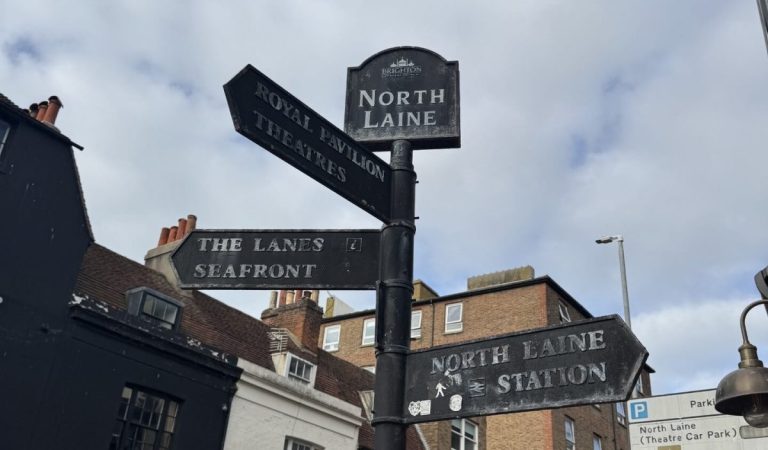
The district lies north of North Street towards Brighton Station and has developed a different identity around independent shops, vintage clothing, records, cafés, pubs and colourful street life.
Gardner Street, Kensington Gardens, Sydney Street and surrounding roads form the core of the area, although the neighbourhood is better explored by wandering than following one prescribed route.
North Laine is particularly useful at the beginning or end of a rail day trip because it sits between Brighton Station and the Royal Pavilion area.
Best for: Independent shopping, vintage, records and cafés.
Allow: One to three hours.
Cost: Free to explore, until the shopping starts.
Without a car: Excellent.
Brighton beach and seafront
Brighton’s beach is not sandy, peaceful or undiscovered. It is also one of the most enjoyable urban seafronts in Britain when you approach it for what it actually is.
The central shingle beach sits immediately below the city centre, with Palace Pier, SEA LIFE, bars, cafés, beach sports and entertainment concentrated along the promenade.
Walk west and the seafront changes repeatedly. The remains of the West Pier sit offshore, Hove Lawns open up beyond the busiest central section and the promenade continues for miles.
A beach day does not require paying for an attraction. Sitting by the sea, walking the promenade and watching the city go past can occupy several hours without buying anything beyond lunch or an ice cream.
The Channel still requires respect. Waves and currents can be powerful, and shingle can make getting in and out of the water harder than it looks.
Best for: First visits, people-watching and simple seaside days.
Allow: Anything from an hour to a full day.
Cost: Free.
Without a car: Excellent.
Brighton Palace Pier
You can make sophisticated arguments about Brighton’s architecture and cultural history, but sometimes you want dodgems, arcade machines and chips above the sea.
Brighton Palace Pier opened in 1899 and remains one of the city’s defining visitor attractions.
The pier combines amusement arcades, food and fairground rides ranging from traditional children’s attractions to larger thrill rides. You do not need to go on everything for the visit to work: simply walking along the pier provides views back towards Brighton and along the coast.
Ride availability can be affected by wind and weather, while admission and wristband arrangements can vary seasonally, so check current information before promising children a particular attraction.
Best for: Families, arcades and traditional seaside fun.
Allow: One to three hours.
Cost: The pier currently lists £1 seasonal admission, with exemptions including under-twos, Local Resident Card holders and pre-booked wristband holders. Rides cost extra. Check the entry rules for your date.
Without a car: Excellent.
SEA LIFE Brighton
SEA LIFE Brighton is one of the city’s most dependable family attractions when Sussex weather stops cooperating.
The aquarium’s history reaches back to 1872, making the building part of Brighton’s Victorian seaside heritage as well as a modern attraction.
Inside are sharks, rays, turtles, jellyfish and other marine life, with the large Ocean display forming the centrepiece. A separately bookable glass-bottom boat experience takes visitors over the main tank.
Its position opposite Palace Pier makes SEA LIFE particularly easy to combine with the seafront rather than building an entire day around one indoor attraction.
Best for: Families, younger children and rainy days.
Allow: Around 90 minutes to two hours.
Cost: Paid; advance prices vary by date.
Without a car: Excellent.
Brighton Museum & Art Gallery
Brighton Museum sits within the Royal Pavilion Estate and provides a useful indoor counterpart to the palace next door.
Its collections range across local history, archaeology, fashion, art and design, while temporary exhibitions mean the experience changes over time.
In 2026 there is an additional local reason to visit: Brighton & Hove Albion: Stand or Fall explores the history of the football club and its relationship with the city and supporters.
The museum works particularly well as part of a Pavilion-area day. If the weather changes, it is easy to move between the museum, Pavilion, North Laine, The Lanes and nearby cafés without crossing the city.
Best for: Local history, art, families and rainy days.
Allow: One to two hours.
Cost: Paid; eligible local residents receive reduced admission arrangements.
Without a car: Excellent.
Volk’s Electric Railway
Volk’s Electric Railway is both a Brighton attraction and a genuinely useful way to move along the eastern seafront.
Dating from 1883, it is the world’s oldest operating electric railway. Trains run seasonally between Aquarium station near Palace Pier and Black Rock towards Brighton Marina. The operator lists the 2026 season as 28 March to 30 September, so do not plan an autumn or winter visit around a train ride without a new operating announcement.
The short journey works particularly well with children, but the historical significance makes it more than a miniature seaside railway.
It can also save tired legs. A family can explore the central seafront, ride east and continue towards Madeira Drive, Black Rock or the Marina without walking the same stretch of promenade twice.
Best for: Families, railway history and seafront sightseeing.
Allow: Around an hour for a return journey, longer when using it as transport.
Cost: Paid.
Without a car: Excellent.
Brighton Marina and Black Rock
The eastern end of Brighton seafront has changed substantially in recent years and feels very different from the Palace Pier area.
Brighton Marina combines boats, restaurants, leisure businesses and waterfront walks, while Black Rock and Madeira Drive link it back towards central Brighton.
The Marina itself is more modern leisure development than historic Brighton, but it provides useful food and entertainment options and a destination at the end of a seafront walk or Volk’s Railway journey.
For walkers, the journey is part of the attraction. Madeira Drive, the historic seafront arches and changing views back towards Palace Pier make the route more interesting than simply arriving at the Marina by car.
Best for: Waterfront walks, food and combining with Volk’s Railway.
Allow: Two to three hours.
Cost: Free to explore; individual activities cost extra.
Without a car: Very good.
Hove seafront, Hove Lawns and the beach huts
For visitors who find central Brighton beach too busy, the simplest solution is often to keep walking west.
Hove Lawns provide broad green space between the city and sea, while the rows of colourful beach huts have become one of Hove’s defining images.
The promenade is useful for walking, with signed cycle routes alongside parts of the seafront; cyclists should follow the marked lanes, with cafés and places to stop along the route. It also provides a useful connection between central Brighton and Hove Lagoon farther west.
Hove does not suddenly become deserted, particularly on a warm weekend, but the atmosphere is generally less concentrated than around Palace Pier.
Best for: Walking, cycling, beach huts and a slower seafront day.
Allow: One to three hours.
Cost: Free.
Without a car: Excellent.
Hove Lagoon and Hove Beach Park
Hove Lagoon is one of the strongest parts of the city for families and older children who want to do rather than simply look.
The area combines playground and seasonal water-play facilities with watersports, while the neighbouring Hove Beach Park has added major new wheeled-sports facilities.
The newer area includes a pump track, skate plaza and roller space, giving children and teenagers options beyond conventional playground equipment.
Lagoon Watersports operates paid activities including sailing, paddleboarding and windsurfing, while much of the surrounding public space can be enjoyed without an attraction ticket.
Best for: Families, teenagers, watersports, skating and scootering.
Allow: Two hours to half a day.
Cost: Much is free; organised watersports and other activities are charged.
Without a car: Very good. Buses run along the coast and the promenade is accessible on foot or by bike from central Hove.
Our Hove Beach Park guide explains the skatepark, padel, cafés and other seafront changes.
Hove Museum of Creativity
Hove Museum of Creativity is one of the city’s best free indoor attractions, particularly for families with younger children.
The museum occupies a Victorian villa on New Church Road and combines displays covering toys, film, craft, design and local history.
The Wizard’s Attic is the obvious family highlight, while the museum’s relatively compact size makes it easier with younger children than committing to several hours inside a larger attraction.
Its location also works well geographically. Hove seafront is around a 10-minute walk away, so the museum can provide the indoor half of a day that also includes the beach, Lagoon or Hove Lawns.
Best for: Families, toys, creativity and rainy days.
Allow: One to two hours.
Cost: Free.
Without a car: Excellent.
Preston Manor and Preston Park
Preston provides a useful contrast with the Brighton most visitors encounter around the Pavilion and seafront.
Preston Manor is a historic house beside Preston Park, with interiors exploring life above and below stairs. Its longstanding reputation for ghost stories has also become part of the visitor experience.
The surrounding Preston Park is Brighton & Hove’s largest urban park and provides open lawns, sports facilities, playground space and cafés.
That combination works particularly well for families: the historic house provides the attraction, while the park gives children somewhere to run around afterwards.
Best for: Historic houses, families, parks and local history.
Allow: Two to four hours when combining house and park.
Cost: Preston Park is free; Preston Manor charges admission when open.
Without a car: Excellent.
Check Preston Manor before booking
The current visitor page lists Friday to Monday opening, 10am to 5pm, through 30 November 2026. It also reports that the lift is out of service, affecting access to other floors and the café. Contact the museum about your requirements before travelling. Check the live Preston Manor access notice.
For the White Lady legend and the distinction between folklore and historical accounts, see our Haunted Sussex guide.
Devil’s Dyke
Devil’s Dyke is the easiest dramatic introduction to the South Downs from Brighton.
The deep dry valley cuts through the chalk landscape north of the city and provides enormous views across the Weald from the surrounding high ground.
Its name comes with suitably dramatic folklore involving the Devil attempting to dig a channel to the sea, but the real explanation lies in the geological processes that shaped the Downs.
The site can be approached as anything from a viewpoint stop to the beginning of a substantial walk. Footpaths connect Devil’s Dyke with surrounding villages and the wider South Downs Way network.
One of its biggest advantages for Brighton visitors is that you do not necessarily need a car. Seasonal and scheduled bus connections have traditionally linked the city with the Downs, although the current timetable should always be checked before relying on the final service home.
Brighton sunshine does not guarantee calm conditions up here
Devil’s Dyke is high and exposed. Wind, mist and rain can make conditions very different from the seafront, so check the forecast and take suitable footwear and clothing before setting off on a longer walk.
Best for: Views, walking and an easy escape from the city.
Allow: One hour for the viewpoint; half a day or more for walking.
Cost: Free to explore; parking and transport may cost extra.
Without a car: Good when the current bus timetable works for your visit.
Ditchling Beacon
Ditchling Beacon provides another of the great viewpoints immediately behind Brighton & Hove.
At 248 metres above sea level, the chalk hill is one of the highest points in East Sussex. The South Downs Way crosses the summit, opening up longer routes east and west along the ridge.
On a clear day the views stretch across the Weald in one direction and towards Brighton and the coast in the other.
The Beacon works particularly well for visitors who want the landscape rather than facilities. This is somewhere to walk, look and continue along the Downs rather than a conventional attraction with an indoor visitor centre.
The nearby village of Ditchling can add cafés, pubs and local history to the day, including Ditchling Museum of Art + Craft.
Best for: Walking, views and the South Downs Way.
Allow: One to three hours, or longer for a substantial walk.
Cost: Free.
Without a car: Possible, but requires more planning and walking than Devil’s Dyke.
Ditchling village and Ditchling Museum of Art + Craft
Ditchling is worth treating as more than the village below the Beacon.
During the 20th century it became associated with a remarkable community of artists and craftspeople, including Eric Gill, Edward Johnston and Hilary Pepler.
Ditchling Museum of Art + Craft explores that creative history through typography, print, textiles, sculpture and other forms of applied art.
The village itself adds historic buildings, pubs and cafés, making this one of the easiest ways to combine culture with a South Downs walk.
Best for: Art, craft, village life and walking.
Allow: Half a day when combining village and museum; longer with the Beacon.
Cost: The village is free to explore; museum admission is charged.
Without a car: Possible by bus and walking, but check current services.
Stanmer Park
Stanmer Park is where Brighton begins to turn into the South Downs.
The large park north of the city contains woodland, open grassland, walking routes and the historic village of Stanmer, while paths continue into the surrounding National Park.
It is particularly useful for people who want countryside without committing to a more remote Downs trip. Falmer railway station and city bus services make the area comparatively accessible without a car.
Stanmer is also home to One Garden Brighton, a restored walled garden with planting, food and horticultural spaces associated with Plumpton College.
Families can use the park for straightforward walks and picnics, while more ambitious walkers can treat it as a starting point for routes farther into the Downs.
Best for: Walking, picnics, families and accessible countryside.
Allow: Two hours to half a day.
Cost: Free to explore; parking and individual activities may cost extra.
Without a car: Very good.
The South Downs Way from Brighton
You do not have to walk the entire 100-mile South Downs Way to experience it from Brighton.
The National Trail runs along the chalk ridge north of the city, passing Ditchling Beacon and connecting with a much larger network of paths towards Lewes in the east and Devil’s Dyke and the Adur Valley to the west.
That makes Brighton unusually good for a city-and-countryside break. You can spend one day around the Pavilion and seafront, then use the next for a genuine Downs walk without moving accommodation.
For a one-way walk, public transport can sometimes remove the need to retrace your steps. The important part is planning the end of the route before beginning it, particularly when rural bus services are involved.
Best free things to do in Brighton & Hove
Brighton can become an expensive day out very quickly, but some of its strongest experiences cost nothing.
The beach, Hove Lawns, Pavilion Garden, North Laine and The Lanes can all be explored without an attraction ticket.
Hove Museum of Creativity is free, while the city’s parks and playgrounds provide substantial options for families. Walking west along the seafront towards Hove or east along Madeira Drive is also one of the simplest ways to see different sides of the city.
Beyond the built-up area, Devil’s Dyke, Ditchling Beacon, Stanmer Park and the South Downs provide entire days of walking without an admission charge.
The distinction, as elsewhere in Sussex, is between free admission and a completely free day. Transport, parking, cafés and spontaneous ice creams have a habit of finding the family budget.
Best things to do in Brighton with children
Brighton & Hove has enough family attractions to justify a separate guide, but several choices stand out for a first visit.
SEA LIFE is the most dependable wet-weather option, while Palace Pier provides rides and arcades for children who want the full seaside experience.
Volk’s Electric Railway combines transport and attraction particularly well, while Hove Museum offers a free indoor alternative.
Hove Lagoon and Beach Park are stronger choices for active older children, with skating, scootering, cycling and watersports alongside facilities for younger families.
And there is no requirement to book anything. Beach stones, playgrounds, parks and a picnic can still produce a perfectly good Brighton day.
What can you do in Brighton when it rains?
Brighton’s concentration of indoor attractions is one of its advantages over more rural Sussex destinations.
The Royal Pavilion, Brighton Museum and SEA LIFE are all within a compact part of the city centre, making it possible to move between them without spending much of a wet day outdoors.
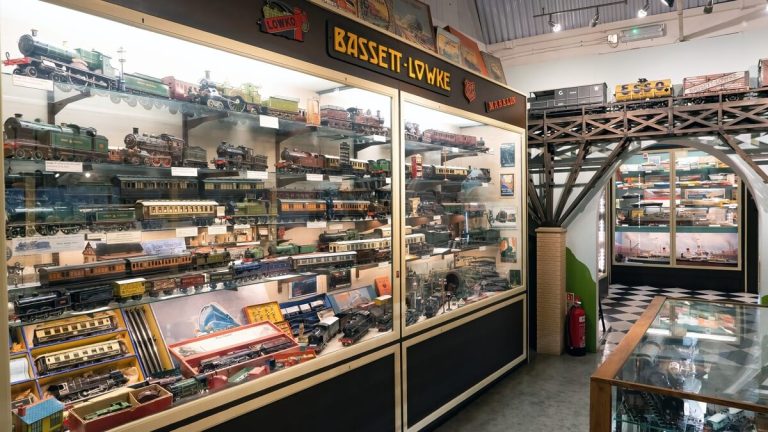
Brighton Toy and Model Museum beneath the railway station provides another option, while Hove Museum and Preston Manor extend the choice farther west and north.
The city also has cinemas, theatres, comedy venues, cafés and pubs, so poor weather does not necessarily require a museum marathon.
A genuinely stormy day is a different matter for the Downs. Devil’s Dyke and Ditchling Beacon are exposed, and there is little value in forcing a viewpoint walk when the view has disappeared into cloud.
Brighton & Hove without a car
Brighton is one of the easiest Sussex destinations to visit without driving.
Brighton Station is within walking distance of North Laine, the Royal Pavilion, Brighton Museum, The Lanes, SEA LIFE, Palace Pier and the beach.
Frequent buses connect the centre with Hove, the Marina, Stanmer and neighbourhood attractions, while the seafront itself is particularly easy to explore on foot or by bike.
Hove and Preston Park have their own railway stations, and Falmer provides rail access for Stanmer Park and the eastern edge of the city.
The South Downs require more planning but remain unusually accessible for countryside. Devil’s Dyke has bus connections at relevant times of year, while buses and walking routes can be used to reach Ditchling and other points around the Downs.
A simple first day from Brighton Station
Morning: walk through North Laine to the Royal Pavilion. Lunch: The Lanes or city centre. Afternoon: SEA LIFE, Palace Pier and the beach. Evening: walk west along the seafront or return through the city for food and entertainment.
Where should you stay in Brighton & Hove?
The right area depends on whether you want nightlife outside the door, a quieter seafront or easier access to the Downs.
| Area | Best for | What is nearby |
|---|---|---|
| Central Brighton | First visits and sightseeing | Royal Pavilion, The Lanes, North Laine and seafront |
| Kemptown | Nightlife, independent businesses and eastern seafront | SEA LIFE, Palace Pier, Madeira Drive and beach |
| Hove | A quieter coastal stay | Hove Lawns, beach huts, Lagoon and Hove Museum |
| Preston Park | Rail access and a more residential base | Preston Manor, park and routes north from the city |
For a first visit, central Brighton is the simplest choice because almost everything can be reached on foot.
Hove suits visitors who want the sea without being directly in the busiest nightlife area, while Kemptown works well for the eastern seafront and evening venues.
How many days do you need in Brighton & Hove?
A day trip is enough for the classic Brighton combination of Pavilion, Lanes and seafront, but a weekend changes what is possible.
With two days, you can slow the city centre down, spend time in Hove and add museums, food or nightlife rather than racing between headline attractions.
Three days gives the guide its real advantage: one of those days can be spent in the South Downs.
| Time available | A sensible approach |
|---|---|
| One day | Royal Pavilion, The Lanes, Palace Pier and seafront |
| Weekend | Add North Laine, museums, Hove and an evening out |
| Three days | Use one day for Devil’s Dyke, Ditchling Beacon or another South Downs walk |
| Four days or more | Add day trips farther into East or West Sussex rather than trying to find ever more city-centre attractions |
More ways to plan your day
- Days out across Sussex for alternatives beyond the city.
- Rainy-day museums and indoor outings when the weather changes.
Frequently asked questions
What are the best things to do in Brighton for a first visit?
The Royal Pavilion, The Lanes, North Laine, Brighton seafront and Palace Pier provide the classic introduction. With more time, add Brighton Museum, SEA LIFE, Volk’s Electric Railway or Hove.
What can you do in Brighton for free?
The beach, Pavilion Garden, North Laine, The Lanes, Hove Lawns and the city’s parks can all be explored without an attraction ticket. Hove Museum of Creativity is also free. Nearby Devil’s Dyke, Ditchling Beacon and the South Downs provide free countryside days.
Are The Lanes and North Laine the same place?
No. The Lanes are the historic Old Town south of North Street towards the seafront, while North Laine is the separate district north of North Street towards Brighton Station. Both are known for independent businesses, but they have different histories and characters.
Is Brighton good for a day trip without a car?
Yes. Brighton Station is within walking distance of North Laine, the Royal Pavilion, Brighton Museum, The Lanes, SEA LIFE, Palace Pier and the beach. Buses make Hove, the Marina and other parts of the city straightforward to reach without driving.
What are the best things to do in Brighton when it rains?
The Royal Pavilion, Brighton Museum, SEA LIFE, Brighton Toy and Model Museum and Hove Museum are among the strongest indoor choices. The city also has theatres, cinemas, comedy venues, cafés and other indoor entertainment.
What are the best things to do in Brighton with children?
SEA LIFE, Palace Pier, Volk’s Electric Railway, Hove Museum, Hove Lagoon and the city’s parks and playgrounds are among the easiest family choices. Older children may prefer the pier rides, skateparks, Hove Beach Park and watersports.
Is Hove worth visiting as well as Brighton?
Yes. Hove has a noticeably different atmosphere from the busiest parts of central Brighton. Hove Lawns, the beach huts, Hove Museum, Hove Lagoon and the western seafront make it particularly good for walking, cycling and family days.
Can you visit the South Downs from Brighton without a car?
Yes. Devil’s Dyke is one of the easiest South Downs destinations from the city when bus services are operating, while Stanmer Park is accessible by bus and from Falmer station. Ditchling Beacon and longer walks require more planning, so check the outward and return journey before setting off.
Planning a Brighton & Hove and South Downs trip
The easiest mistake to make in Brighton is trying to schedule every hour.
The city works particularly well because its main areas connect naturally. Brighton Station leads into North Laine, which leads towards the Royal Pavilion and The Lanes, which in turn lead down to the seafront.
That means a first day does not require much transport at all. Start around the station and North Laine, continue through the Pavilion Estate and Old Town, then finish beside the sea.
Hove deserves more deliberate time rather than being treated simply as the western end of a Brighton walk. Its seafront, museum, Lagoon and parks can comfortably occupy half a day.
The South Downs should be treated differently. Weather, daylight, footwear and the return journey matter much more once you leave the city streets.
City day or Downs day? Check different things
In Brighton: check attraction opening times and major events that may make the centre busier. On the Downs: check weather, daylight, footwear and your return transport. At the beach: pay attention to sea conditions and safety information. By car: check parking before assuming driving into central Brighton will be the easiest option.
More Sussex days out
For a family visit, use our Brighton and Hove guide for children. Our Seven Sisters guide explains the difference between a valley walk and the full cliff-top route.
Guide edited on 24 October 2026. Seasonal opening, access alerts and selected visitor arrangements checked against the linked official pages. Confirm the live opening calendar, transport and admission terms before travelling; suggested visit lengths are editorial estimates.
You May Also Be Interested In