




















Sussex has an unusually rich collection of National Trust and English Heritage places, ranging from the battlefield where the Norman Conquest was decided to Virginia Woolf’s country retreat, Rudyard Kipling’s home, medieval castles, Arts and Crafts houses and some of the finest landscapes on the South Downs.
The choice also varies noticeably between the two counties. East Sussex is particularly strong on castles, literary houses, the events of 1066 and the Seven Sisters coast. West Sussex has a larger concentration of country houses, designed gardens, historic estates and open downland.
Not every place works like a conventional paid attraction. Some, including Bramber Castle, Boxgrove Priory, Cissbury Ring, Devil’s Dyke and Ditchling Beacon, are primarily open landscapes or ruins. Others have timed entry, seasonal opening or compulsory advance booking.
This guide covers 25 principal National Trust and English Heritage destinations in East and West Sussex, including the Kew-managed National Trust estate at Wakehurst. Opening arrangements can change through the year, so the official property page should always be checked before making a special journey.
Map of National Trust and English Heritage places in Sussex
Use the map to plan nearby visits. Green pins mark National Trust places, red pins mark English Heritage sites, and purple pins mark the start of the four walks described below. Wakehurst is included in the National Trust layer but is managed by Kew, with separate parking arrangements.
Open the Sussex heritage map in a larger window. Walking pins identify starting points, not a plotted route; follow the official route instructions below.
Prices below are standard adult admission without an optional donation unless stated otherwise. Seasonal rates, special events and opening days can differ. Use each property’s official link to check your intended date.
Sussex National Trust and English Heritage sites at a glance
| Place | Area | Organisation | Type | Best known for |
|---|---|---|---|---|
| Alfriston Clergy House | East Sussex | National Trust | House and garden | Medieval house and the first building saved by the National Trust |
| Bateman’s | East Sussex | National Trust | House and garden | Rudyard Kipling’s home |
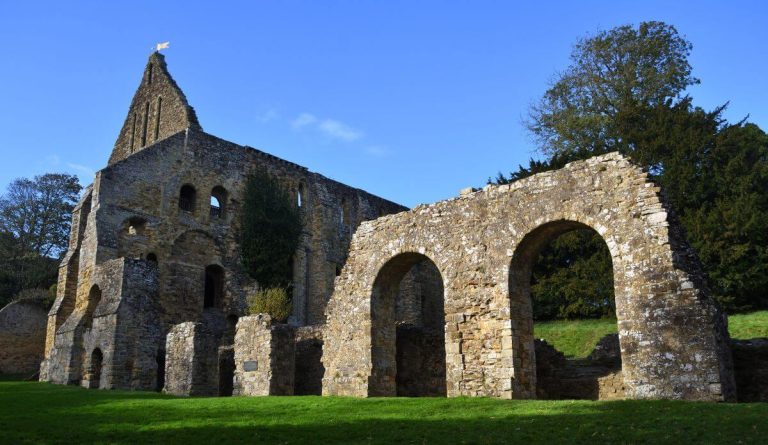
| Battle Abbey and Battlefield | East Sussex | English Heritage | Abbey and battlefield | The Battle of Hastings in 1066 |
| Bayham Old Abbey | East Sussex / Kent border | English Heritage | Abbey ruins | Medieval abbey ruins near Lamberhurst; English Heritage uses a Kent postal address |
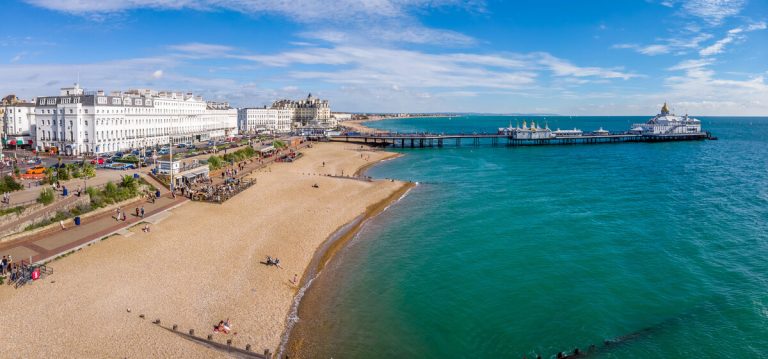
| Birling Gap and the Seven Sisters | East Sussex | National Trust | Coast and countryside | Chalk cliffs, beach and South Downs walks |
| Black Down | West Sussex | National Trust | Countryside | Highest point in the South Downs National Park |
| Blackcap | East Sussex | National Trust | Countryside | Downland ridge, woodland and views near Lewes |
| Bodiam Castle | East Sussex | National Trust | Castle | 14th-century moated castle |
| Boxgrove Priory | West Sussex | English Heritage | Priory ruins | Free Benedictine priory ruins |
| Bramber Castle | West Sussex | English Heritage | Castle ruins | Free Norman castle ruins |
| Camber Castle | East Sussex | English Heritage | Castle | Henry VIII’s artillery fort near Rye |
| Cissbury Ring | West Sussex | National Trust | Hillfort and countryside | Iron Age hillfort and prehistoric flint mines |
| Cuckmere Valley | East Sussex | National Trust | Countryside | River valley walks, Frog Firle Farm and the Litlington White Horse |
| Devil’s Dyke | West Sussex | National Trust | Countryside | Huge dry valley and panoramic South Downs views |
| Ditchling Beacon | East Sussex | National Trust | Countryside | South Downs views and Iron Age history |
| Drovers Estate | West Sussex | National Trust | Countryside estate | Woodland, old pastures and downland walks near Singleton |
| East Head | West Sussex | National Trust | Coast and countryside | Sand dunes, salt marsh and coastal walks at West Wittering |
| Harting Down | West Sussex | National Trust | Countryside | Chalk grassland and South Downs Way walking |
| Lamb House | East Sussex | National Trust | House and garden | Henry James, E. F. Benson and literary Rye |
| Lavington Common | West Sussex | National Trust | Countryside | Heathland, woodland and wildlife near Duncton |
| Marley Common | West Sussex | National Trust | Countryside | Heather, gorse and woodland walks near Haslemere |
| Monk’s House | East Sussex | National Trust | House and garden | Virginia and Leonard Woolf’s home |
| Nymans | West Sussex | National Trust | House and garden | Romantic ruins and major garden |
| Petworth House and Park | West Sussex | National Trust | House and parkland | Art collection and 700-acre deer park |
| Pevensey Castle | East Sussex | English Heritage | Castle | Roman fort, Norman conquest and wartime defences |
| Saddlescombe Farm and Newtimber Hill | West Sussex | National Trust | Farm and countryside | Ancient farm, Knights Templar history and chalk downland |
| Sheffield Park and Garden | East Sussex | National Trust | Garden and parkland | Grade I landscape garden and lakes |
| Slindon Estate | West Sussex | National Trust | Countryside estate | Large historic downland estate |
| Standen House and Garden | West Sussex | National Trust | House and garden | Arts and Crafts interiors and Morris & Co |
| Sullington Warren | West Sussex | National Trust | Countryside | Heathland and woodland near Storrington; listed under Cissbury Ring |
| Uppark House and Garden | West Sussex | National Trust | House and garden | 17th-century country house and South Downs views |
| Wakehurst | West Sussex | National Trust estate, managed by Kew | Botanic garden | Wild botanic garden and Millennium Seed Bank |
| Warren Hill | West Sussex | National Trust | Countryside | Woodland and heath near Washington; listed under Cissbury Ring |
| Woolbeding Countryside | West Sussex | National Trust | Countryside estate | Heathland, parkland and River Rother walks near Midhurst |
| Woolbeding Gardens | West Sussex | National Trust | Garden | Contemporary garden design and glasshouse |
National Trust places in East Sussex
Alfriston Clergy House
Small in scale but enormous in National Trust history, Alfriston Clergy House was the first building acquired by the newly formed Trust.
The early-15th-century Wealden hall house was built as a residence for the priest of neighbouring St Andrew’s Church. The National Trust bought it as a restoration project in 1896, only a year after the organisation was founded. Tree-ring dating indicates that much of its oak was felled between 1399 and 1407.
Inside, visitors can see the medieval hall and domestic rooms, while outside is a compact Arts and Crafts-influenced garden, orchard and views over the Cuckmere Valley.
Its location in Alfriston makes it particularly easy to combine with a village visit, the South Downs or the nearby Seven Sisters.
Location: The Tye, Alfriston, BN26 5TL.
Admission and parking: Adult admission is £10, or free for National Trust members. Opening is seasonal and limited, so check the calendar before travelling.
Facilities and access: Village parking is around 500 yards away. There are no toilets on site. Dogs on short leads can enter the garden and Garden Room, but the historic building and uneven paths have access restrictions.
Bateman’s, Burwash
Bateman’s was the family home of Rudyard Kipling and remains one of Sussex’s strongest literary attractions.
The Jacobean house bears the date 1634 above its entrance, although the National Trust says parts of the building may be older. Kipling and his wife Carrie bought Bateman’s in 1902 and lived there for more than 30 years.
The rooms retain furniture, books, Persian rugs and objects associated with the writer, while his study gives perhaps the strongest sense of the house as a working literary home.
Outside are gardens, a working watermill and around 300 acres of High Weald countryside. The landscape helped inspire works including Puck of Pook’s Hill and Rewards and Fairies.
Location: Bateman’s Lane, Burwash, TN19 7DS.
Admission and parking: Adult admission is £18; National Trust members enter free. Parking costs £4 for non-members and is free for members.
Facilities and access: There is a tea room, shop and toilets, including an accessible toilet near reception. Dogs on short leads are welcome in the gardens and estate; only assistance dogs enter the house. Some paths are uneven and the approach includes a slope.
Bodiam Castle
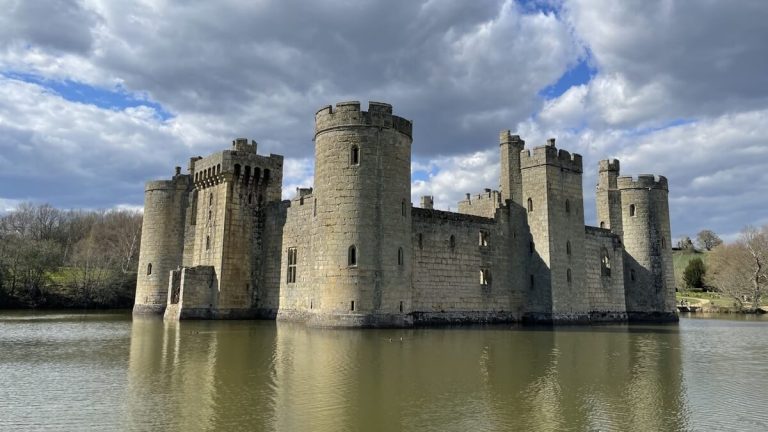
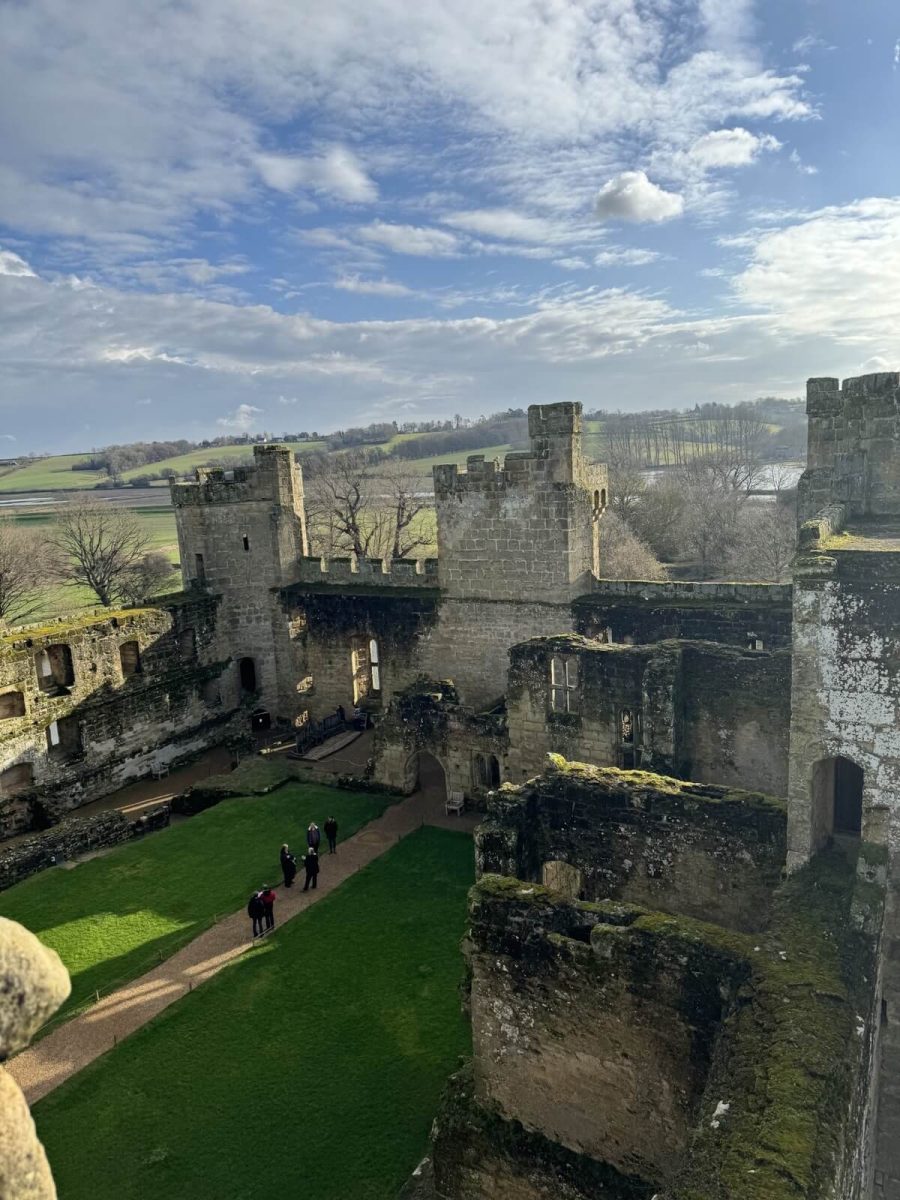
Few English castles look quite as deliberately castle-like as Bodiam (main image).
The 14th-century fortress is surrounded by a broad moat and retains towers, battlements, spiral staircases and its original portcullis. Although much of the interior is ruined, visitors can explore inside the walls and climb parts of the structure.
It is particularly popular with families and photographers, and the National Trust operates a tea room, shop and car park.
There is also a useful transport option for visitors making a day of the area: the nearby Kent & East Sussex Railway serves Bodiam, and the National Trust currently offers a discount on admission for visitors arriving by the heritage railway.
Location: Bodiam, near Robertsbridge, TN32 5UA.
Admission and parking: Standard adult admission is £13, with higher prices on peak dates; National Trust members enter free. General visits do not need advance booking. Non-member parking is £5.
Facilities and access: Tea rooms, a shop and toilets are available. The courtyard is more accessible than the towers, which involve steep spiral stairs. Dogs on short leads are welcome in the grounds and refreshment areas, but only assistance dogs enter the castle.
Monk’s House, Rodmell
Monk’s House offers a much more intimate historical experience.
The 17th-century cottage was the country home of Virginia and Leonard Woolf and became closely associated with the Bloomsbury Group. The rooms contain art, furniture and personal objects connected with the couple and their circle.
Virginia Woolf wrote much of her major work in the writing lodge at the end of the garden, while Leonard developed the cottage garden, orchard and ponds surrounding the house.
Location: Rodmell, near Lewes, BN7 3HF.
Admission and parking: Adult admission is £12; National Trust members enter free, but everyone must book a timed visit in advance.
Facilities and access: The small car park is about 100 yards beyond the house and has a 1.98m height barrier. Paths are narrow and uneven, with steps into the cottage. There is a small outdoor toilet and second-hand books. Dogs on leads are welcome in the garden.
Monk’s House must be booked
The property is small and the National Trust requires advance booking for everyone, including members.
Opening days and hours are also more limited than at larger properties, so this is one place where turning up without checking first is particularly likely to end in disappointment.
Lamb House, Rye
Rye provides Sussex with another important literary National Trust property.
Lamb House was built in 1723 and later became the home of American-born writer Henry James. E. F. Benson, author of the Mapp and Lucia books, subsequently lived there too.
The Georgian house sits on West Street in Rye’s historic centre, making it very different from the larger rural estates elsewhere in the county.
It works particularly well as part of a wider day exploring Rye’s cobbled streets, Mermaid Street, the church and old harbour town.
Location: West Street, Rye, TN31 7ES.
Admission and parking: Adult admission is £10, with free entry for National Trust members. Check seasonal house opening before combining it with a day in Rye.
Facilities and access: There is no on-site parking, so use the town’s car parks. Toilets are available, but the entrance has steps and the upper floor requires stairs. Only assistance dogs are admitted. The walled garden makes a quieter stop after exploring the town.
Sheffield Park and Garden
Sheffield Park and Garden, near Uckfield, is primarily about landscape rather than a country house.
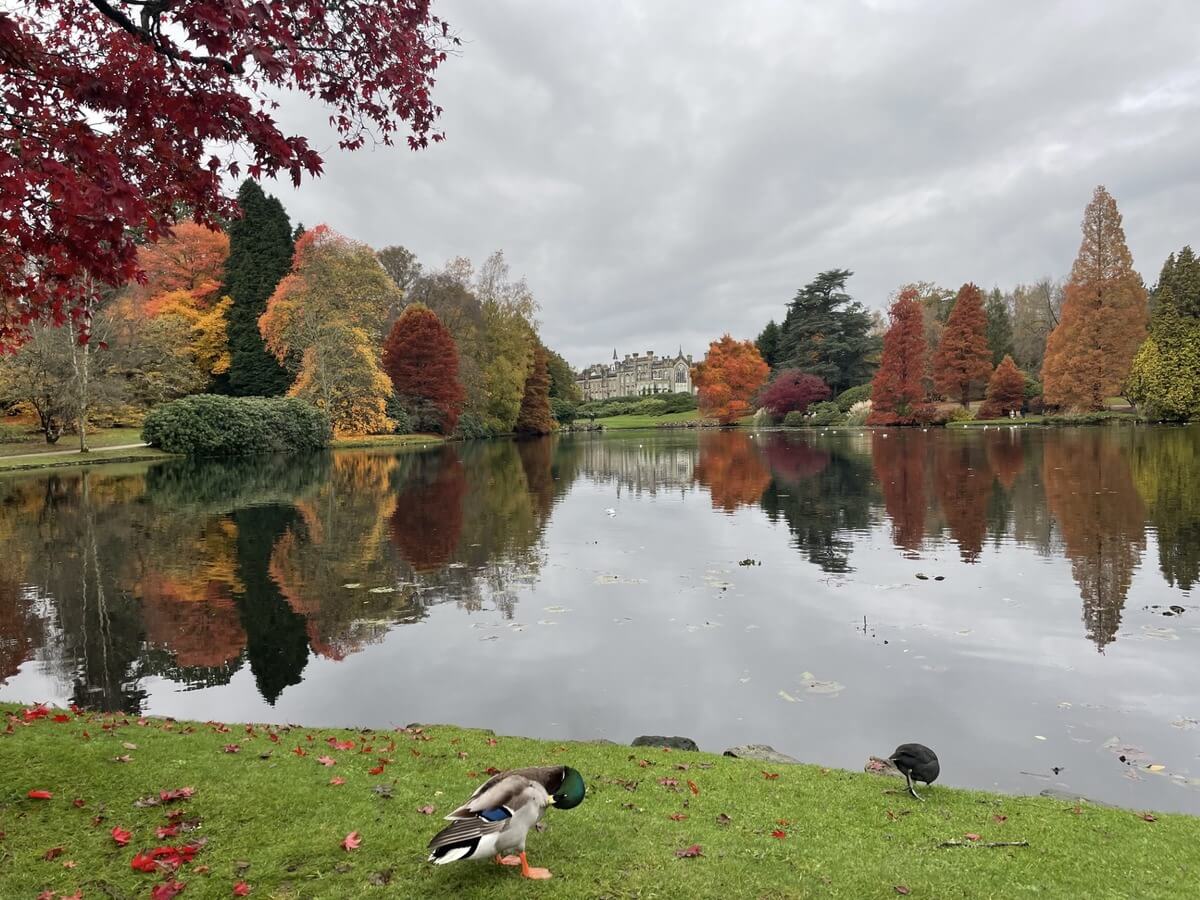
The National Trust manages a Grade I registered garden built around a chain of lakes, specimen trees and carefully designed views. The surrounding parkland and woodland provide longer walks beyond the formal garden.
The colours make it especially popular in autumn, although waterlilies, spring flowers and mature trees give the landscape a strong seasonal identity throughout the year.
One detail is worth knowing before visiting: Sheffield Park House itself is a private residence and is not open to the public. The attraction is the garden, parkland and woodland.
Location: Sheffield Park, near Uckfield, TN22 3QX.
Admission and parking: Adult admission is £19; National Trust members enter free. Parking is free and general visits do not require booking, although busy autumn days can fill the car park.
Facilities and access: There is a café, shop and toilets, including accessible facilities. Mobility scooters can be booked. Dogs on short fixed leads may enter the garden except on Saturdays before 1pm; separate rules apply in the parkland and designated off-lead area.
Birling Gap and the Seven Sisters
National Trust properties do not have to involve stately homes.
At Birling Gap, the Trust looks after a major section of the Seven Sisters coastline, including chalk grassland, cliff-top walks and access to the beach when conditions permit.
The site has a café, shop and visitor facilities on the cliff top and is a useful starting point for walks towards Beachy Head, East Dean and Cuckmere Haven.
The landscape is actively eroding, with the Trust saying sections around Birling Gap can retreat by up to a metre a year. Beach access can consequently close at short notice after cliff falls or bad weather.
Location: East Dean, near Eastbourne, BN20 0AB.
Admission and parking: There is no admission charge for the coast. Non-member parking costs £2 for one hour, £4 for two hours or £8 for longer stays; National Trust members and Blue Badge holders park free.
Facilities and access: The cliff-top visitor centre has a café, shop and toilets. Beach access is by steps and can close after storms or cliff falls. Keep dogs on leads around the cliffs and grazing animals, and follow signs at the beach.
Seven Sisters cliff safety
Do not approach the cliff edge for photographs and keep well away from the cliff base on the beach. Chalk falls can happen without warning.
Check the National Trust’s current access information before visiting Birling Gap, particularly after storms or prolonged wet weather.
Ditchling Beacon
For a free countryside visit, Ditchling Beacon offers some of the finest views close to Brighton.
The National Trust describes it as the highest point in East Sussex. The South Downs Way crosses the site, while surviving earthworks reflect the presence of an Iron Age hillfort.
The landscape is best suited to walking rather than conventional sightseeing. Paths include steep gradients and rough ground, while longer routes link Ditchling Beacon with Devil’s Dyke.
Location: Ditchling Road, on the South Downs above Ditchling.
Admission and parking: Access to the downland is free. The small National Trust car park costs £1.50 for an hour, £3 for two hours or £6 for the day; members park free.
Facilities and access: The nearest public toilets are in Ditchling village. Bring water and suitable footwear for rough, steep ground. The 2.7-mile history walk linked below offers a defined route for visitors who want more than a viewpoint stop.
English Heritage sites in East Sussex
1066 Battle of Hastings, Abbey and Battlefield
If one Sussex heritage site has genuinely national significance, it is difficult to look beyond Battle Abbey and the Battle of Hastings battlefield.
This is the landscape where the armies of King Harold and William of Normandy fought on 14 October 1066, changing the course of English history.
English Heritage combines the battlefield with the remains of the abbey founded by William after his victory. Visitors can follow an audio tour around the battlefield, explore the monastic ruins, see exhibitions explaining the invasion and climb the Great Gatehouse for views over the site.
Tradition places the abbey church’s high altar on the spot where Harold fell. English Heritage moved the memorial stone marking that tradition after archaeological and architectural research refined its understanding of where the medieval altar had stood.
Location: High Street, Battle, TN33 0AE.
Admission and parking: This is a paid attraction, with free entry for English Heritage members. Check the booking calendar for your date and current prices. Parking is £4 for non-members, free for members who validate their card, with a six-hour maximum stay.
Facilities and access: A café, shop, picnic area, playground and toilets make this a practical family visit. Dogs on leads are welcome throughout. Audio guides are included with admission. Check access notices before setting out on the battlefield walks.
Pevensey Castle
Pevensey Castle compresses more than 1,600 years of defensive history into one site.
Its outer walls began as the Roman fort of Anderitum, constructed around AD 290 as part of the Saxon Shore defences. They still extend for more than 500 metres and survive to remarkable height.
William the Conqueror landed at Pevensey in 1066 and established a stronghold within the Roman fort before moving towards Hastings.
Later medieval owners developed the inner castle, while the defences were adapted yet again during the Second World War. Machine-gun positions were disguised within the ancient walls and are now part of the visitor story.
It pairs particularly well with Battle Abbey for anyone wanting to follow the events of the Norman invasion geographically.
Location: Castle Road, Pevensey, BN24 5LE.
Admission and parking: The inner castle is ticketed, with free admission for English Heritage members. Use the official calendar for current prices and opening dates.
Facilities and access: A public pay-and-display car park is around 300 metres from the entrance, with public toilets nearby. The castle shop sells drinks and sweets, and picnics are welcome. Dogs on leads are allowed throughout. The North Tower viewing area involves a steep wooden staircase.
Camber Castle, Rye Harbour
Camber Castle is one of the more unusual English Heritage sites because reaching it is part of the experience.
Henry VIII ordered the artillery fort to defend the approaches to Rye. The castle now stands inland because changes to the coastline left it stranded away from the sea it was built to protect.
There is no vehicle access. English Heritage says visitors reach the site by roughly a one-mile walk across fields from the Rye side, and the exterior can be viewed during reasonable daylight hours.
Its position within the Rye Harbour landscape makes it particularly rewarding as part of a longer walk incorporating the nature reserve, military remains and changing coastline.
Location: In the fields between Rye and Winchelsea, reached on foot from Rye.
Admission and parking: The exterior can be viewed free in daylight, but the interior is currently closed and guided tours are not available.
Facilities and access: Allow for an approximately one-mile walk from Brede Lock across the fields. There is no vehicle access to the castle; the nearest suggested parking is on Winchelsea Road in Rye. Keep dogs on leads and check conditions before taking the field paths.
National Trust houses and gardens in West Sussex
Petworth House and Park
Petworth is arguably the grandest National Trust property in Sussex.
The 17th-century house contains one of the Trust’s most important art collections, while outside it sits within a 700-acre deer park.
The collection includes major British and European art, while the historic kitchens provide a very different view of life within the estate.
The deer park, associated with Capability Brown, can also be visited independently of the house and makes Petworth as much a walking destination as a cultural one.
The town of Petworth itself is immediately outside the estate and has antiques shops, galleries, cafés and independent businesses, making this one of the easiest National Trust properties to turn into a full Sussex day out.
Location: Petworth, GU28 9LR for the main house and garden car park.
Admission and parking: Adult admission is £21 during the March–October season, with different winter prices; National Trust members enter free. Main-car-park parking costs £4 for non-members, while the North Car Park for the deer park costs £3.
Facilities and access: There is a café, shop and accessible toilets. The main car park is about 700 yards from the house, with an uphill approach; a mobility buggy is available. Use GU28 9LS for the North Car Park if visiting the deer park.
Nymans
Nymans, near Handcross, combines one of Sussex’s best-known gardens with the romantic remains of a country house damaged by fire.
The garden developed around an extensive plant collection, while the house is now partly preserved as atmospheric ruins following the devastating fire of 1947. Surviving rooms remain open to visitors.
There is also a woodland nature reserve beyond the formal garden.
Dogs are welcome under close control in the woodland all year, with leads required during the bird-nesting season. Garden visits with dogs resume from 1 November 2026 between 1.30pm and 4pm; assistance dogs are welcome throughout the year. Check Nymans’ current dog policy.

Location: Handcross, near Haywards Heath, RH17 6EB.
Admission and parking: Adult admission is £21 and National Trust members enter free. Parking is free. Check the separate opening times for the garden, house rooms and cafés.
Facilities and access: Facilities include a café, shop, accessible toilets and a Changing Places toilet. Garden paths vary in surface and gradient, and mobility equipment is available. Dogs can use the woodland under close control all year, with seasonal lead requirements; garden access is restricted.
Standen House and Garden
For Arts and Crafts design, Standen near East Grinstead is one of the strongest places to visit anywhere in Sussex.
The family home was designed by architect Philip Webb and contains interiors furnished extensively with Morris & Co wallpapers, fabrics and decorative work.
The house sits in a hillside garden influenced by Arts and Crafts principles, while around 100 acres of estate provide woodland and meadow walks.
There are also walking links towards the Bluebell Railway, making Standen particularly attractive for visitors interested in combining heritage attractions.
Location: West Hoathly Road, East Grinstead, RH19 4NE.
Admission and parking: Adult admission is £18; National Trust members enter free. Free parking is approximately 200 yards from the entrance.
Facilities and access: The Barn Café, shop and toilets support a longer visit. The hillside garden includes steps and slopes, so consult the access guide if these are a concern. Dogs on short leads are welcome in the garden and estate; only assistance dogs enter the house.
Uppark House and Garden
Uppark occupies one of the most dramatic settings of any Sussex country house, high on the South Downs ridge.
The house was built around 1690 and has associations with figures including Emma Hamilton and H. G. Wells. Its interiors tell the contrasting stories of life above and below stairs, while one of its best-known treasures is an elaborate 18th-century dolls’ house.
Uppark also has an extraordinary modern chapter. A serious fire in 1989 caused enormous damage, leading to a major National Trust conservation and reconstruction project.
Opening is more restricted than at properties such as Petworth or Nymans. The published 2026 visiting seasons are 1 March–30 September and 6–23 December, so the site is between seasons in October. During its visiting season, the site opens Sunday to Wednesday, with house visits on selected days and Wednesday limited to the garden. Check the Uppark visiting calendar before travelling.
Location: South Harting, near Petersfield, GU31 5QR.
Admission and parking: House admission is £10 for adults and free for National Trust members. Gardens are free during site opening hours. Non-member parking costs £2.50 for two hours or £4 for the day.
Facilities and access: There is a refreshments kiosk, second-hand bookshop and toilets, including accessible facilities. Dogs on leads are welcome in the garden; only assistance dogs enter the house and tunnels. The seasonal opening calendar is particularly important here.
Woolbeding Gardens
Woolbeding Gardens near Midhurst offer something distinctly more contemporary.
The gardens combine formal rooms, herbaceous planting, sculptures and follies with views across the River Rother landscape. More recent additions include the ten-sided Woolbeding Glasshouse and Silk Route Garden.
The property is deliberately managed at a lower visitor capacity than the Trust’s larger estates.
Location: Near Midhurst; use the Grange Centre, Bepton Road, GU29 9HD for the shuttle departure.
Admission and parking: Adult admission is £14 and National Trust members enter free, but all visitors must book. Ordinary visitors cannot park at the gardens: use the paid council car park at the Grange Centre and the free shuttle bus.
Facilities and access: There is a café and toilets. Only assistance dogs are admitted. The garden has steps, cobbles and slopes. Limited on-site Blue Badge parking must be arranged before booking a garden ticket.
Book Woolbeding before travelling
Advance booking is essential for all visitors, including National Trust members.
The garden also operates on selected days rather than opening daily throughout the year, so check the current calendar before setting out.
Wakehurst, Ardingly
Wakehurst adds a different kind of garden visit to the Sussex list. The estate belongs to the National Trust but is managed by the Royal Botanic Gardens, Kew. Its wild botanic garden and Millennium Seed Bank bring horticulture and plant conservation together, with woodland and landscape walks beyond the formal areas.
Location: Ardingly, near Haywards Heath, RH17 6TN.
Admission and parking: Standard adult entry is £18.50. National Trust members enter free but pay for parking: £8 for 45–150 minutes or £13.50 for longer stays. Parking is included for paying garden-ticket holders and Kew or Wakehurst members. Kew encourages advance booking.
Facilities and access: There are cafés, a shop, toilets and accessible paths, with mobility equipment available. Dogs must stay on short leads and use the designated dog route.
National Trust countryside in West Sussex
Devil’s Dyke
Only a few miles from Brighton, Devil’s Dyke is one of the National Trust’s best-known South Downs landscapes.
The huge dry valley was formed naturally during the Ice Age, despite centuries of folklore attributing it to the Devil. The high ground also contains traces of prehistoric activity and an Iron Age hillfort.
Today it is popular for walking, cycling, kite flying, paragliding and broad views across the Weald.
It is also an accessible starting point for longer walks through Saddlescombe, Newtimber Hill and along the South Downs Way.
Location: North of Brighton; main car park BN1 8YJ.
Admission and parking: The downland is free to explore. Non-member parking costs £1.65 for an hour, £3.30 for two hours or £8 for the day; National Trust members and Blue Badge holders park free.
Facilities and access: Choose your route to suit your fitness: a view from the ridge involves much less climbing than a descent into the valley. The seasonal 77 bus provides an alternative to driving; check its timetable before relying on it.
Cissbury Ring
Near Worthing, Cissbury Ring is a particularly important archaeological landscape.
The hill is dominated by the earthworks of one of Britain’s largest Iron Age hillforts, while much older Neolithic flint mines demonstrate that people were exploiting the site thousands of years earlier.
The National Trust describes it as “the most historic hill on the South Downs”.
This is a countryside site rather than a staffed visitor attraction. There are no toilets at the Ring and no National Trust car park directly beside it. The Trust advises that the approach from the nearest parking involves about a 20-minute uphill walk.
Location: Above Findon and Worthing, BN14 0HT.
Admission and parking: There is no admission charge. The free Storrington Rise car park, which is not operated by the National Trust, has about 30 spaces. Allow roughly 20 minutes for the uphill walk to the Ring.
Facilities and access: There are no toilets at the hillfort; the nearest are in Findon Valley by the library. Expect steep paths, stiles and kissing gates. Keep dogs on leads and bring drinking water for the exposed hilltop.
Slindon Estate
Slindon, near Arundel, is on a completely different scale.
The National Trust estate covers around 1,400 hectares of downland, woodland, farmland and parkland and contains roughly 40km of rights of way.
Historic features include part of the Roman Stane Street, medieval landscape remains and evidence of much earlier settlement.
It is a place to choose for walking, cycling and landscape rather than interiors, shops or a conventional visitor centre.
Location: Around Slindon, near Arundel, with several separate access points.
Admission and parking: The estate is free to explore. Free car parks include Park Lane, BN18 0QY; Dukes Road, BN18 0SP; and Bignor Hill, RH20 1PH. Park Lane and Dukes Road have height barriers.
Facilities and access: Pick a route and its correct starting car park before travelling, as the estate is extensive. Woodland and downland paths can be muddy or uneven. Carry food and water for longer walks, rather than relying on facilities along the route.
Black Down
Black Down, close to the Surrey border near Haslemere, is the highest point in the South Downs National Park.
The National Trust manages its heathland, woodland, old tracks and flower-rich meadows, with the landscape becoming particularly striking when the heather is in bloom.
Its literary association comes through Alfred, Lord Tennyson, who lived nearby and walked on the hill. The Temple of the Winds viewpoint remains a popular destination.
Location: Near Haslemere; Tennyson’s Lane car park GU27 3AF.
Admission and parking: Access is free, with three free National Trust car parks. The lower Tennyson’s Lane parking area uses GU27 3BJ.
Facilities and access: There are no toilets on the hill; the National Trust lists the nearest in Haslemere. Keep dogs on leads. Some tracks offer easier access than others, but surfaces remain rural and uneven, so consult the access information before choosing a route.
Harting Down
At the western end of the county, Harting Down is classic South Downs chalk grassland.
The South Downs Way crosses the landscape and there are extensive views across the surrounding countryside. It works particularly well in combination with Uppark, which lies nearby.
This is another relatively wild site: there are no toilets on the Down and paths include steep, uneven sections.
Location: Off the B2141 near South Harting, GU31 5PW.
Admission and parking: There is no admission charge. Parking is £3 for the day for non-members; National Trust members should validate their free parking. Blue Badge holders also park free.
Facilities and access: There are no toilets on the Down; the nearest are in South Harting beside the White Hart. Paths can be steep and uneven. Dogs must be kept on leads on the property, and the specific wildlife walk below is not recommended for dogs.
Saddlescombe Farm and Newtimber Hill
Saddlescombe, north of Brighton, combines landscape with a surprisingly long human history.
The farm was recorded in Domesday Book and was once associated with the Knights Templar. The oldest part of the present farmhouse dates from around 1630, while one of the most unusual surviving features is a donkey wheel once used to draw water from a well about 50 metres deep.
The surrounding Newtimber Hill combines ancient woodland with species-rich chalk grassland and links directly into the South Downs Way.
Saddlescombe remains a working farm, so some areas are not open to visitors.
Location: Saddlescombe Road, north of Brighton, BN45 7DE.
Admission and parking: There is no general admission charge for the countryside. There is no visitor parking at the farm: Summer Down car park, BN45 7FH, is about a quarter of a mile away.
Facilities and access: The farm café has toilets, including an accessible toilet. The information barn and donkey wheel can be seen year-round, but this remains a working farm with restricted areas. Keep dogs on leads. Newtimber Hill routes include steep ground and stiles.
English Heritage sites in West Sussex
Bramber Castle
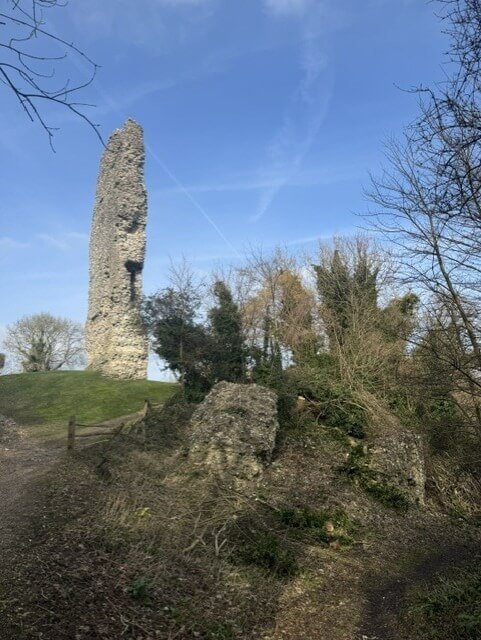
Bramber Castle is small compared with Bodiam or Pevensey, but it has a powerful position above the River Adur.
The Norman castle was established soon after the Conquest and became the Sussex stronghold of the de Braose family. Today, the most prominent surviving feature is a section of the tower wall standing about 14 metres high.
Entry is free and the site is open during reasonable daylight hours.
The approach includes rough and potentially muddy ground, while the castle occupies a steep site with uneven surfaces and drops. English Heritage therefore warns that access may be difficult for visitors with limited mobility.
Location: Castle Lane, Bramber, near Steyning, BN44 3EW.
Admission and parking: The ruins are free to visit during reasonable daylight hours. Limited on-site parking costs £2 for non-members, paid by text; English Heritage members need a valid parking sticker for free parking.
Facilities and access: Dogs on leads are welcome. The approach track is rough and may be unsuitable for low-clearance vehicles. Slopes, muddy ground and unguarded drops make this a visit where sturdy footwear and close supervision of children matter.
Boxgrove Priory
Close to Chichester, Boxgrove Priory offers another free English Heritage visit.
The Benedictine priory was founded around 1107, initially for only three monks. Surviving remains include the roofless two-storey guest house and other monastic structures.
An unusual consequence of the Dissolution is that parts of the medieval priory church survived because its eastern end continued in use as the parish church.
The English Heritage ruins can be visited free during reasonable daylight hours and there is a small car park.
Location: Off The Street, Boxgrove, near Chichester, PO18 0EE.
Admission and parking: The English Heritage ruins are free to visit during reasonable daylight hours, with a small car park.
Facilities and access: Dogs on leads are welcome. This is an outdoor ruins visit rather than a staffed house attraction. The neighbouring parish church is separate from the English Heritage remains, so check its own arrangements if you want to go inside.
Which Sussex heritage site should you visit?
With such different properties, the most useful question is not necessarily which is “best”, but what kind of day out you want.
| If you want… | Good place to start |
|---|---|
| 1066 and the Norman Conquest | Battle Abbey and Pevensey Castle |
| A classic medieval castle | Bodiam Castle |
| Major art collections | Petworth House |
| Literary history | Bateman’s, Monk’s House or Lamb House |
| Arts and Crafts design | Standen |
| Gardens | Nymans, Sheffield Park or Woolbeding |
| Coastal scenery | Birling Gap and the Seven Sisters |
| Free castle ruins | Bramber Castle |
| Free monastic ruins | Boxgrove Priory |
| Archaeology and hillforts | Cissbury Ring or Ditchling Beacon |
| South Downs walking | Devil’s Dyke, Harting Down, Slindon or Black Down |
| A smaller historic house | Alfriston Clergy House |
| Something unusual and remote | Camber Castle |
Best Sussex sites for families
For a conventional family day out, Bodiam Castle, Battle Abbey, Pevensey Castle, Petworth and Nymans are among the easiest choices because there is enough to occupy several hours and visitor facilities are available.
Bodiam offers towers, battlements and a moat, while Battle combines the battlefield with exhibitions, ruins and an audio trail. Pevensey adds Roman, Norman and Second World War stories in the same visit.
National Trust countryside can work equally well for families, but facilities are much more variable. Cissbury Ring, Harting Down and Black Down do not operate like visitor attractions with cafés and toilets, so food, water, footwear and the return walk need more thought.
Best National Trust gardens in Sussex
Sussex is particularly strong for gardens, but each has a different character.
Sheffield Park is about landscape, lakes and trees. Nymans combines horticulture with romantic architectural ruins. Standen reflects Arts and Crafts ideas around a family home, while Woolbeding is the place to choose for more contemporary horticultural design.
Uppark offers a smaller garden but compensates with its elevated South Downs setting and wide views towards the coast.
National Trust or English Heritage membership: are they the same?
No. The National Trust and English Heritage are separate organisations and their memberships are separate.
A National Trust membership gives entry to participating National Trust properties but does not provide general free admission to English Heritage attractions such as Battle Abbey or Pevensey Castle.
Likewise, English Heritage membership does not provide admission to National Trust houses such as Bateman’s, Petworth or Nymans.
This matters less at the organisations’ free countryside and ruin sites. Bramber Castle and Boxgrove Priory are free to enter, for example, while National Trust landscapes such as Devil’s Dyke, Ditchling Beacon and Cissbury Ring can be explored without buying a house-admission ticket. Parking charges can still apply.
Places often confused with National Trust or English Heritage sites
Sussex has many major historic attractions that belong to neither organisation.
Arundel Castle is independently owned. Fishbourne Roman Palace, Lewes Castle and Anne of Cleves House are associated with the Sussex Archaeological Society, trading as Sussex Past. Michelham Priory is also a Sussex Past property.
Wakehurst is the notable exception to remember: the National Trust owns the estate and its members receive free garden entry, but Kew manages the attraction and charges National Trust members for parking. See the Wakehurst entry above for details.
Checking who actually manages a site is worthwhile before buying a membership specifically for a Sussex holiday.
Four National Trust walks to add to your Sussex visit
These routes have separate purple starting pins on the map. Distances and difficulty ratings follow the National Trust’s route guides. Check the full directions and current conditions before setting out.
Southease to Monk’s House
This 3.5-mile (5.6km), moderate circular walk starts at Southease railway station and links the Ouse Valley with Rodmell. There is no station parking, making the train a useful option. Paths can become waterlogged in winter. Entry to Monk’s House is separate and must be booked. Follow the Southease to Monk’s House route.
East Dean to Birling Gap
The 3-mile (4.8km), moderate circular walk from the Tiger Inn in East Dean, BN20 0DA, connects the village with the coast. Expect slopes and gates, and stay well back from cliff edges. Check access notices after bad weather. Follow the East Dean to Birling Gap route.
Ditchling Beacon history walk
Starting at the National Trust car park, this 2.7-mile (4.32km), challenging circular walk explores the Beacon’s historic landscape. Steep gradients and rough surfaces mean it is not suitable for wheelchairs or pushchairs. Follow the Ditchling Beacon history walk.
Harting Down wildlife walk
This 4-mile (6.4km), moderate circular walk starts at Harting Down car park and crosses chalk grassland and downland viewpoints. Although dogs on leads are permitted on the property generally, the National Trust marks this particular route as not suitable for dogs. Follow the Harting Down wildlife walk.
Planning a Sussex heritage weekend
The geography lends itself particularly well to pairing nearby attractions.
In East Sussex, Pevensey Castle and Battle Abbey form an obvious 1066 itinerary. Rye can combine Lamb House with the walk to Camber Castle, while Alfriston Clergy House can be paired with the Seven Sisters and Birling Gap.
Farther inland, Bateman’s and Bodiam make a good High Weald combination, although both deserve enough time that trying to rush them into a short afternoon would lose much of the point.
In West Sussex, Petworth can fill most of a day on its own. Uppark and Harting Down work naturally together, as do Devil’s Dyke and Saddlescombe Farm. Standen can be combined with other attractions around East Grinstead, while Boxgrove Priory is an easy addition to a visit to Chichester.
Before you travel
Check opening days: smaller houses such as Monk’s House, Woolbeding and Uppark have more limited arrangements than major properties.
Check booking: Monk’s House and Woolbeding require advance booking, including for members.
Check parking: free countryside does not necessarily mean free parking.
Check facilities: several downland and ruin sites have no café or toilets.
Check access: castles, ruins, historic houses and South Downs sites can include steep slopes, stairs and uneven ground.
Check coastal conditions: access at Birling Gap can change because of erosion and cliff falls.
Build a wider Sussex itinerary
- Seven Sisters visitor guide for routes, viewpoints and cliff-safety advice.
- Explore East Sussex to combine heritage with towns and coast.
- Explore West Sussex for more places beyond the heritage estates.
Frequently asked questions
How many National Trust places are there in Sussex?
The National Trust looks after numerous houses, gardens and countryside areas across both counties. This guide covers the principal named visitor destinations, including Bateman’s, Bodiam Castle, Monk’s House, Sheffield Park, Nymans, Petworth, Standen, Uppark and a substantial collection of South Downs landscapes.
What are the main English Heritage sites in East Sussex?
The principal visitor sites are 1066 Battle of Hastings, Abbey and Battlefield, Pevensey Castle and Camber Castle. Battle and Pevensey are staffed ticketed attractions, while Camber Castle is a more remote site reached on foot.
What English Heritage sites are in West Sussex?
Bramber Castle and Boxgrove Priory are English Heritage sites in West Sussex. Both are free to enter during reasonable daylight hours.
Which National Trust property was its first ever building?
Alfriston Clergy House. The Trust bought the early-15th-century house in 1896 as its first building conservation project.
Which Sussex National Trust property was Rudyard Kipling’s home?
Bateman’s at Burwash. Kipling and his wife bought the house in 1902 and lived there for more than three decades.
Which National Trust property did Virginia Woolf live in?
Monk’s House at Rodmell was the country home of Virginia and Leonard Woolf. Advance booking is essential for visits.
Which Sussex heritage site is best for the Battle of Hastings?
Battle Abbey and Battlefield. The English Heritage attraction occupies the battlefield where Harold and William’s armies fought in 1066.
Which Sussex National Trust site is best for art?
Petworth House has one of the finest art collections in the National Trust’s care and is the strongest starting point for visitors primarily interested in paintings and historic interiors.
Which sites are free?
English Heritage’s Bramber Castle and Boxgrove Priory are free to enter. National Trust countryside including Devil’s Dyke, Ditchling Beacon, Cissbury Ring, Slindon and other open landscapes can also be explored without a conventional admission ticket, although parking charges and local restrictions may apply.
Is Bodiam Castle National Trust or English Heritage?
Bodiam Castle is cared for by the National Trust.
Is Battle Abbey National Trust?
No. Battle Abbey and the Battle of Hastings battlefield are cared for by English Heritage.
Is Arundel Castle an English Heritage property?
No. Arundel Castle is independently owned and is not included with English Heritage or National Trust membership.
Can I use National Trust membership at English Heritage sites?
No. The organisations operate separate memberships. A National Trust card does not normally provide free admission to English Heritage ticketed attractions, and an English Heritage membership does not provide admission to National Trust properties.
Which Sussex properties need advance booking?
Monk’s House and Woolbeding Gardens currently require advance booking for all visitors. Other properties may introduce timed entry or booking for particular dates or events, so always check the live property page before travelling.
You May Also Be Interested In