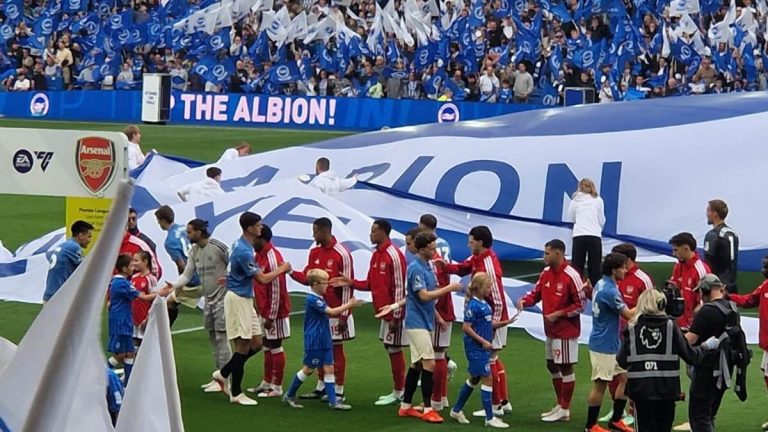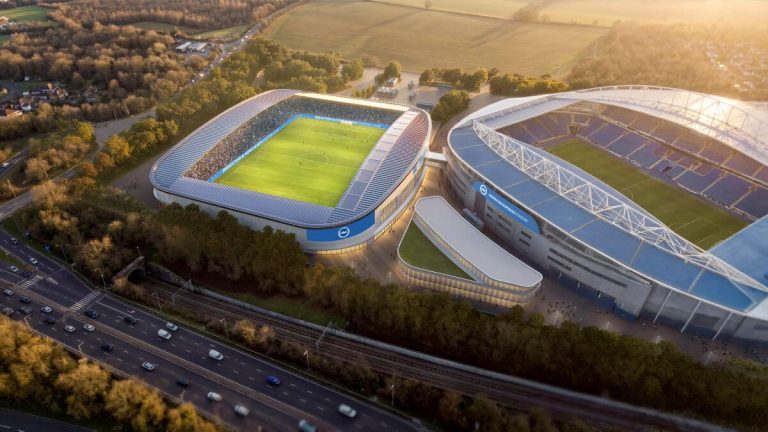







Brighton & Hove Albion’s 125-year history stretches from a meeting in a Ship Street pub to European football at the Amex. Between those points came a national trophy, Wembley heartbreak, the loss of the Goldstone Ground and a supporters’ campaign that helped keep the club alive.
Some younger fans know of the plight of the club thanks to a motivational video played on the big screens on matchdays. The story of the Seagulls is rich one, with many heroes and villains on and off the pitch. Trophies and league positions tell one story. The grounds, the players and the generations who followed them tell another.
For older supporters, Albion means the Goldstone, (he shot, he scored) Peter Ward and the first climb into the top flight. For others, it means the ball hitting the net with Bobby Zamora, Gully’s Girls or beating Manchester City at Withdean. It’s promotion under Chris Hughton, Kazenga LuaLua’s backflips, or simply the dream of just watching Vicente move about in a Brighton shirt. More recently it’s the blessed never-ending conveyor belt of world-class talent, and travelling to Amsterdam, Marseille and Rome on European away days. Which seemed an impossible reality when 1-0 down to Hereford in 1997.
And there are the lows. But I can’t mention Hawkins own goal and Sami Hyypia’s disastrous reign with the loss of the Goldstone Ground so damaging. There’s a huge lost generation of fans, when crowds dwindled due to the trips to Priestfield and kids a scarcity at the Withdean. Some older Seagulls still refuse to shop at the Goldstone retail ground, and would ask Archer and Bellotti where the money went if given the chance.
But what connects those experiences is a club that has repeatedly had to rebuild and reinvent itself into the well run club the envy of the football world. The present-day Amex can make that struggle for a home feel distant, but the Premier League years are only the latest chapter with pages waiting to be written.
One thing is for certain, with Albion in Europe again and the local kids proudly wearing Brighton tops over the “big” clubs, the future is blue and white.
Brighton & Hove Albion history at a glance
| Founded | 24 June 1901, at the Seven Stars pub on Ship Street |
|---|---|
| Original name | Briefly Brighton & Hove United, before becoming Brighton & Hove Albion |
| First home | Sussex County Cricket Ground, Hove |
| First major national trophy | FA Charity Shield, 1910 |
| Football League entry | 1920 |
| First top-flight promotion | 1979 |
| FA Cup final | 1983, against Manchester United |
| First Premier League season | 2017/18 |
| First European campaign | 2023/24 UEFA Europa League |
How Brighton & Hove Albion began
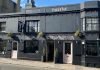
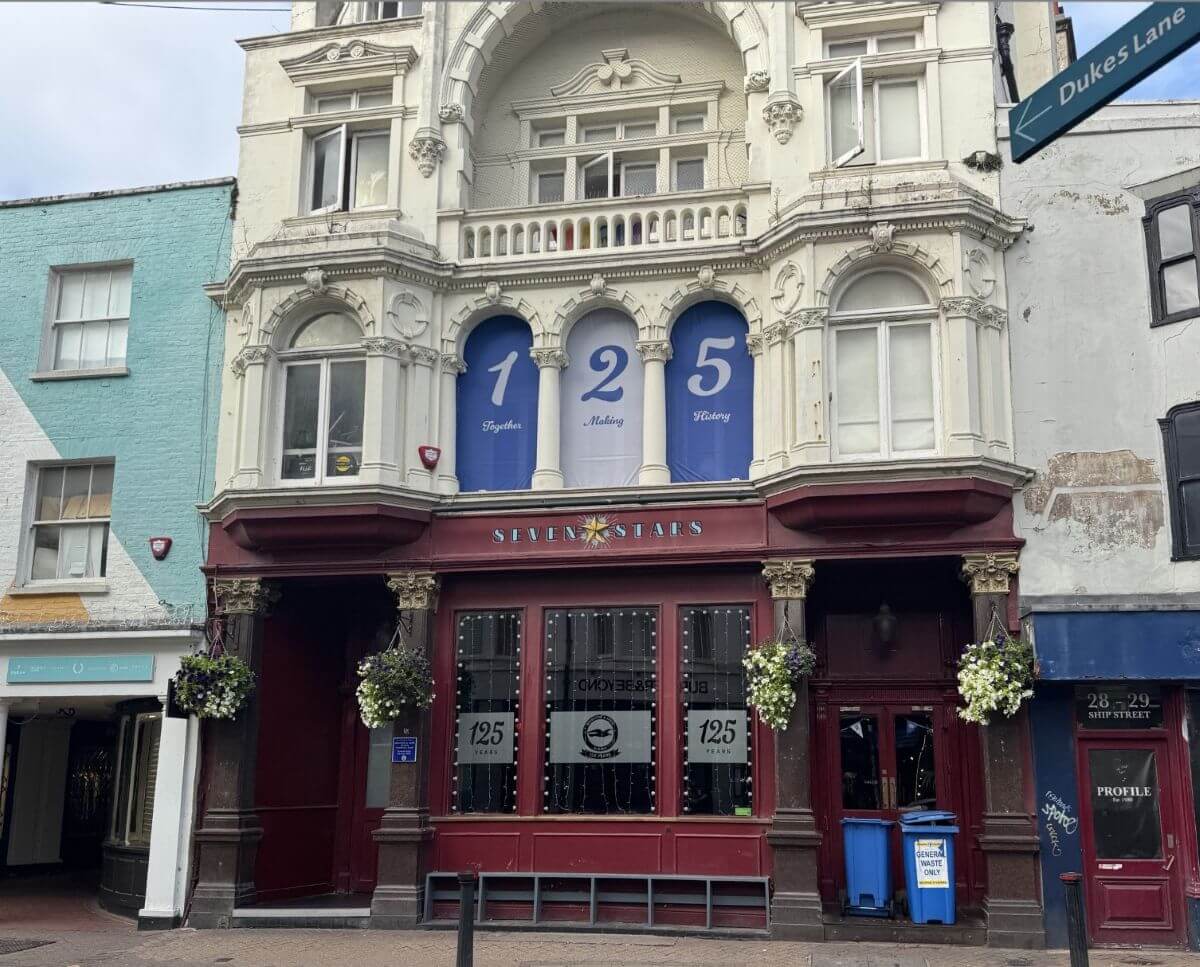
Albion was founded on 24 June 1901 at the Seven Stars pub on Ship Street. The driving force was John Jackson, who became the new club’s first manager.
It was not the first attempt to establish professional football locally. Earlier clubs called Brighton United and Brighton & Hove Rangers had already come and gone.
Those were separate clubs, not simply earlier names of the present Albion. Jackson’s new organisation emerged from that unsettled football landscape and began as a semi-professional side in the Southern League.
The founding meeting initially chose Brighton & Hove United. However, the existing Hove FC objected to a name that could suggest a connection between the clubs. The new team became Brighton & Hove Albion before its first season began.
The history of the Seven Stars meeting is therefore also a story about persistence. Two earlier ventures had failed, but there was still a determination to make senior football work in the town.
Exactly why “Albion” was chosen remains uncertain. Club historian Tim Carder’s published history says no contemporary connection with West Bromwich Albion has been established, so the familiar suggestion that Brighton simply borrowed its name should not be presented as proven.
The birthplace remains visible today. On 24 June 2026, the club marked its anniversary by unveiling a blue plaque at the Seven Stars and paying tribute to Jackson.
Where have Brighton & Hove Albion played?
The men’s first team has had five principal home grounds. Together they trace the club’s movement from a borrowed cricket ground to a purpose-built stadium, with two periods of temporary accommodation in between.
| Ground | Years | Place in the club’s history |
|---|---|---|
| Sussex County Cricket Ground, Hove | 1901–1902 | Home for Albion’s first season in the Southern League |
| Goldstone Ground, Hove | 1902–1997 | The club’s home for 95 years, initially shared with Hove FC |
| Priestfield Stadium, Gillingham | 1997–1999 | Groundshare in Kent after the Goldstone was sold |
| Withdean Stadium, Brighton | 1999–2011 | Athletics stadium adapted as a temporary football home |
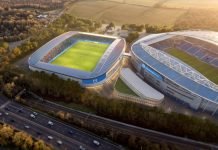
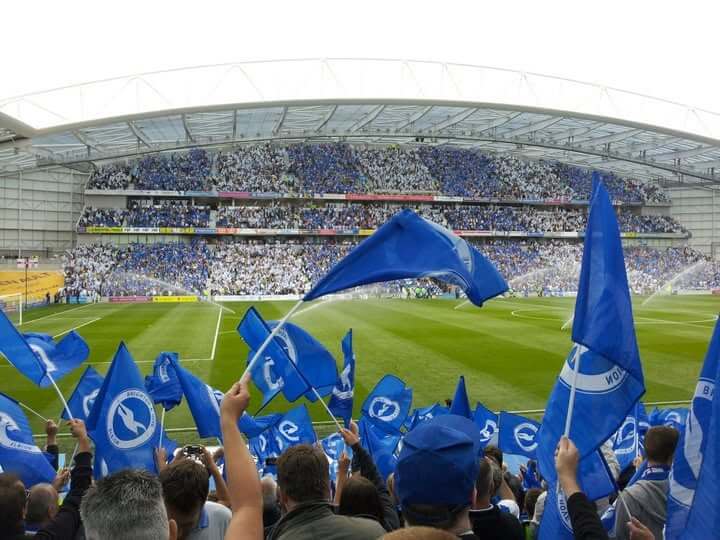
| American Express Stadium, Falmer | 2011 onwards | The permanent home that enabled the club’s modern expansion |
The Goldstone’s long association with Albion began through a practical arrangement with Hove FC. The clubs shared from 1902 until Hove departed in 1904.
The connection with Doncaster Rovers provides an unusual thread through the stadium story of course. Doncaster were the opponents for the final Goldstone match in 1997 and the first league fixture at the Amex in 2011.
1910: when Albion became “Champions of England”
Albion’s first major triumph arrived long before the Football League years, and is pushed more loudly since Palace won a low level European trophy recently. Please note I have the right to edit this description based on this season’s results.
Under manager John Robson, Brighton won the Southern League championship in 1909/10. That earned a Charity Shield meeting with Football League champions Aston Villa.
On 5 September 1910, Albion beat Villa 1–0 at Stamford Bridge, with Charlie Webb scoring the winner. The club’s account of the victory records the celebratory description of Albion as unofficial champions of England.
The context matters. The Southern League was then a major competition outside the Football League, and the Shield brought their champions together. While not formally recognised, it holds more sway than “we won the Club World Cup so we must be the best in the World.”
Albion’s 1910 trophy
Champions of England, but not Football League champions
Albion won the Southern League and then defeated Football League champions Aston Villa in the Charity Shield. The famous description celebrates that achievement; it does not mean Brighton won the top-flight league title.
Joining the Football League and waiting for promotion
Brighton entered the Football League in 1920, when Southern League clubs formed its new Third Division. Regional divisions followed, leaving Albion in the Third Division South.
Promotion was a long time coming. It took until 1958 for Brighton to win the division and reach the second tier.
The decisive match produced one of the great individual performances in club history. On 30 April 1958, 20-year-old Adrian Thorne scored five goals in a 6–0 victory over Watford at the Goldstone. Billy Lane’s team only needed a draw but they delivered something considerably more emphatic.
The breakthrough did not bring lasting stability though. Consecutive relegations in 1962 and 1963 took Albion into the Fourth Division. They won that division in 1965, then experienced another short-lived second-tier stay following promotion in 1972.
The idea that Brighton’s rise was a steady climb does not survive much examination of these decades.
Clough, Mullery and the first top-flight team
Chairman Mike Bamber brought national attention to the club by appointing Brian Clough in 1973. His stay was short and unsuccessful on the pitch, but his assistant and successor Peter Taylor helped assemble the foundations of a better team.
Alan Mullery took charge in 1976 and turned that potential into promotions. Peter Ward’s extraordinary goalscoring, Brian Horton’s leadership and the emergence of players including Mark Lawrenson helped transform expectations.
The 7–0 defeat of Walsall in October 1976, with all seven goals scored after half-time, captured the attacking excitement of the period.
Promotion followed in 1977. After narrowly missing out on another promotion the next season, Albion secured their first place in the First Division with a 3–1 win at Newcastle on 5 May 1979.
Brighton stayed in the top flight for four seasons. Those years established that the club could compete at that level, even if sustaining it proved much harder.
Why are Brighton called the Seagulls?
The club name and nickname have different histories.
Albion had used “the Dolphins” during the early 1970s. The Seagulls identity developed through supporters, with chants answering Crystal Palace’s “Eagles”.
The club’s history of the chant identifies a 2–0 victory over Palace on 24 February 1976 as the occasion when it firmly caught on. A seagull appeared on the club crest in 1977.
The rivalry grew through repeated meetings, promotion contests and controversial encounters during that era. It was not created solely by a map or one managerial argument.
Another part of Albion’s identity is much older in Sussex by the Sea. The march written in 1907 became associated with the club in its early years and still provides the musical connection between matchday, cricket and the wider county.
There was always some unfair mockery from away fans at the song being played at the Amex with the words on the screen, but in fairness at the Withdean it was only the changed chorus of going up to win the cup sung then. With the move to the new ground came a North Stand Chat campaign to use the original version of Stand or Fall. Which some of the increased capacity needed some guidance on, mostly as there were still Arsenal season ticket holders trying out the Blue and White stripes.
1983: Wembley, relegation and “Smith must score”
Albion’s most famous cup run came during a season that also ended in relegation.
Jimmy Melia’s side beat opponents including Liverpool and Sheffield Wednesday on the way to the 1983 FA Cup final against Manchester United.
At Wembley on 21 May, Gordon Smith put Brighton ahead. United recovered to lead 2–1 before Gary Stevens equalised, taking the match into extra time.
Then came the moment most people know as the words “And Smith must score”. Smith’s late opportunity was saved by Gary Bailey. The final ended 2–2. United won the replay 4–0 five days later.
The club’s reunion with members of the cup-final team shows how strongly that side remains part of supporter memory. The result hurt, but reaching Wembley was an achievement that should not be reduced to one saved shot.
The Goldstone sale and the fight to save Albion
The years after Wembley brought mounting financial difficulty and fluctuating league fortunes. Albion reached another Wembley final in 1991, losing the second-tier promotion play-off to Notts County, but relegation followed the next year.
The defining crisis came with the sale of the Goldstone Ground under chairman Bill Archer and chief executive David Bellotti, without a permanent replacement secured.
Supporters responded with protests, campaigns and efforts to force a change in control. The abandoned York City match in April 1996 became one of the most visible expressions of the dispute.
On 8 February 1997, Fans United brought supporters of other clubs to the Goldstone in solidarity. Albion beat Hartlepool 5–0, but the significance extended beyond the result: the campaign had become part of a wider conversation about supporters and the future of their clubs.
On the pitch, Steve Gritt took over a side stranded at the bottom of the Football League and began an unlikely recovery.
Stuart Storer scored the final Goldstone goal in a 1–0 win against Doncaster on 26 April 1997 before a pitch invasion left some supporters with unique memorabilia. The result was equally as special, meaning Albion needed a draw away in a relegation-decider against Hereford United on the season’s final day.
They fell behind. Then Robbie Reinelt equalised, securing a 1–1 draw on 3 May and preserving Brighton’s Football League place.
The deciding tiebreaker was goals scored, not goal difference. Both teams finished on 47 points, but Brighton had scored 53 league goals to Hereford’s 50. Albion won the battle for survival. Literally. Hereford United eventually folded.
Homeless, but with a league status, Dick Knight’s consortium took control during 1997. And at last the club had a Knight in shining armour at the reins.
Gillingham and Withdean: rebuilding without a permanent home
For two seasons, home matches meant travelling to Gillingham’s Priestfield Stadium. Albion were a Sussex club playing in Kent, with the inconvenience reflected in small crowds.
The return to Brighton came in 1999, when Withdean’s athletics stadium became a temporary football ground.
It was hardly worthy of the name, but at least local. A running track, distant views from some seats and limited shelter. On a foggy night the away fans had to sing to ask the score. I take my kids to athletics there now, and stare wistfully at where H Block used to be (it was temporary seating). A part of me genuinely misses those Skint days.
It was a home for a while, and the setting for a remarkable recovery and turn in fortunes.
Micky Adams led Albion to the fourth-tier title in 2001, with Bobby Zamora providing the goals. Victory over Chesterfield helped settle the championship beyond any argument about their rivals’ points deduction.
A second successive title followed in 2002 under Peter Taylor. After relegation, Mark McGhee took Brighton back up through the 2004 play-offs, with Leon Knight’s penalty beating Bristol City 1–0.
That final was played at the Millennium Stadium in Cardiff, not Wembley. I was working abroad so missed that one.
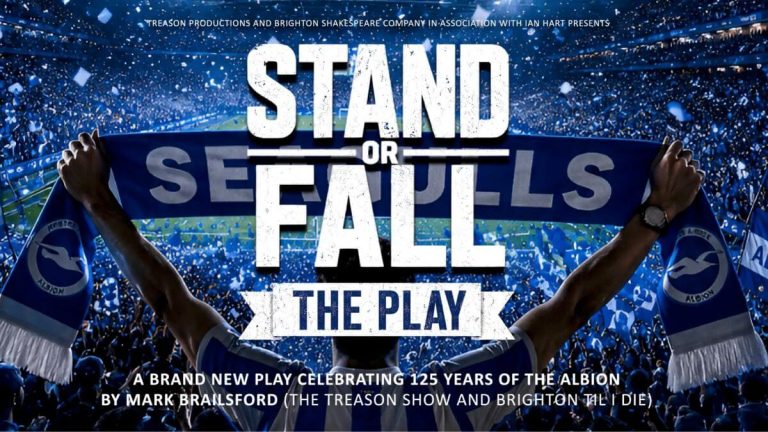
Withdean remained a temporary solution for 12 years. Its limited capacity helped explain why winning permission and funding for Falmer mattered so much. I cannot overstate the efforts of some Brighton fans to help the new stadium go through with tireless campaigning, some of which is captured in the Stand or Fall play soon to be showing at the Theatre Royal.
There were some good times there, in particularly beating the newly “richest club in the world” of Manchester City on penalties in 2008 with a team including Schmeichel, Zabaleta, Kompany, Sturridge, Jô and Elano.
Tony Bloom, the Amex and Premier League promotion
The stadium campaign required years of planning work, public inquiries and supporter pressure. Chief executive Martin Perry played a central role in developing the Falmer project.
Tony Bloom became chairman in 2009 and provided the financial backing for the new stadium. In the list of heroes, Bloom deserves the plaudits and is a chairman every football club deserves. It’s not just the interest-free loans or travelling on the train to away game with the fans. He genuinely cares about the club and relishes the success over money, and has a family connection to the club.
Talking of which Gus Poyet’s team ensured Albion arrived at the Amex as a Championship club by winning League One in 2011, triggering a fantastic parade and Poyet led sing-song of the “we’re F’ing Brilliant” chant. This was also the year of the iconic Pink and White stripes.
The first league match at the Amex came on 6 August 2011. Will Buckley scored twice as Brighton came from behind to beat Doncaster 2–1.
The stadium did not produce instant Premier League football though. There were play-off disappointments and a difficult period (with Poyet sacked live on air, and Oscar Garcia and Sami Hyypia having short spells) before Chris Hughton’s appointment at the end of 2014.
Hughton stabilised the team and then built a promotion challenge based on some pretty dour but effective football. After the disappointment of missing out in 2016, Albion secured their return to the top flight on 17 April 2017, following a 2–1 victory over Wigan Athletic and a result elsewhere that confirmed promotion.
It ended a 34-year absence. Glenn Murray, Anthony Knockaert, Bruno, Lewis Dunk and their team-mates had delivered something that would have sounded extraordinary during the Gillingham years.
From Premier League survival to European football
Hughton kept Albion in the Premier League before Graham Potter took over in 2019 and developed a different playing style.
Roberto De Zerbi succeeded Potter in 2022. Under De Zerbi, Brighton finished sixth in 2022/23, qualifying for European competition for the first time.
The 2023/24 Europa League group brought Ajax, Marseille and AEK Athens to the Amex. After losing their opening fixture, Albion recovered to beat Ajax home and away and finish top of the group.
João Pedro’s late winner against Marseille secured first place and direct passage to the last 16.
Roma ended the run, winning 4–1 on aggregate despite Brighton’s 1–0 victory in the return leg at the Amex. Eventually De Zebri did his best Poyet impersonation to get himself into the same pile of glass ceiling managers.
Fabian Hürzeler became head coach in 2024 aged just 31. By the 125th-anniversary season, Albion were preparing for another European campaign, this time in the Conference League.
For supporters who remembered travelling to Priestfield for a home game, those journeys abroad represented more than sporting progress. They showed how far the club had come from the brink of extinction.
Who are Brighton & Hove Albion’s greatest players?
There is no single answer that works across 125 years. Records, ability, loyalty and the importance of particular moments produce different choices.
These are players whose contribution helps explain their era, rather than a ranking that pretends a modern international and a pre-war record-holder can be compared neatly.
Charlie Webb, Tommy Cook and Ernie “Tug” Wilson
Charlie Webb belongs near the beginning of any discussion. He scored the 1910 Charity Shield winner and subsequently served the club for decades as manager. Few figures connect so much of Albion’s early history.
Tommy Cook remains the benchmark for competitive goalscoring, with 123 goals.
Ernie “Tug” Wilson holds the competitive appearance record with 566 games, accumulated between 1922 and 1936. His longevity represents a period often overlooked in accounts that begin with the first top-flight promotion.
Peter Ward and the rise of the 1970s
Peter Ward is central to the way a generation remembers Albion. His 36 goals in 1976/77 remain the club’s competitive single-season record, and his attacking partnership with Ian Mellor helped make Mullery’s team such an attraction. Thanks to REMF and the yearly charity games, he’s still a well known name and character.
Brian Horton supplied leadership and midfield authority during the climb towards the First Division. The captain’s importance should not disappear behind the goalscorers.
Mark Lawrenson gave Brighton exceptional defensive quality before moving to Liverpool in 1981 (something he seemed to forget on MOTD). For an assessment based on individual ability, he has a strong claim to consideration alongside players from the modern era.
Jimmy Case and Steve Foster
Jimmy Case brought experience and a powerful midfield presence. His goals during the 1983 FA Cup run, including the semi-final against Sheffield Wednesday, make him inseparable from Albion’s road to Wembley.
Steve Foster, immediately recognisable by his headband, became another enduring figure from the first top-flight side. His place in supporter memory reflects both his defending and his long association with the club across two spells.
Bobby Zamora and Glenn Murray
Bobby Zamora made the Withdean years feel full of possibility. His goals drove successive promotions, and his return in 2015 added another chapter to the relationship. He finished with 90 competitive Albion goals.
Glenn Murray scored 111, contributing to both the 2011 League One title and the 2017 Premier League promotion. His career also shows why a player’s overall Albion story cannot always be reduced to one transfer or one spell.
Zamora represents the revival from the lower leagues, while Murray helped turn recovery into sustained top-flight football. He’s almost forgiven for joining Palace.
I’d also personally name Danny Cullip and Adam Virgo as legends of that era too.
Bruno, Dunk, Groß and the modern generation
Bruno captained the 2017 promotion side and brought composure and technical quality to right-back. His years at the Amex connected the Championship challenge with the first Premier League seasons. His mural in the Lanes was probably the most deserved at the time.
Lewis Dunk provides the local blood, an academy graduate who made his senior debut in 2010 and developed into a captain representing Albion in European competition. 16 years of staying loyal, never having his head turned, despite being unfairly overlooked by Southgate
Pascal Groß was fundamental to the early Premier League years and the team that reached Europe. His creativity, intelligence and versatility offer a reminder that a club’s most influential players are not always its most spectacular dribblers. He left a hero, then returned in January at the ripe old age of 34 to show he’s still essential to the team.
Anthony Knockaert deserves particular recognition for the promotion campaign, when his attacking contribution helped lift Brighton into the Premier League.
Supporters will add others, from Kit Napier (who scored more goals than Ward and Zamora) and Garry Nelson to the former Dutch Marine Michel Kuipers and Solly March. That disagreement is part of the pleasure of any football club’s endless debate, much like the greatest goal scored (Mitoma vs Chelsea – conversation over).
Different generations have seen different people make the shirt matter. I don’t think many will disagree though that the current crop of players are a far cry from watching Bas Savage or Roland Bergkamp up front. I also can’t help but feel there are plenty new names to become contenders.
Albion’s record-holders
| Record | Player | Total |
|---|---|---|
| Competitive first-team appearances | Ernie “Tug” Wilson | 566 |
| Competitive first-team goals | Tommy Cook | 123 |
| Competitive goals in one season | Peter Ward | 36 in 1976/77 |
Historical totals require consistent definitions. League-only records, competitive league-and-cup totals and wartime football are different categories and should not be mixed together.
The women’s team has its own history
A 125th-anniversary celebration should also recognise that today’s Albion is more than the men’s first team. The club’s published women’s history records the affiliation of C&C Sports in 1990, becoming Brighton & Hove Albion Women and Girls.
The women’s side won its Southern Division in 2016 and entered the top-tier Women’s Super League in 2018, following the award of a licence for the fully professional competition. Hope Powell had become manager in 2017.
That development is another strand of Albion’s expansion, with its own players, supporters and milestones. Brighton’s new dedicated women’s stadium on the same Falmer site will take things up a level.
Why the 125th anniversary means more than a new shirt
The club’s 2026 anniversary programme includes the Seven Stars plaque, the commemorative kit and the permanent Stand or Fall exhibition at Brighton Museum & Art Gallery, which opened on 15 August.
Those celebrations recognise a history that cannot be explained solely through money, recruitment or one manager’s tactics.
Jackson helped establish the club. Players and managers supplied its achievements. Supporters fought for its survival, Knight’s consortium took control at a critical moment and Bloom’s backing enabled the permanent home from which it could grow.
The most important fact about Albion’s 125 years is not that the story ends in the Premier League. It is that, when there was a real possibility of the story ending much earlier, enough people refused to let it. And it’s a true family club too, from the Bloom’s to the Hinshelwood’s, and the mixed generations of fans going every week. It might be a library, but as least it’s full every week.
Brighton & Hove Albion managers and head coaches
From founding manager John Jackson to Fabian Hürzeler, these are the men’s first-team managers and head coaches through Albion’s history. Caretaker and interim appointments are identified separately within the list.
| Manager or head coach | Years in charge |
|---|---|
| John Jackson | 1901–1905 |
| Frank Scott-Walford | 1905–1908 |
| Jack Robson | 1908–1914 |
| Alf Nelmes | 1914–1915, caretaker |
| Charlie Webb | 1919–1947 |
| Tommy Cook | 1947 |
| Don Welsh | 1947–1951 |
| Billy Lane | 1951–1961 |
| George Curtis | 1961–1963 |
| Joe Wilson | 1963, caretaker |
| Archie Macaulay | 1963–1968 |
| Freddie Goodwin | 1968–1970 |
| Pat Saward | 1970–1973 |
| Glen Wilson | 1973, caretaker |
| Brian Clough | 1973–1974 |
| Peter Taylor | 1974–1976 |
| Alan Mullery | 1976–1981 |
| Mike Bailey | 1981–1982 |
| Jimmy Melia | 1982–1983, initially jointly with George Aitken |
| Chris Cattlin | 1983–1986 |
| Alan Mullery | 1986–1987, second spell |
| Barry Lloyd | 1987–1993 |
| Liam Brady | 1993–1995 |
| Jimmy Case | 1995–1996 |
| Steve Gritt | 1996–1998 |
| Brian Horton | 1998–1999 |
| Jeff Wood | 1999 |
| Micky Adams | 1999–2001 |
| Bob Booker and Martin Hinshelwood | 2001, joint caretakers |
| Peter Taylor | 2001–2002 |
| Martin Hinshelwood | 2002 |
| Steve Coppell | 2002–2003 |
| Bob Booker | 2003, caretaker |
| Mark McGhee | 2003–2006 |
| Dean Wilkins | 2006–2008 |
| Micky Adams | 2008–2009, second spell |
| Dean White and Bob Booker | 2009, joint caretakers |
| Russell Slade | 2009 |
| Martin Hinshelwood | 2009, caretaker |
| Gus Poyet | 2009–2013 |
| Óscar García | 2013–2014 |
| Sami Hyypiä | 2014 |
| Nathan Jones | 2014, caretaker |
| Chris Hughton | 2014–2019 |
| Graham Potter | 2019–2022 |
| Andrew Crofts | 2022, interim head coach |
| Roberto De Zerbi | 2022–2024 |
| Fabian Hürzeler | 2024–present |
Two different Peter Taylors: the manager in charge from 1974 to 1976 was Brian Clough’s former assistant. The Peter Taylor appointed in 2001 was a different person, who led Albion to the third-tier championship in 2002.
The gap before Charlie Webb’s appointment reflects the interruption caused by the First World War. Alf Nelmes took temporary charge after Jack Robson’s departure, before Webb began his long managerial spell in 1919.
Years indicate periods in charge rather than complete football seasons. Main tenures are recorded in Soccerbase’s managerial history, supplemented by historical accounts and club announcements for temporary appointments. Current to 19 September 2026.
See Albion’s history around the city
- The BookBench Story Trail includes Albion’s anniversary artwork outside Brighton Museum.
- Royal Pavilion and museum-area guide includes information on the neighbouring Stand or Fall gallery.
You May Also Be Interested In