





















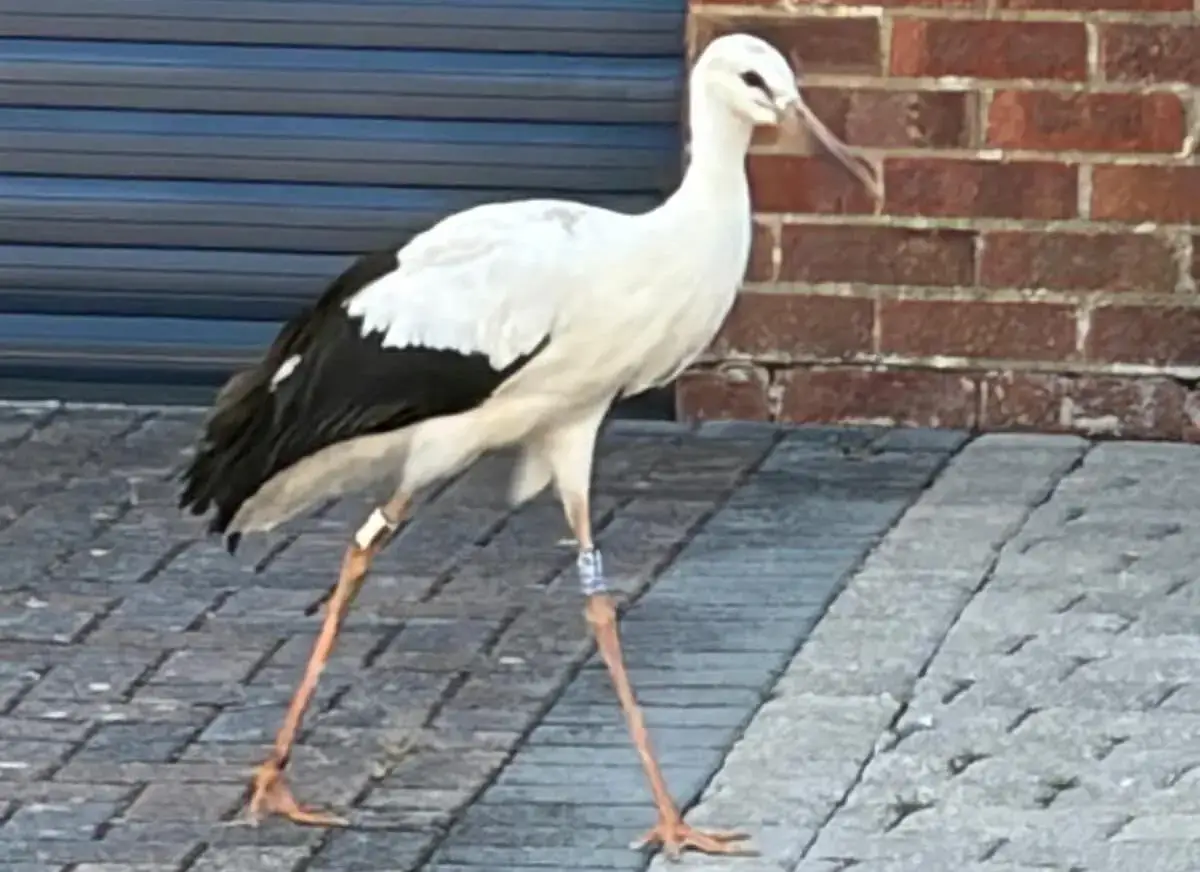
A white stork brought an unusual sight to a Hove street in August, walking past a row of garages and perching on a parked car as neighbours took photographs.
The bird was spotted in Honey Croft in Hangleton on Wednesday 12th August. Pictures shared by a resident show its white body, black wing feathers and long red legs against a decidedly ordinary backdrop of brickwork and driveways.
One neighbour reported the sighting to the White Stork Project. In a reply dated 19 August, the project identified the visitor as a bird hatched at Cotswold Wildlife Park and released at Knepp in West Sussex earlier this year.
Where did the Hove stork go?
The project said the stork carried a tracker. According to its 19 August reply, the bird travelled towards the Kent coastline after leaving Hove, then headed back west and was in the Ashdown Forest area at the time of the message.
The visit came soon after the project released young storks at Knepp in early August. In its account of this year’s release, the team said 49 birds raised at Cotswold Wildlife Park had spent two weeks at Knepp before taking flight. The project describes movements along the south coast as common among young storks at that time of year.
For Honey Croft residents, the brief stop gave them a close-up view of a bird more often associated with the skies above Knepp than a Hove driveway. It also added one more reported sighting to the project’s picture of where the young storks travel after release.
From Cotswold Wildlife Park to Knepp
The Honey Croft visit followed the release of 49 young storks at Knepp in early August. Cotswold Wildlife Park described the group as the result of its most successful white stork breeding season.
Before their move to Sussex, the birds underwent veterinary checks and measurements. They then spent two weeks in an enclosure at Knepp before their release. The settling period helps the youngsters become familiar with a site where the project hopes they will return to breed.
Tracking has expanded this year. According to Cotswold Wildlife Park, every bird in its release group carried either a satellite tracker or an electronic leg ring. The devices help researchers follow the birds after they leave the release site.
The White Stork Project says young storks often travel along the south coast in early August. Some project birds later cross the Channel and reach North Africa, while others spend the winter in Britain.
White storks breeding in Sussex again
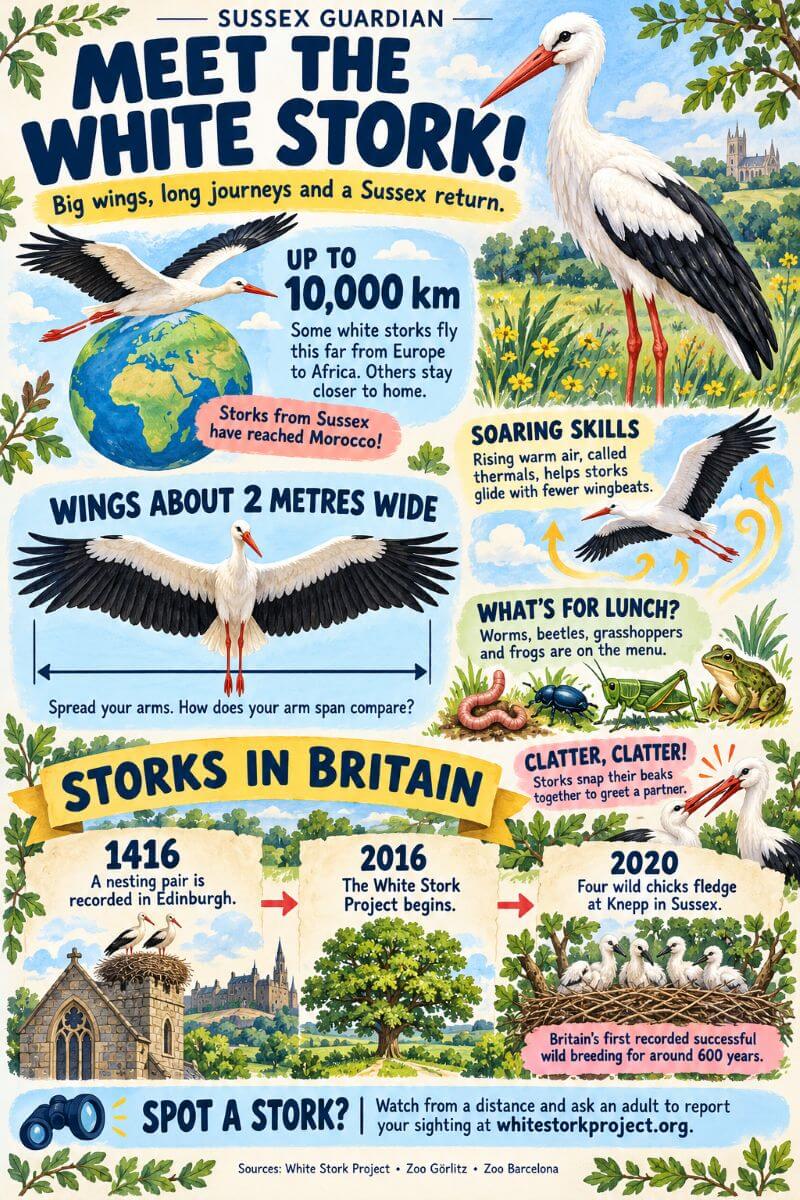
The White Stork Project began in 2016 with the aim of restoring a breeding population in Britain. Four chicks fledged at Knepp in 2020, the first successful wild breeding recorded in Britain for around 600 years.
The project’s 2026 breeding figures record 42 wild chicks fledging from 16 nests at Knepp, plus three chicks from two nests at Wadhurst Park in East Sussex. These birds hatched in Sussex, separately from the 49 youngsters brought from Cotswold Wildlife Park.
If you spot a white stork, send the White Stork Project a sighting report with the date, time and location. A photograph and a readable ring code help the team identify the bird and follow its journey.